











Recently viewed products
Women's Medieval Clothing:
Female Fashion from the 5th to the 15th Century
Women's medieval clothing spans a thousand years of European dress, from the simple practical gowns of the early medieval period to the elaborate layered silhouettes of the 15th century Burgundian court. Across that time, female dress changed significantly in cut, silhouette, and complexity, while remaining consistently tied to ideas of modesty, social rank, and the display of wealth.
The Early Middle Ages: Long Tunics and the Apron Dress
The Basic Silhouette
The foundational garment for women throughout the early medieval period was a long, loose gown reaching to the ankle or floor. Worn over a linen chemise that served as the base layer against the skin, it was belted at the waist or just below the bust and made primarily from wool, with linen used for lighter garments in warmer months. Silk appeared in noble wardrobes, particularly after contact with the Byzantine Empire introduced richer fabrics to Western European courts.
The Apron Dress
In the Norse-influenced north, a distinctive outer garment worn over the tunic dress defined women's dress from roughly the 8th to the 10th century: the apron dress, also known as the hangerok, hangerock, or smokkr. A woollen or linen tailored tube wrapped around the body under the armpits and suspended by a pair of cloth straps over the shoulders, secured by brooches, it hung down to mid-calf and was usually worn over a tunic dress called a særk. The plain variant functioned as a practical protective layer over the outer clothing, while the more elaborate version, trimmed with braids, embroidery, chains, and oval tortoise brooches, served as a clear status symbol. The tortoise brooches used to fasten the shoulder straps are among the most recognizable finds from women's graves of the Viking age, making the apron dress one of the best-evidenced female garments of the early medieval period.
Cloaks, Mantles, and Outer Layers
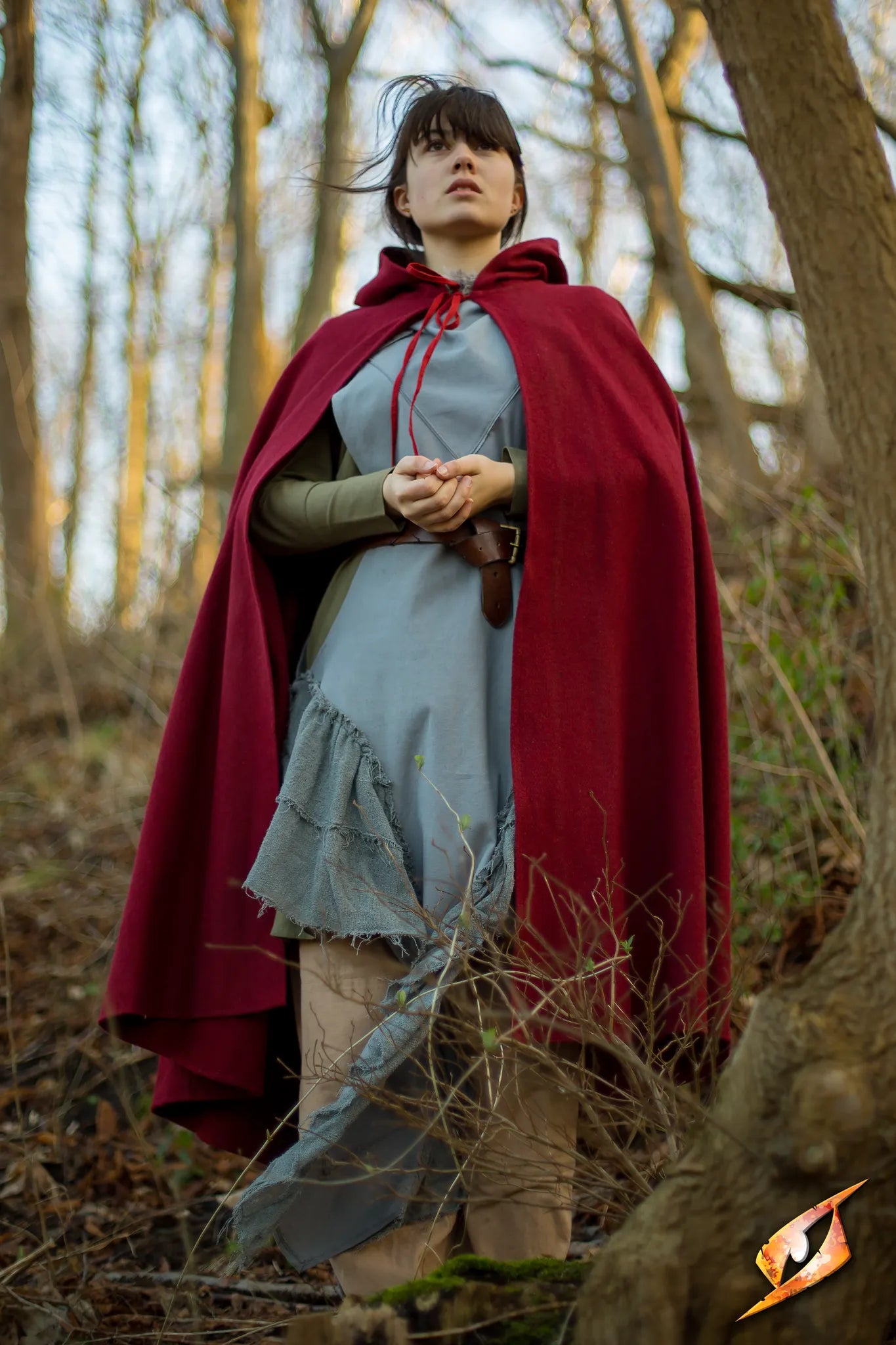
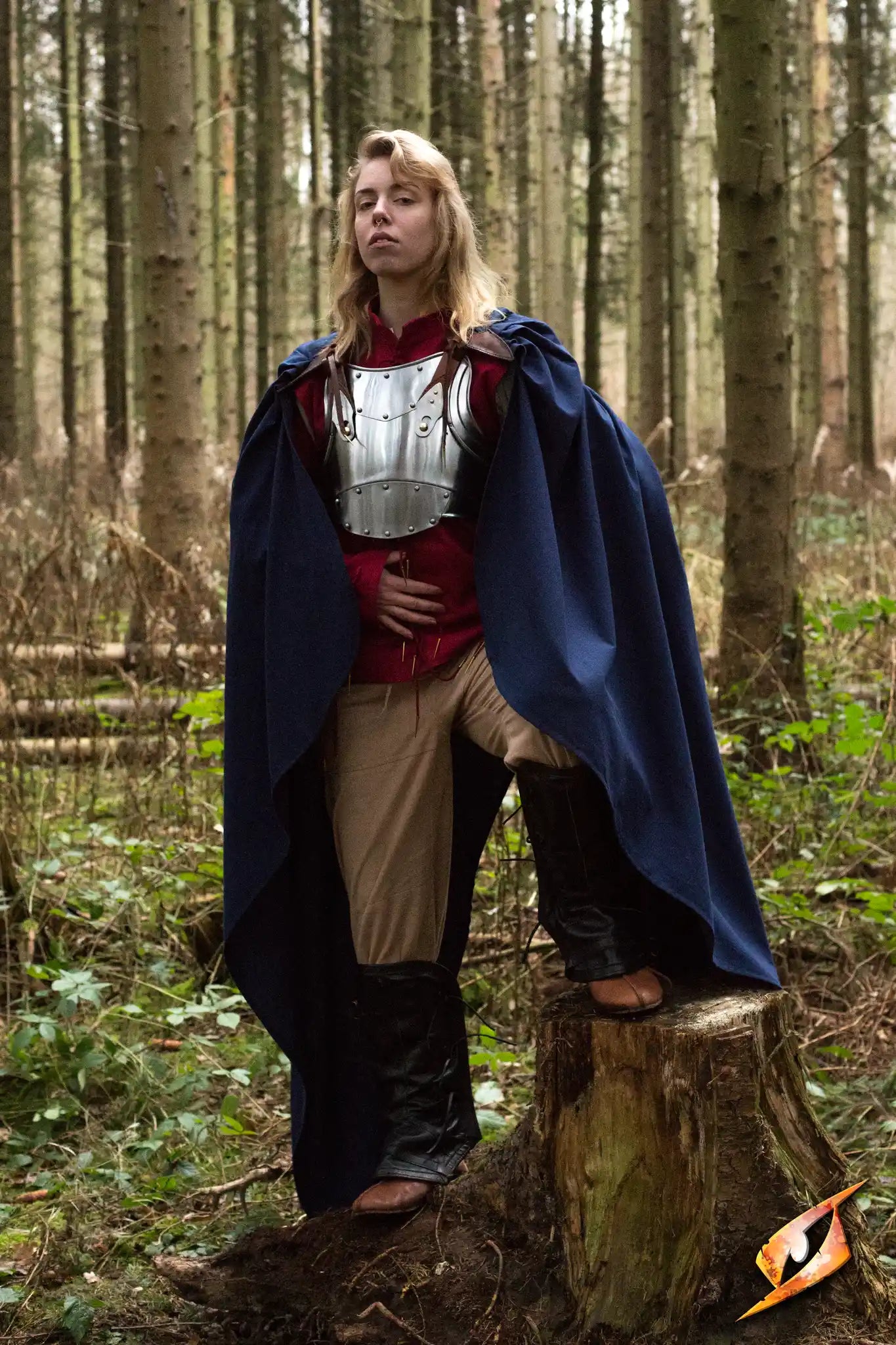
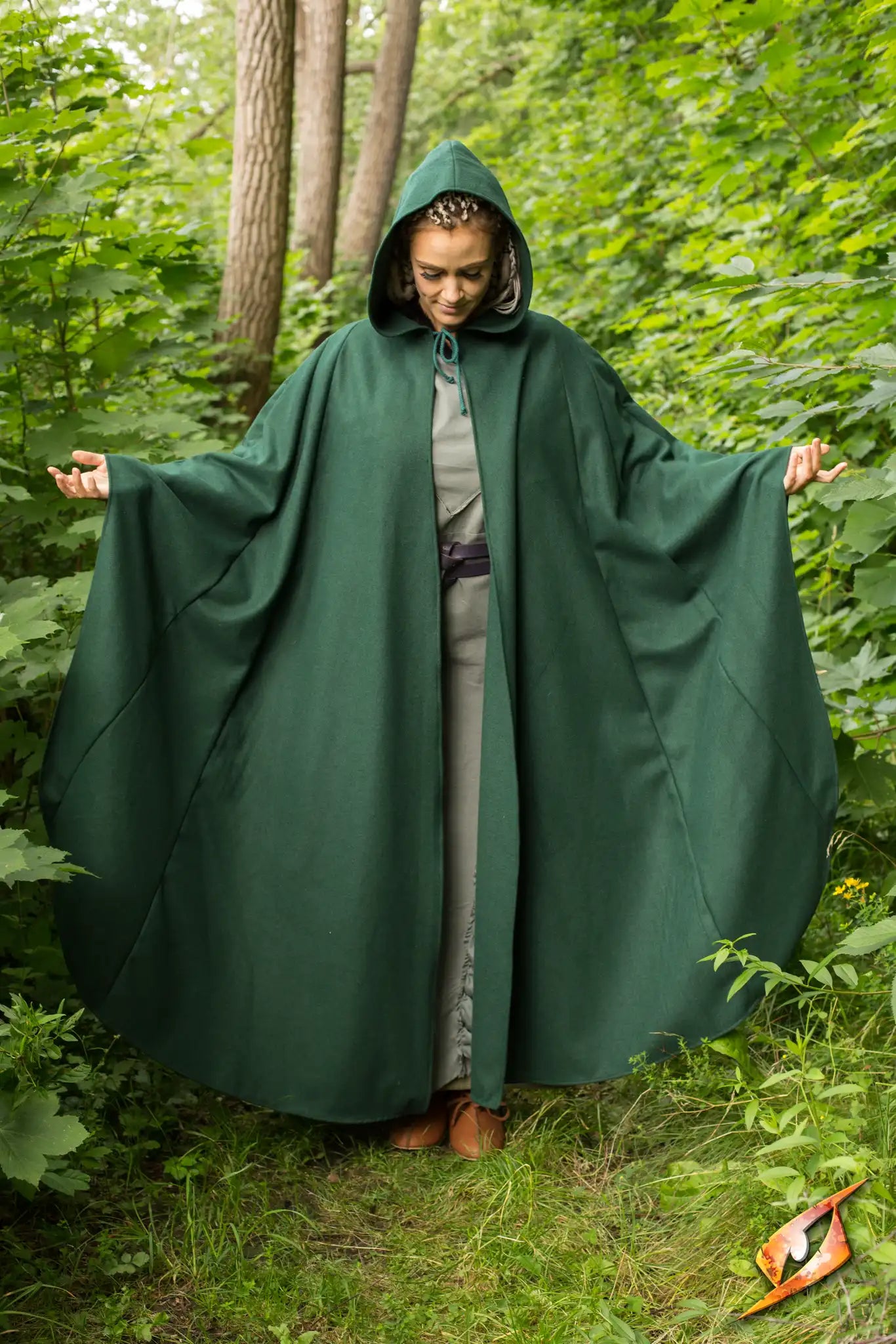
Over the gown or apron dress, women wore a mantle or cloak pinned or clasped at the shoulder or chest. Class distinction in this period was expressed primarily through fabric quality and embroidered decoration at the borders and hem rather than through differences in cut, which remained broadly similar across social classes.
Head Coverings
Adult women across the early medieval period covered their hair as a matter of modesty and social convention. Veils, wrapped cloths, and simple head coverings were standard. Byzantine and Frankish influences shaped the specific styles worn in different regions, and head covering remained a defining feature of women's dress throughout the entire medieval period.
The High Middle Ages: Grand Silhouettes and Layering
The Bliaut and the Fitted Gown
The 12th century saw the emergence of the bliaut, a more structured and fitted gown with a close-fitting bodice, wide skirt, and tight sleeves often elaborately embroidered at the cuff. It represented a move toward more body-conscious silhouettes in upper-class women's dress, a trend that would accelerate significantly in the following century.
The Kirtle
By the 13th century the kirtle had established itself as the defining women's outer garment of the high medieval period. Worn over a chemise and under a surcoat or outer gown, it began as a loose, simple garment and gradually became more fitted and supportive as tailoring techniques improved. It remained a central piece of women's dress through the 14th and into the 15th century, evolving in cut and construction with each passing decade.
Headdresses and Hair
The wimple and veil were the standard head covering for married women through the 12th and 13th centuries. The barbette, a band of linen worn under the chin and pinned at the top of the head, and the coif, a fitted linen cap, appeared alongside them. Hair covering remained strongly associated with marital status and social respectability, with uncovered hair generally acceptable only for unmarried young women.
The Late Middle Ages: The Cotehardie and the Fitted Revolution
The Women's Cotehardie
The 14th century brought the same dramatic shift toward fitted, body-conscious dress for women that transformed men's fashion in the same period. The women's cotehardie became the defining outer garment of the century: a close-fitted gown with snug sleeves, a wide dramatic skirt, and a bodice fastened with buttons or lacing. Tippets, long narrow hanging streamers attached at the elbow, were a fashionable decorative detail through the mid century. It was also a custom for women to cut off their cotehardie sleeves and present them as prizes to favored knights at tournaments.
The Surcoat and the Sideless Surcoat
Over the cotehardie, women wore the surcoat, and later the sideless surcoat: a dramatically open outer garment cut away at the sides to reveal the fitted kirtle and cotehardie beneath. What began as a practical layering piece evolved into a highly decorative status garment, later surviving as a ceremonial royal costume into the 15th century.
Necklines and the New Silhouette
From the late 14th century, necklines dropped and widened. Buttons and lacing allowed a more precise fit than had previously been possible, and color and fabric became subject to increasingly elaborate sumptuary laws dictating what each social class could and could not wear.
The 15th Century: The Houppelande, the Gown, and the Hennin
The Houppelande
The houppelande dominated women's outerwear in the early 15th century. Voluminous and fur-trimmed, with a high collar, dramatically wide sleeves, and a long train, it was worn belted high under the bust to give shape to its otherwise sweeping silhouette. Rich velvets and brocades in strong colors were favored by the wealthy, while simpler versions in good wool were worn by the middle classes.
The Burgundian Gown
As the century progressed, the Burgundian court emerged as the center of European fashion. The houppelande gradually gave way to the Burgundian gown: a more fitted silhouette with slimmer sleeves, a low V-neckline revealing the decorated kirtle beneath, and a high-waisted belt. Fabrics were increasingly luxurious, with cloth of gold, embroidered silk, and ermine lining reserved for the highest ranks.
Headdresses of the 15th Century
No element of 15th century women's dress is more immediately recognizable than its headdresses. The hennin, a tall cone-shaped structure covered in fine fabric with a sheer veil floating from the tip, became the signature of Burgundian court fashion. Regional variations included the truncated hennin, the butterfly hennin with its wire-framed veil, and padded rolls arranged in heart or horned shapes. Jeweled cauls and draped linen coverings provided alternatives for different classes and tastes.
What Women Wore: A Quick Reference by Class
Nobility: Chemise, fitted kirtle, Burgundian gown or houppelande in velvet or brocade, fur lining, elaborate belt, jewelry, and a fashionable headdress.
Merchants and tradeswomen: Chemise, kirtle, and a well-made outer gown in good wool. Following noble fashion at a distance, with less elaborate decoration and simpler headwear.
Common women and laborers: Chemise and a simple woolen kirtle or gown, belted for practical work. Head covered with a simple veil or linen coif. Function first, with fabric quality limited by cost.