


Recently viewed products
What is a cuirass?
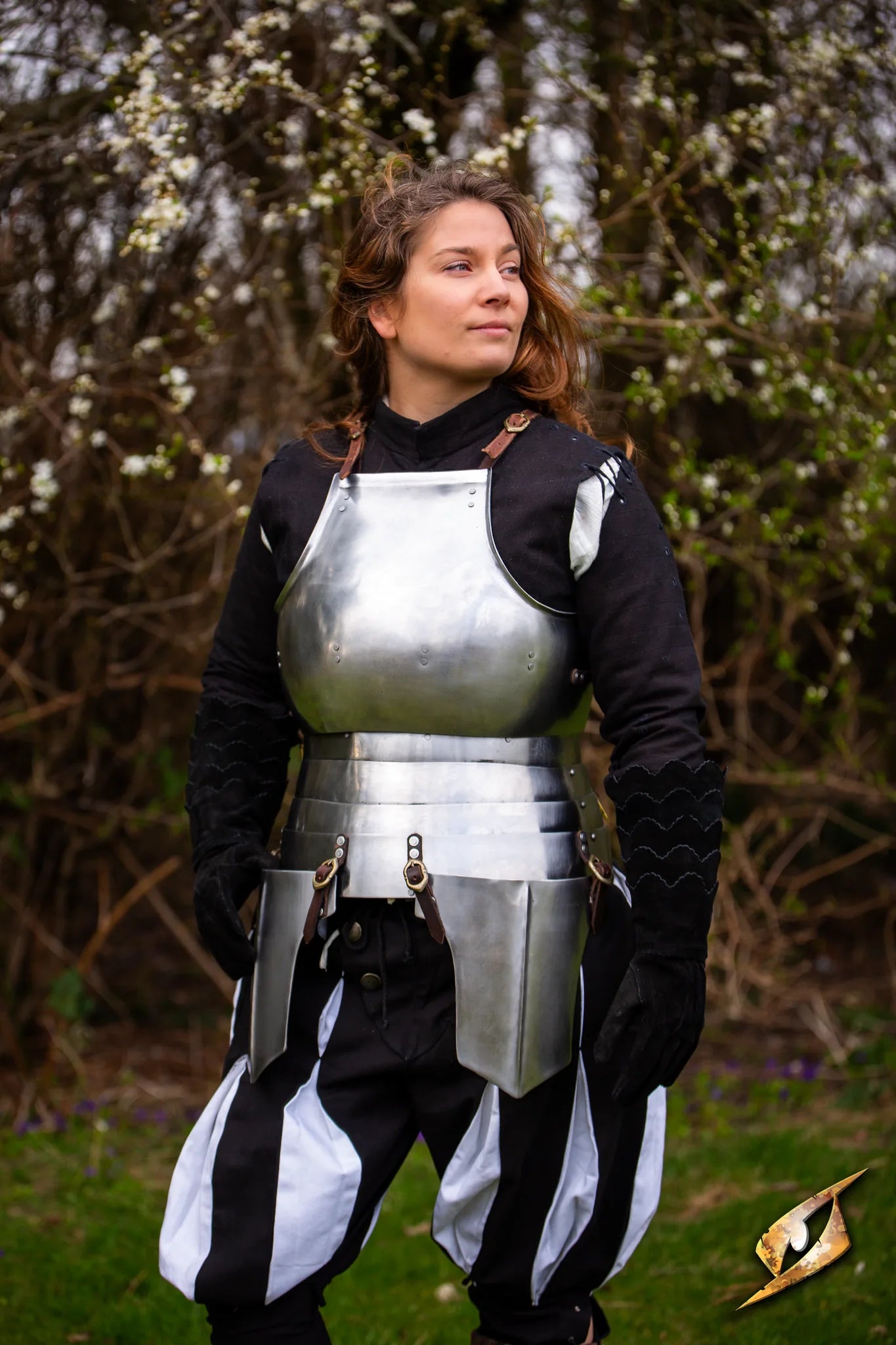
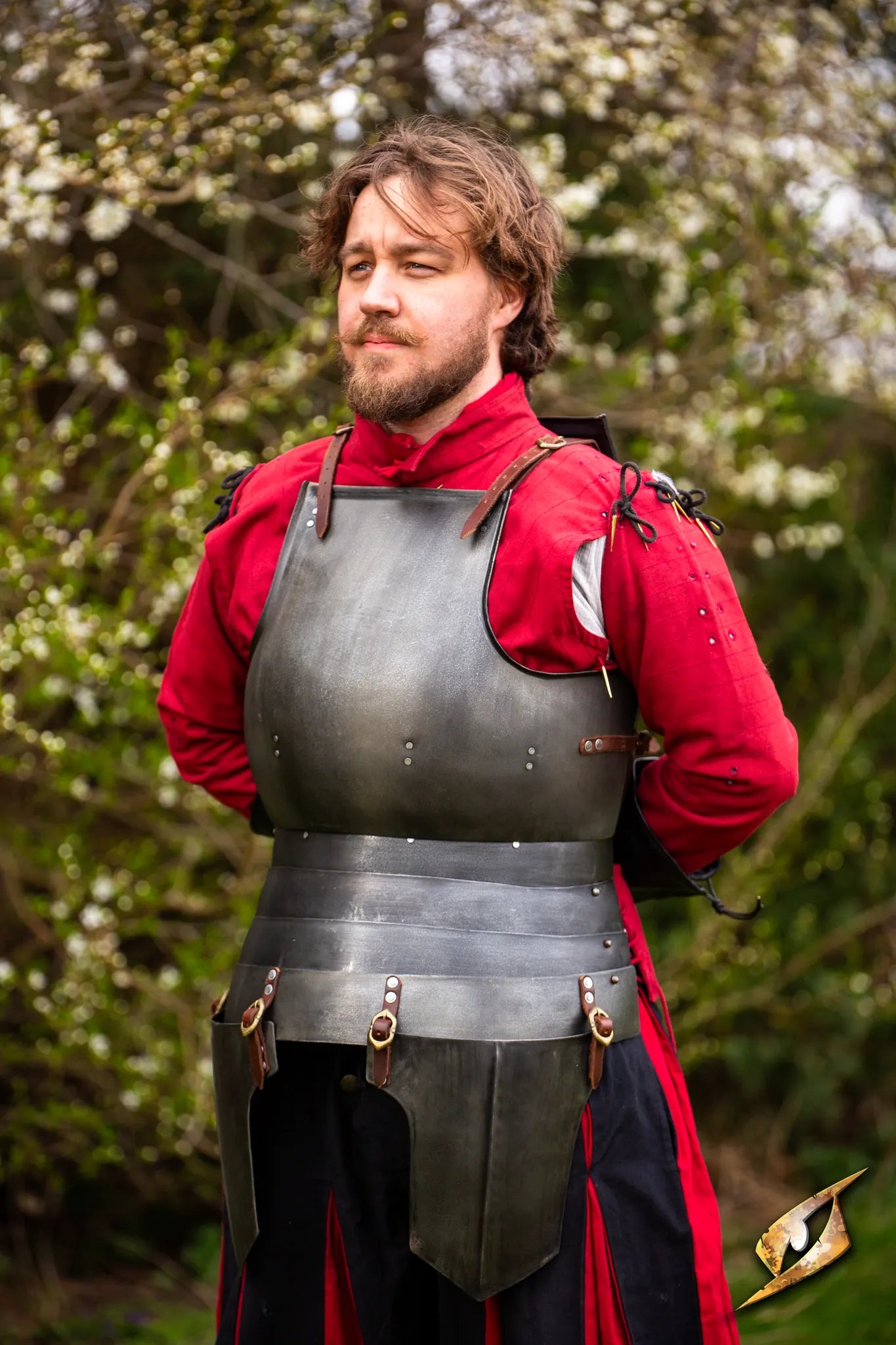
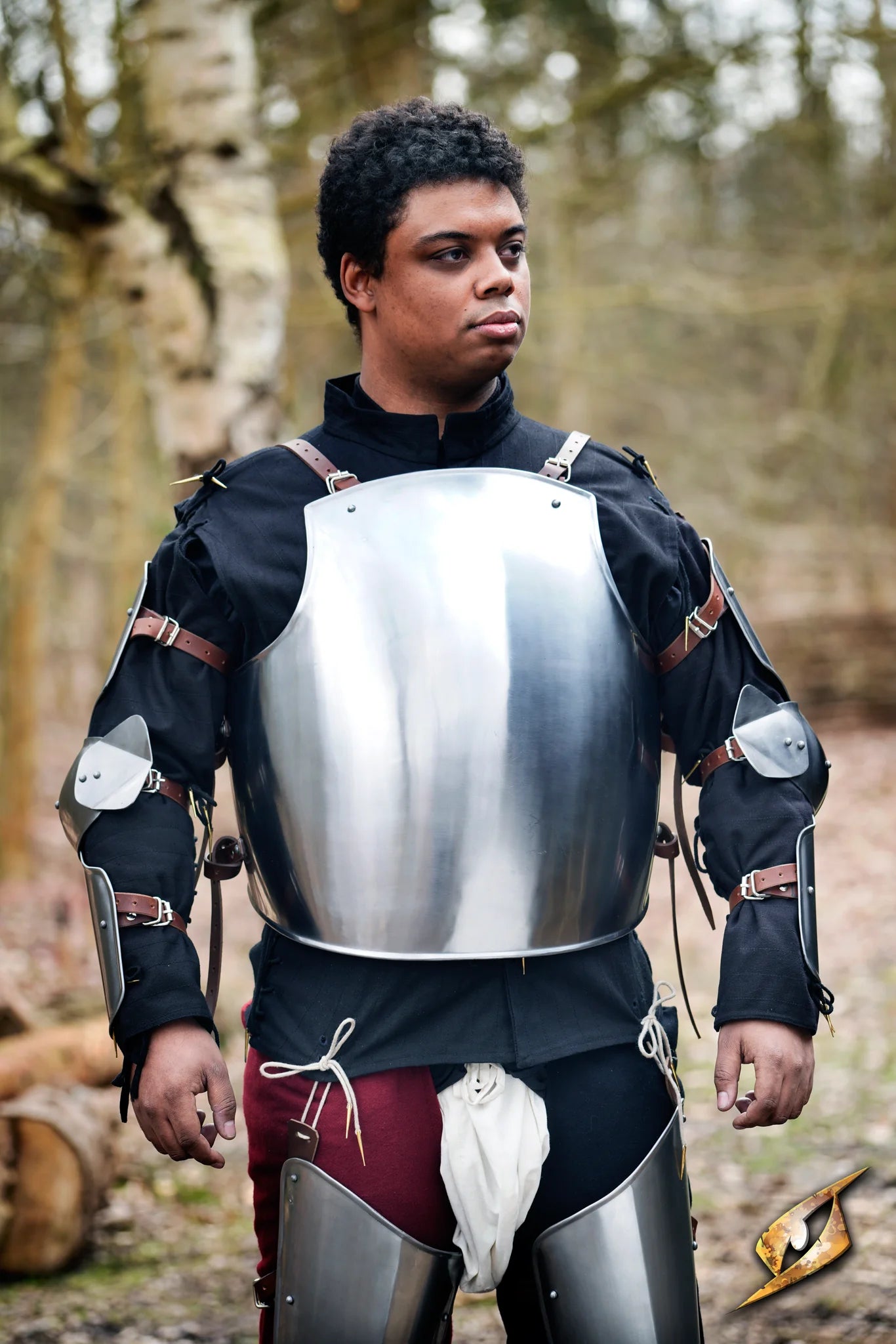
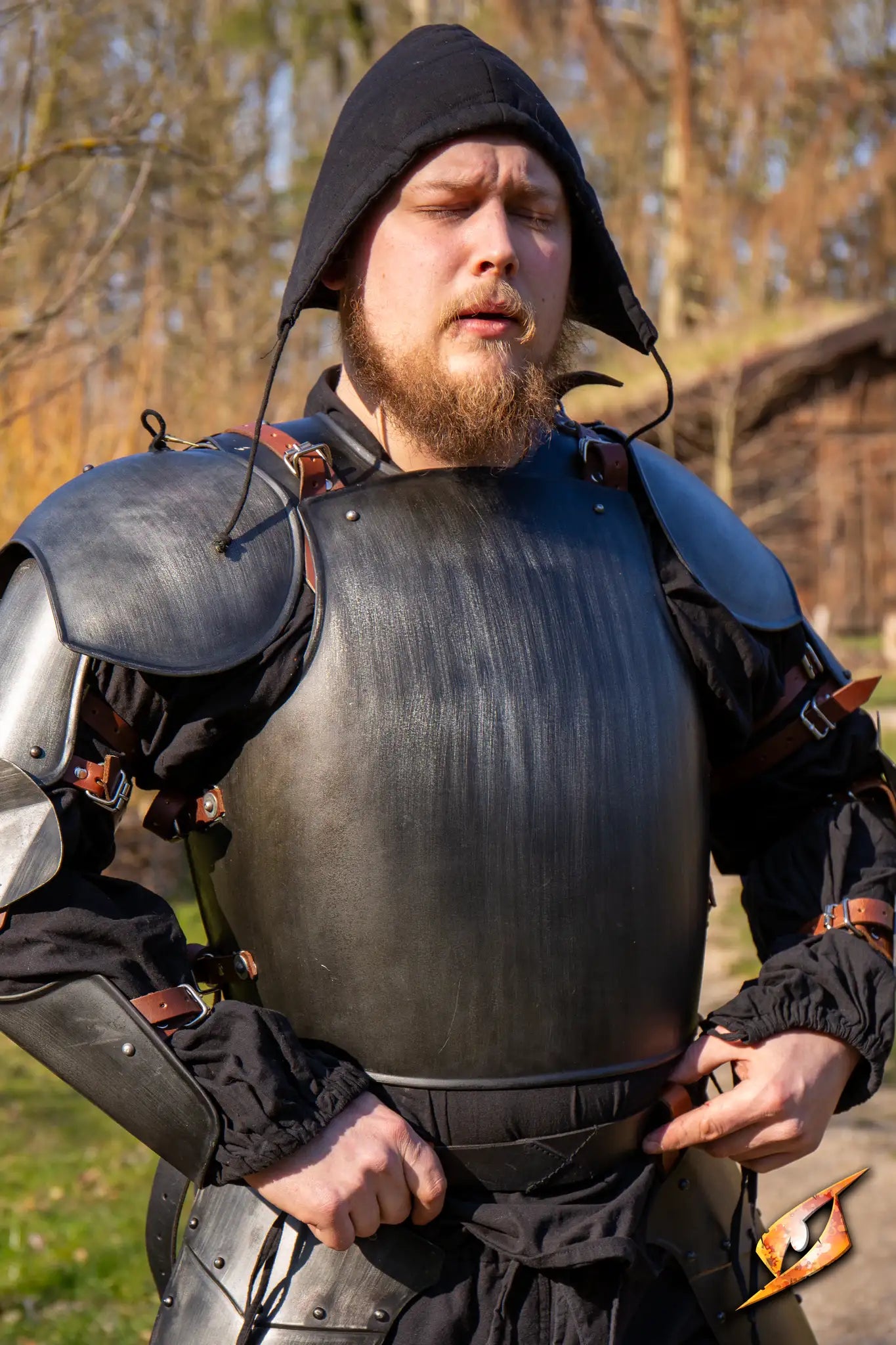
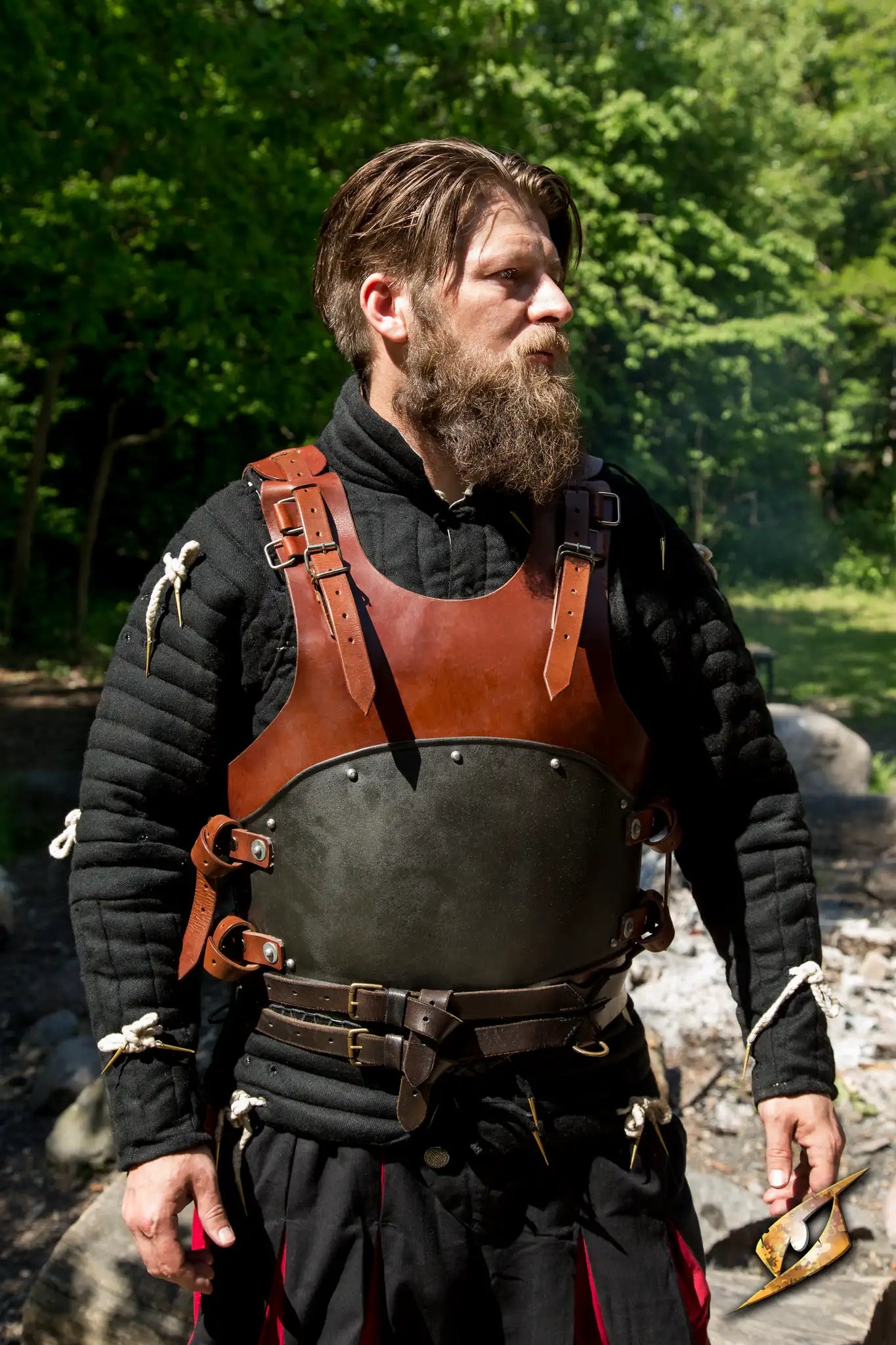
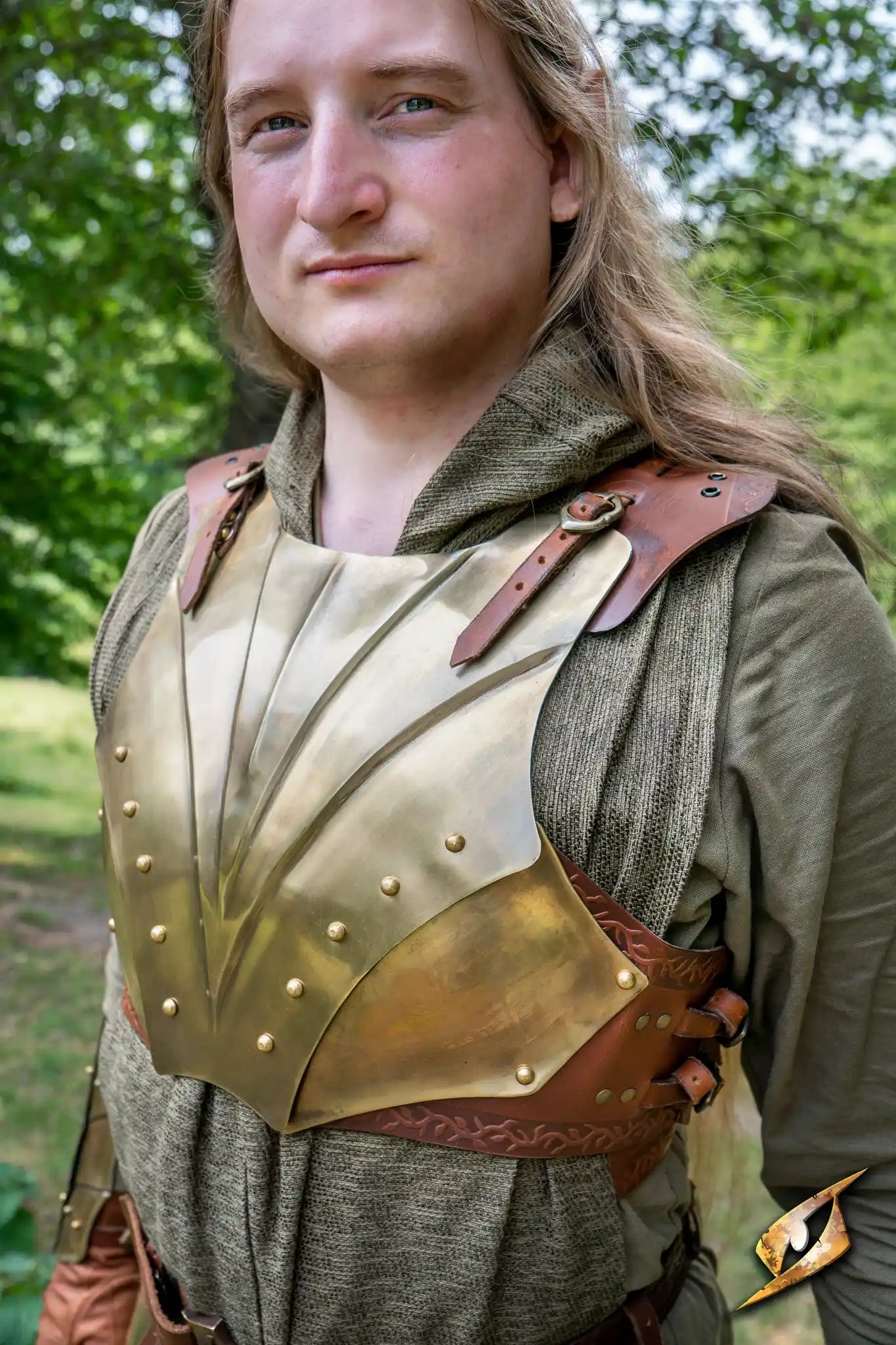
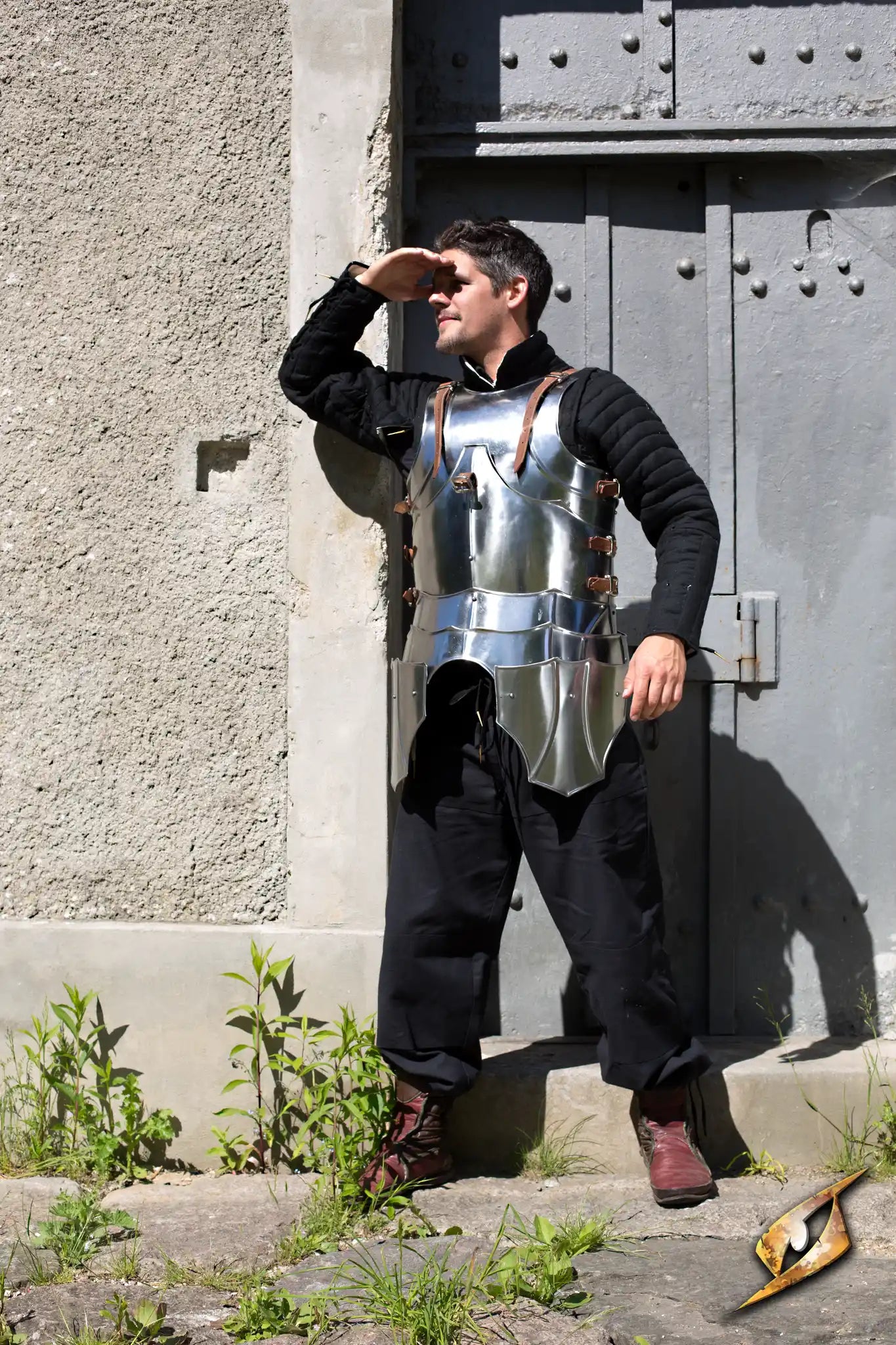
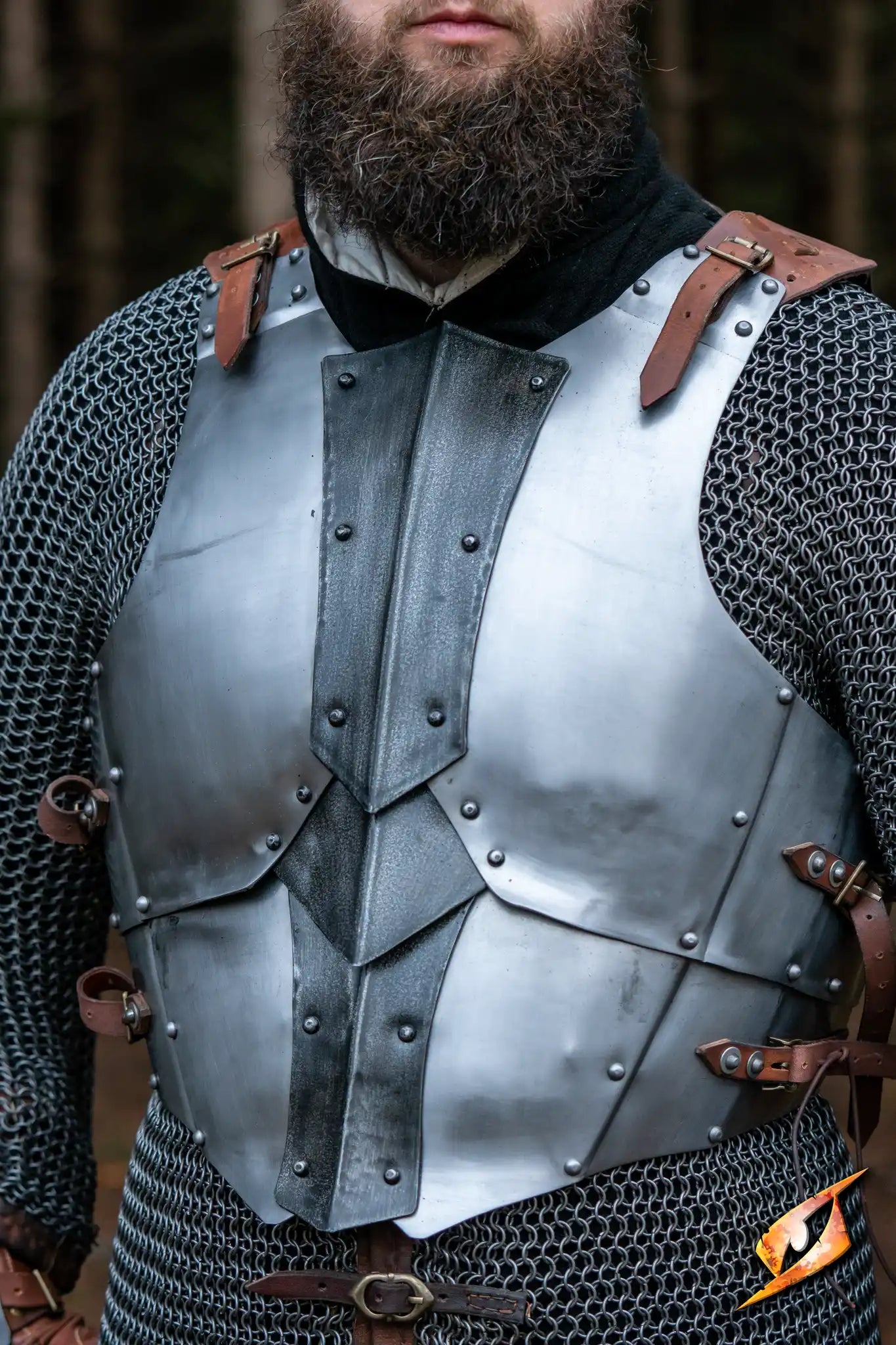
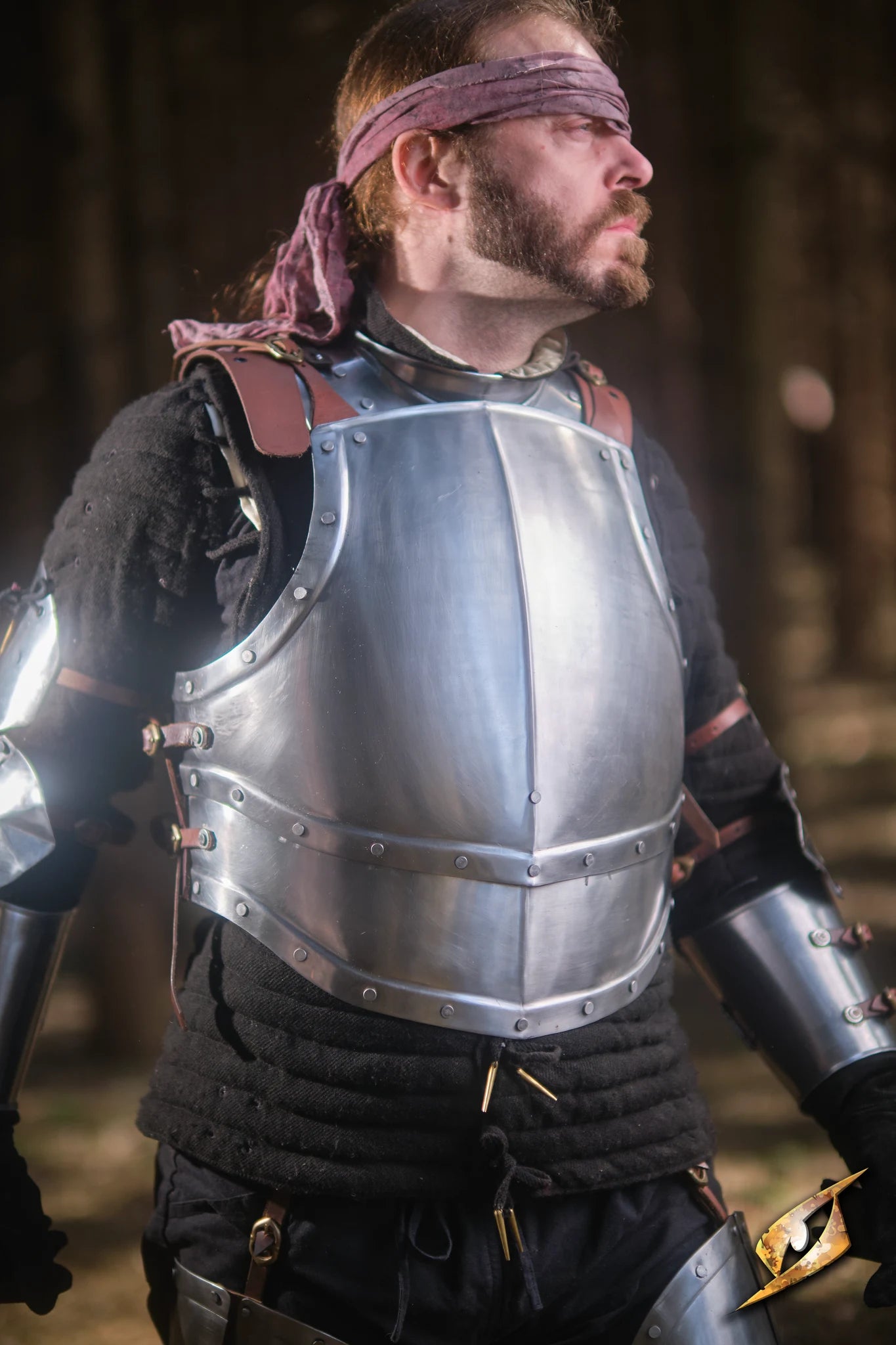
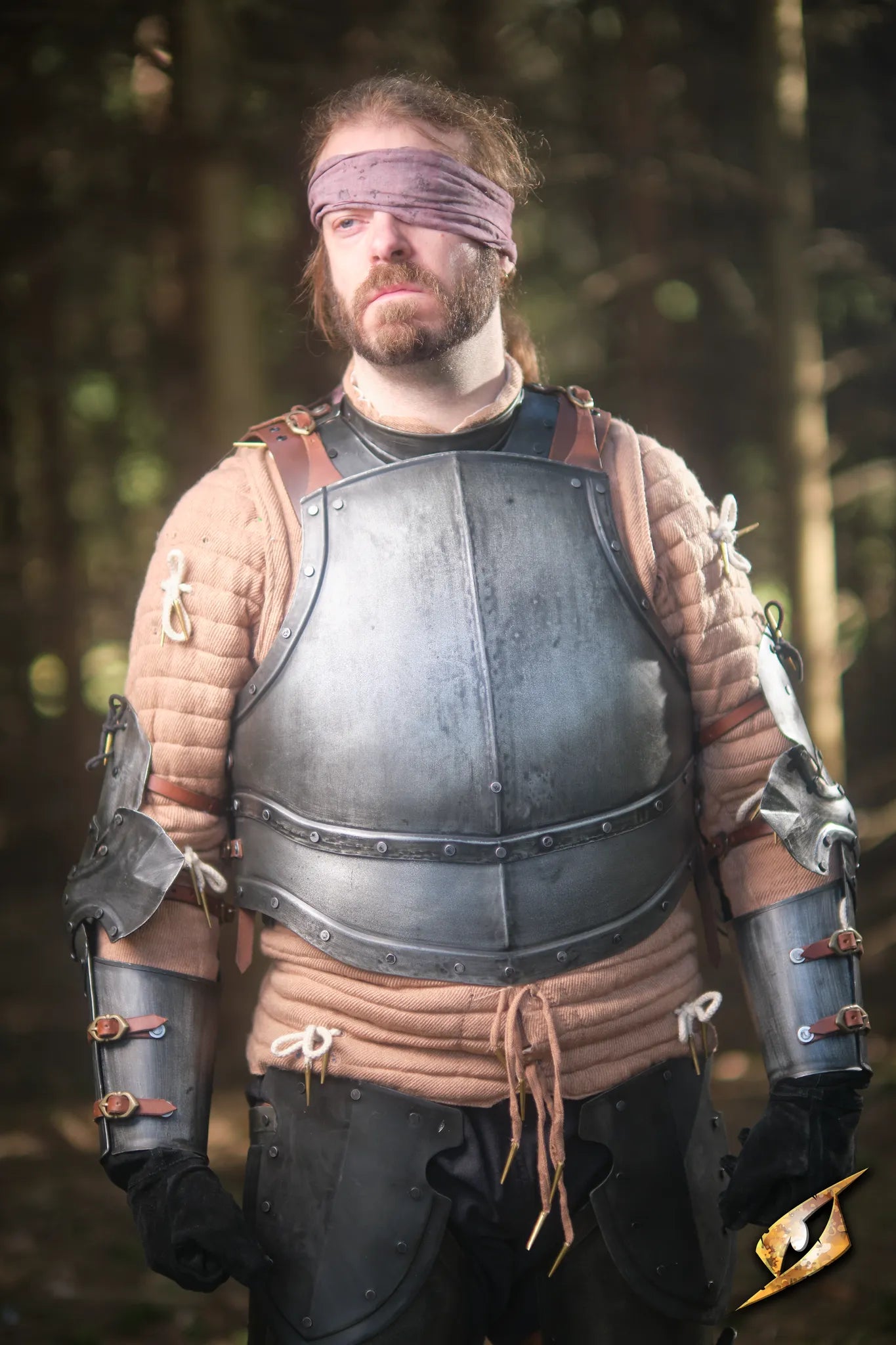
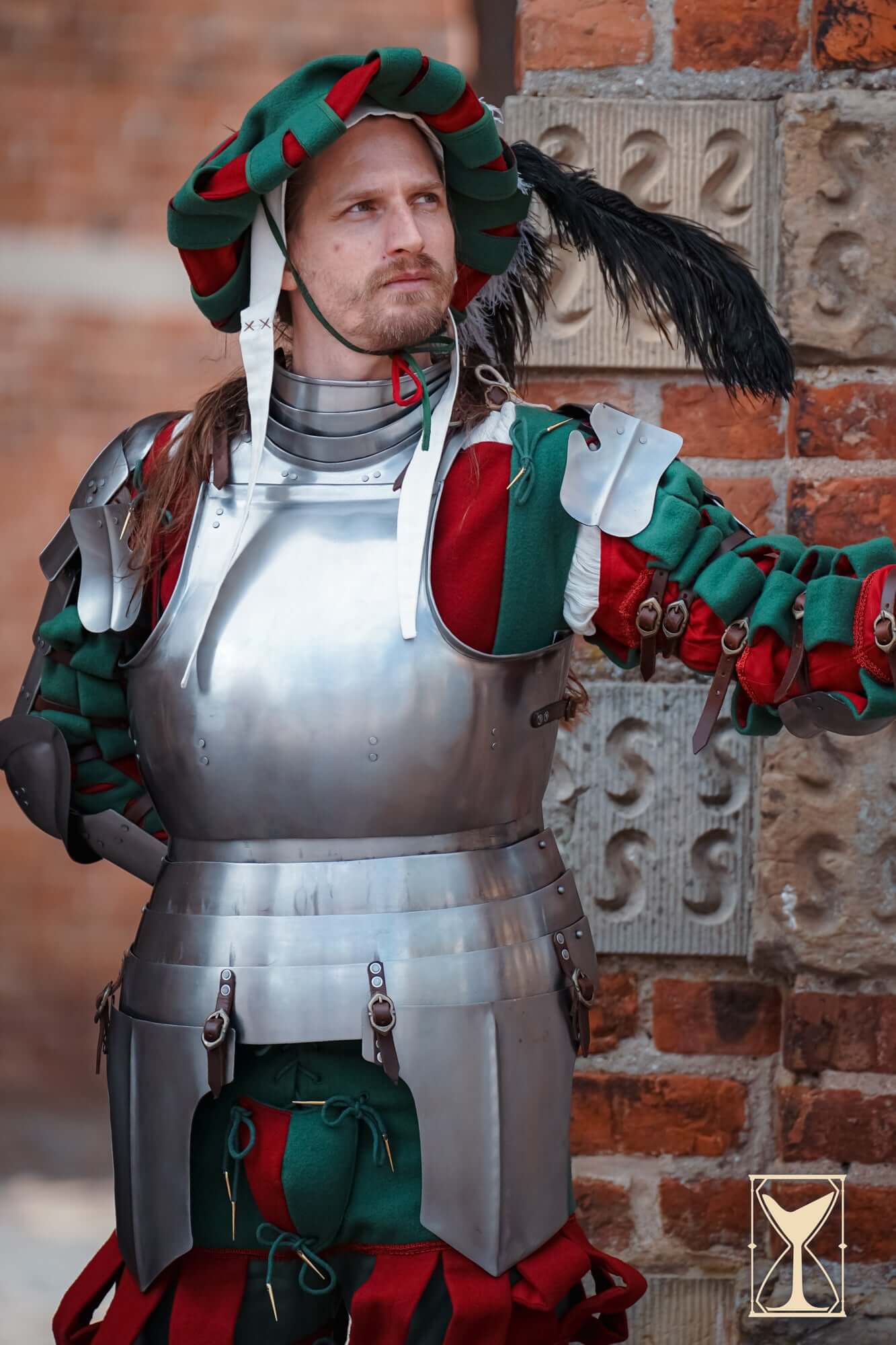
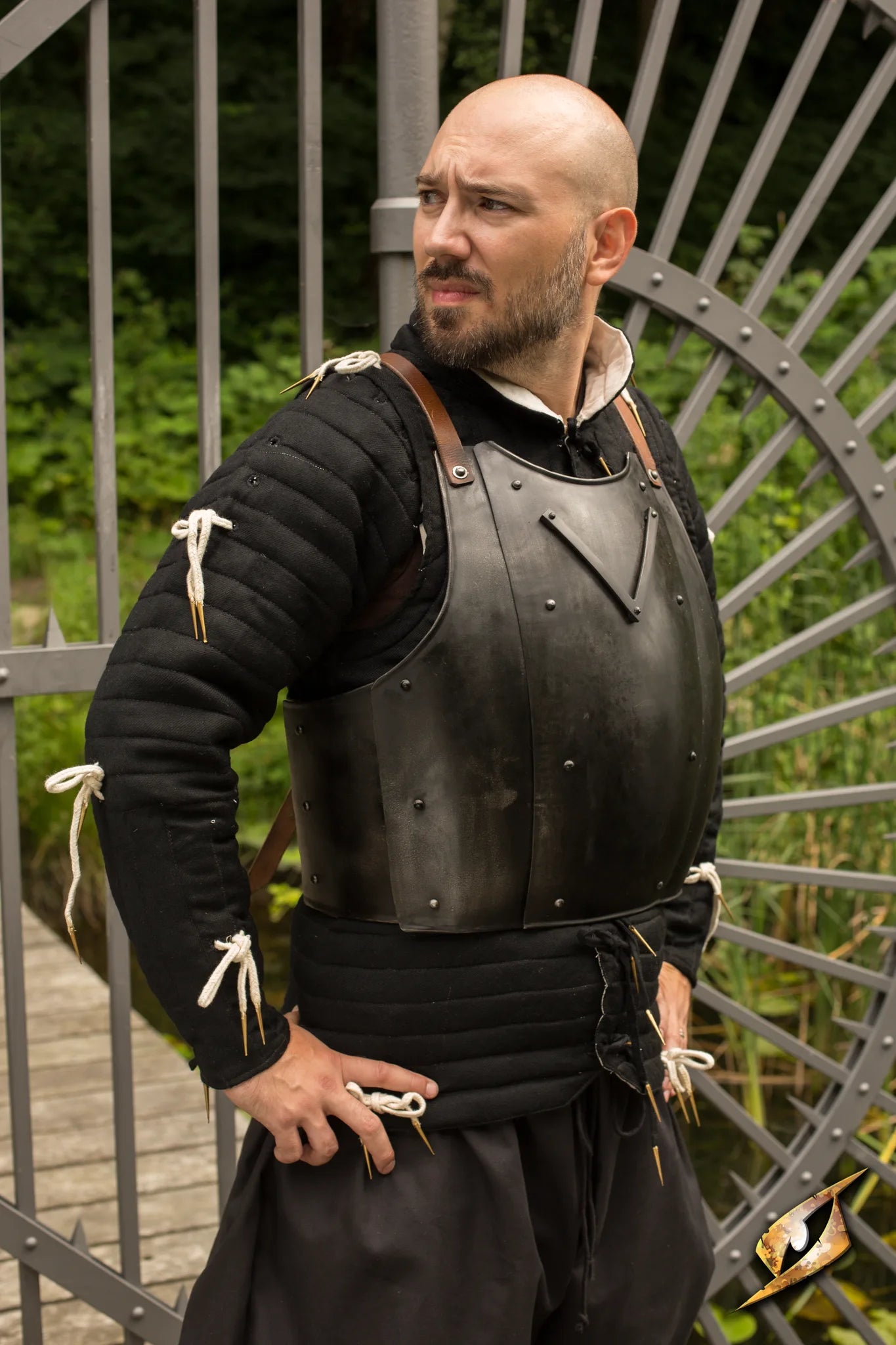
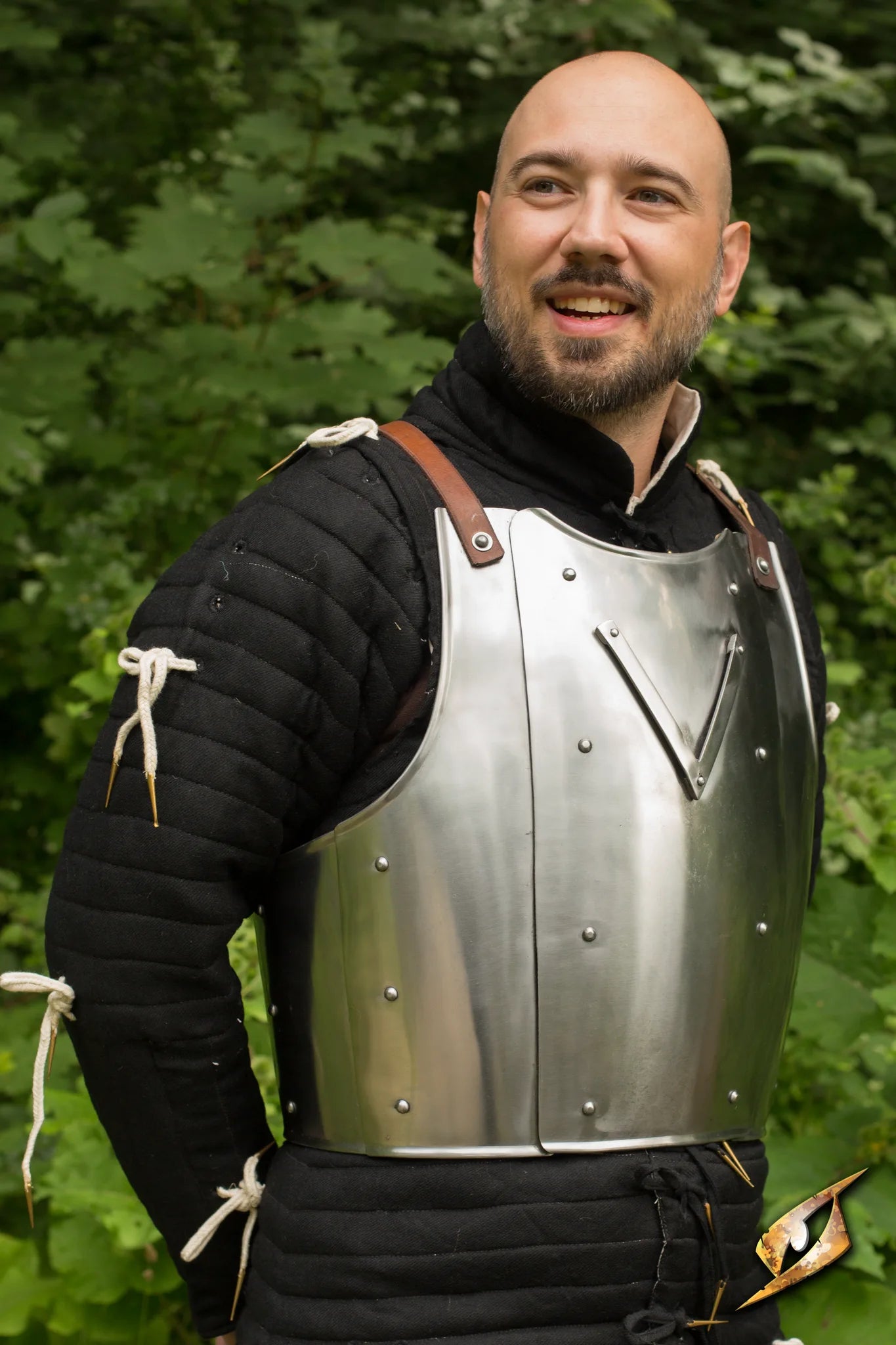
A cuirass is torso armor built from two steel plates, one shaped to the chest and one to the back, strapped together at the shoulders and sides so they enclose the body as a single shell. It covers everything vital and leaves your arms and legs free to fight, which is why it has been the backbone of a harness for seven hundred years.
Every cuirass here comes as the complete pair, in steel, sized XS to 3XL to be worn over padding.
Start with the fit
Measure your chest wearing the gambeson you actually fight in, not bare. Steel is sized to go over padding, and measuring without it is the most common sizing mistake there is. Take that number to the size guide. Most of this range uses paired sizes, S/M, M/L, L/XL and 2XL/3XL, so each one covers a span rather than a fixed measurement. If you sit at the top of a span, go up.
Fit decides how heavy a cuirass feels, far more than the number on the spec sheet. Sized right, the plates rest on your torso and the load spreads around you. Sized small, the weight hangs off your shoulders, and you will know about it by mid-afternoon.
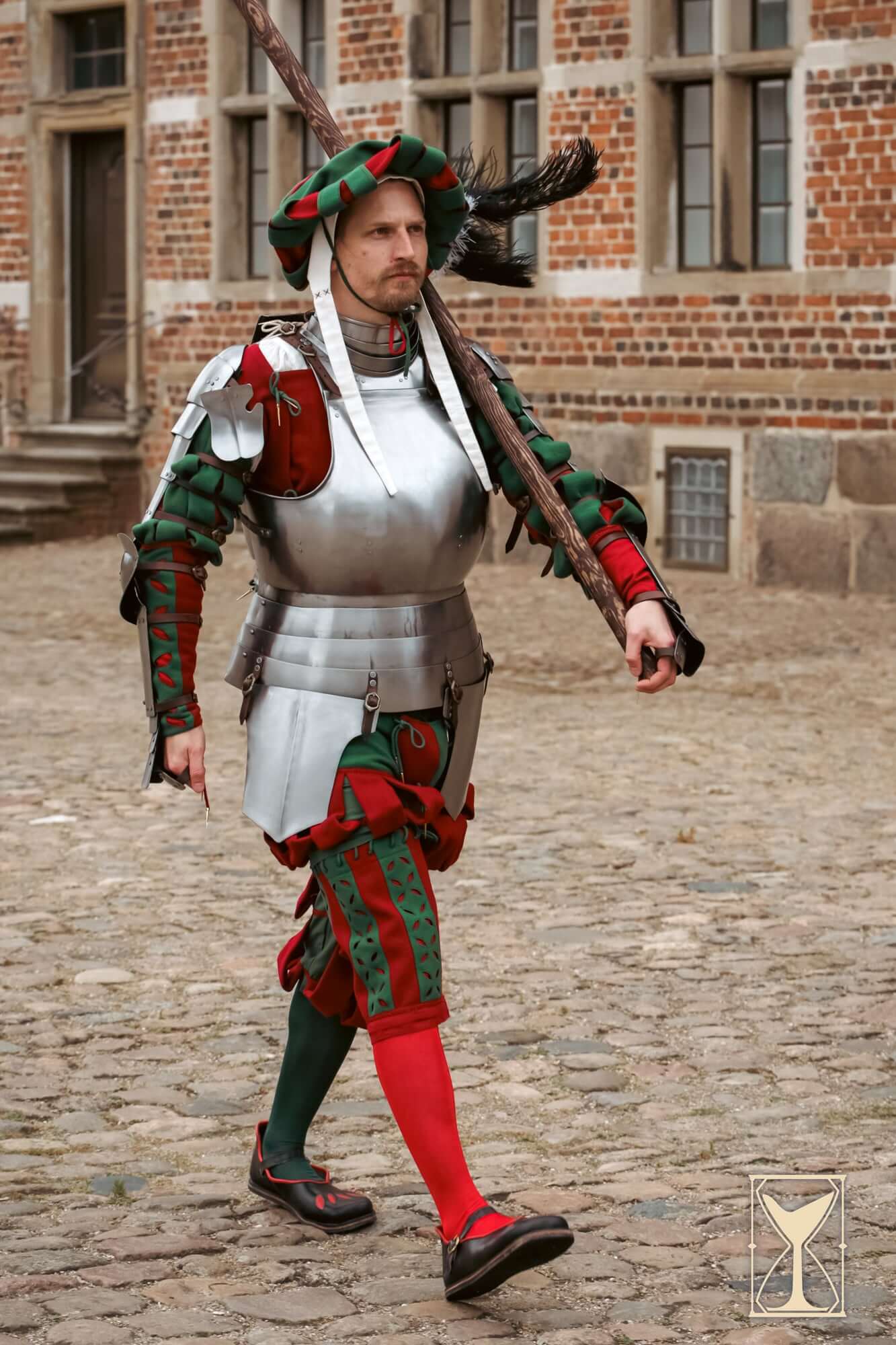
One thing catches people out. A cuirass is meant to end around the navel, not at the waist. Historical pieces stopped there on purpose, because plate that reaches the hips stops you leaning forward, back or sideways, and a fighter who cannot bend is a fighter who gets hit. The gap below is covered by faulds and tassets rather than by more breastplate.
Then the finish
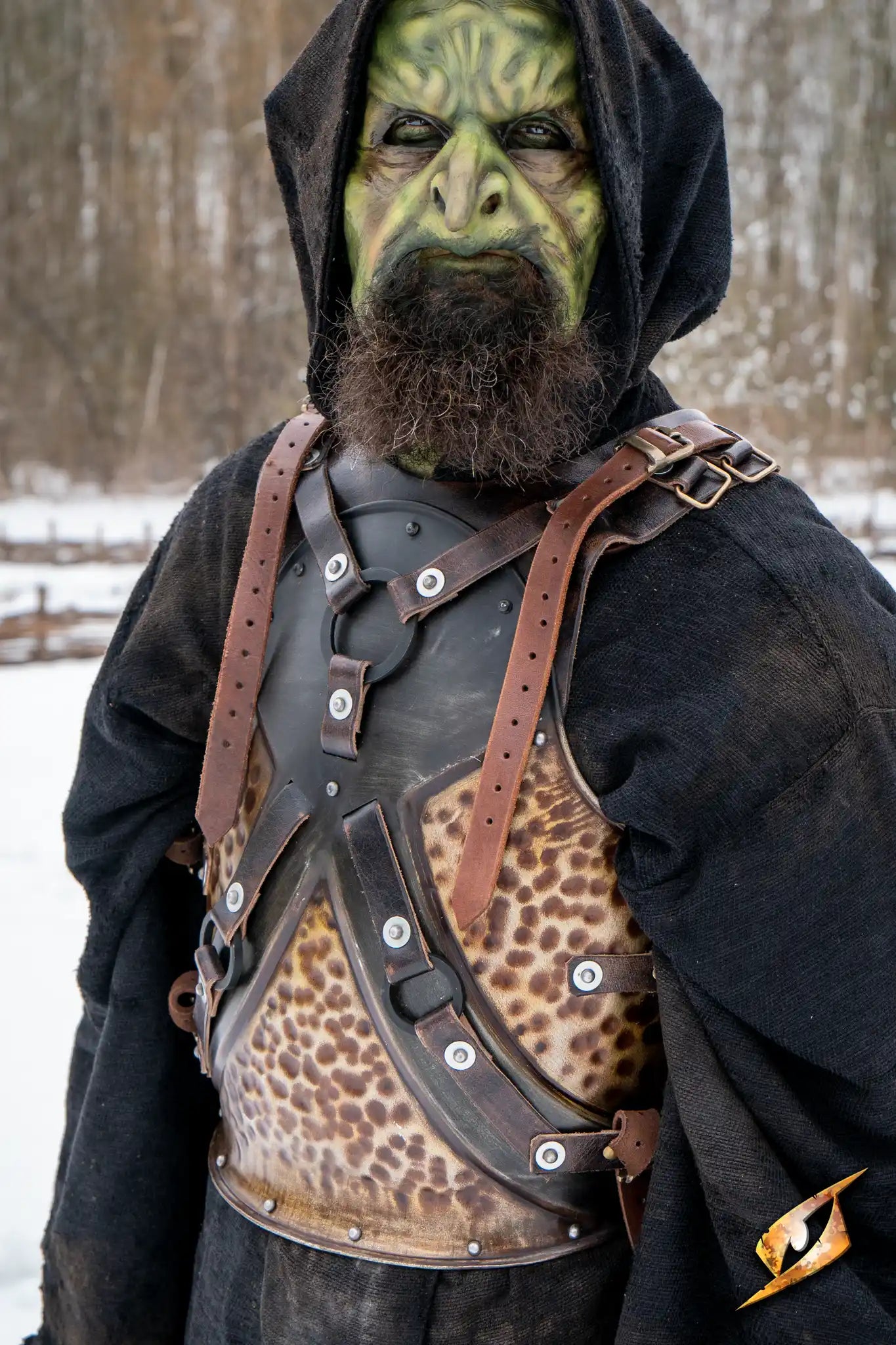
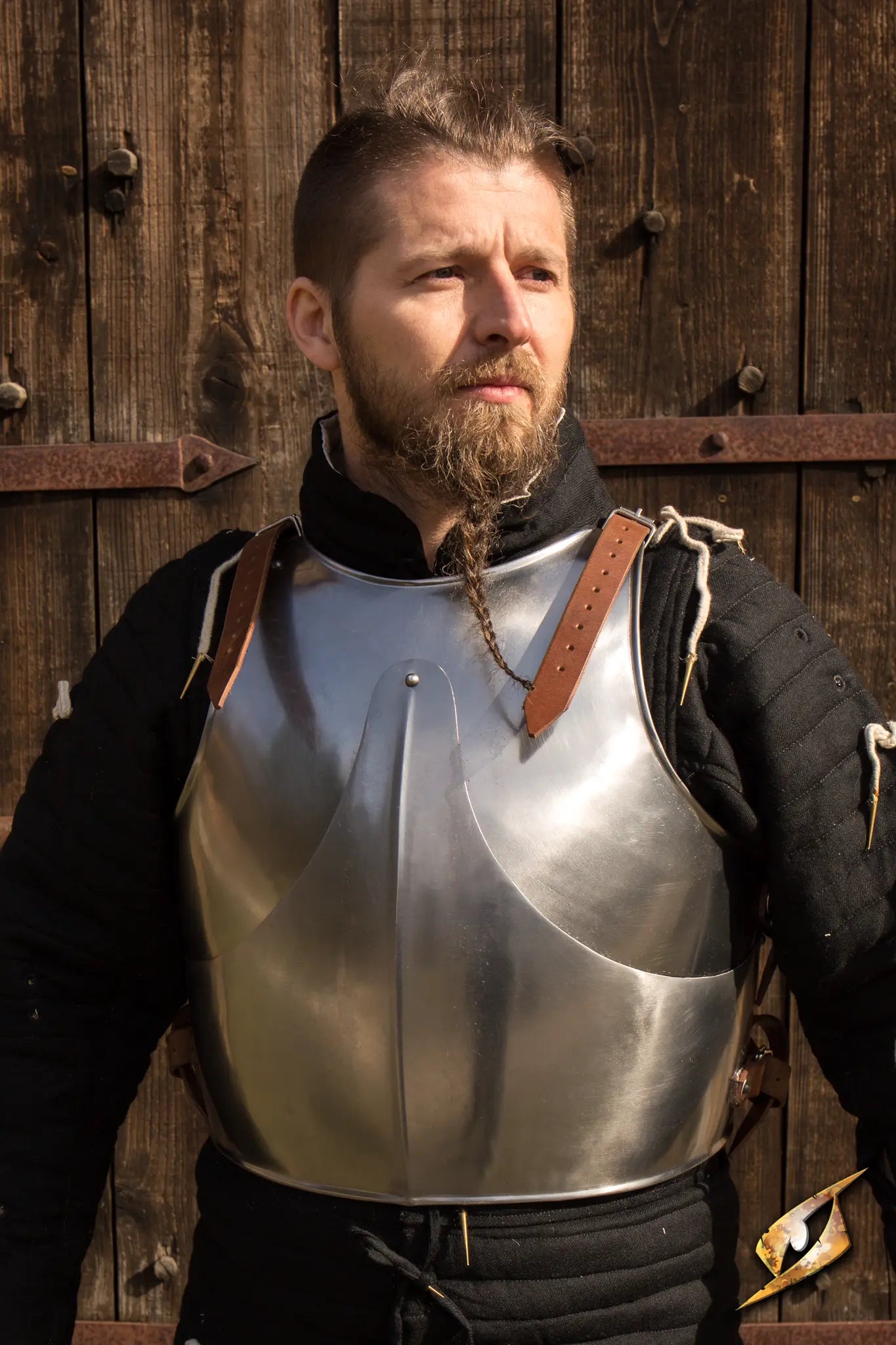
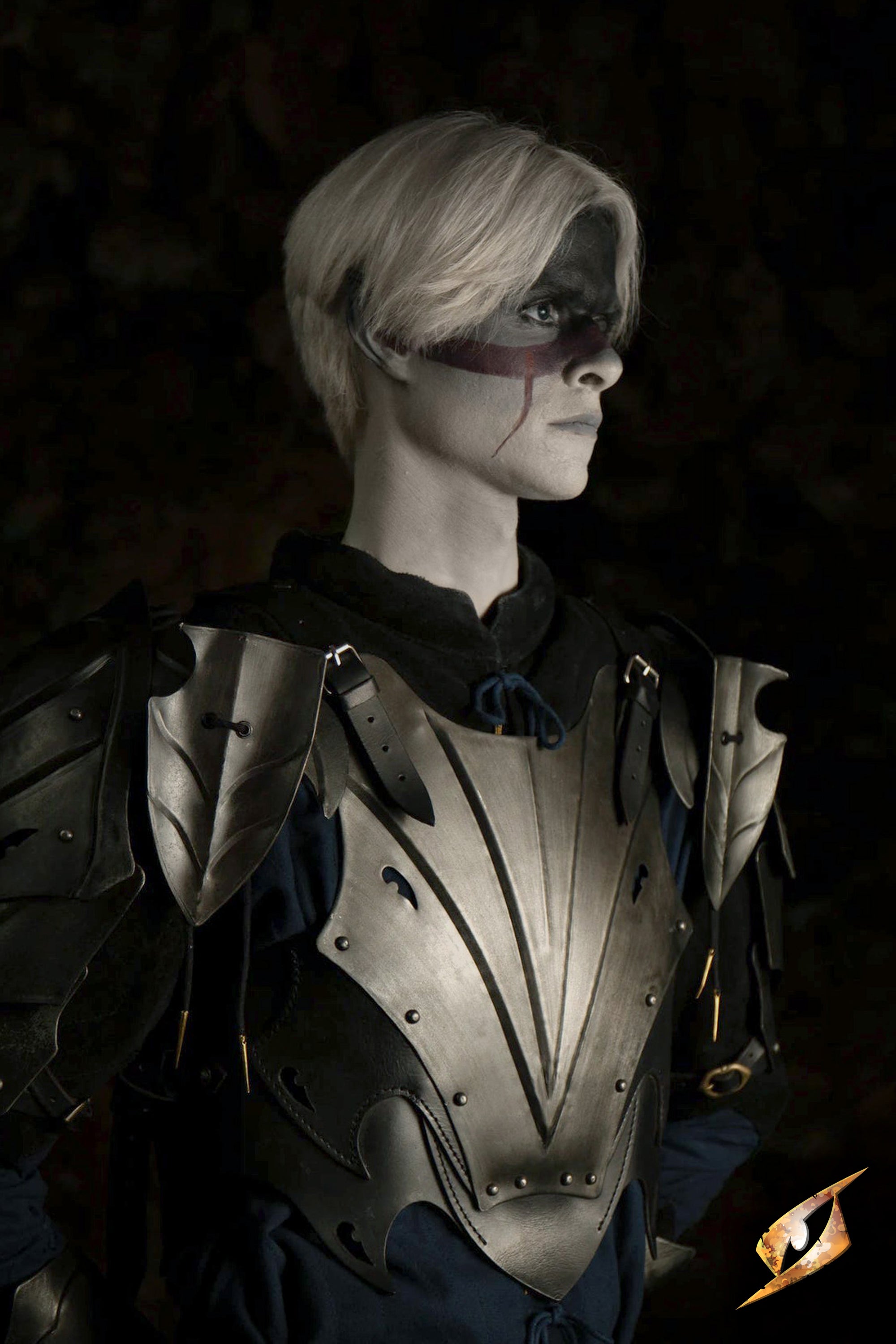
Finishes run from polished steel and matte polish through Epic Dark, ancient brass and rust patina. Protection is identical across all of them. What changes is upkeep and how you read to everyone looking at you.
Polish throws light and photographs well, which makes it the pick for stage, parade and faire work, and it shows every fingerprint, so it wants wiping down more often. Epic Dark, brass and patina finishes absorb field marks instead of displaying them. Armor that spends its weekends being hit tends to look better a year in when it started darker.
Building the kit around it
Most people buy the cuirass first and work outward, because nothing else changes a silhouette as fast. The order that follows is roughly the order history arrived at.
Armorers worked out early that plate left openings at the shoulder, and began riveting small plates in front of them to close the gap. Those grew into pauldrons. A gorget does the same job at the throat.
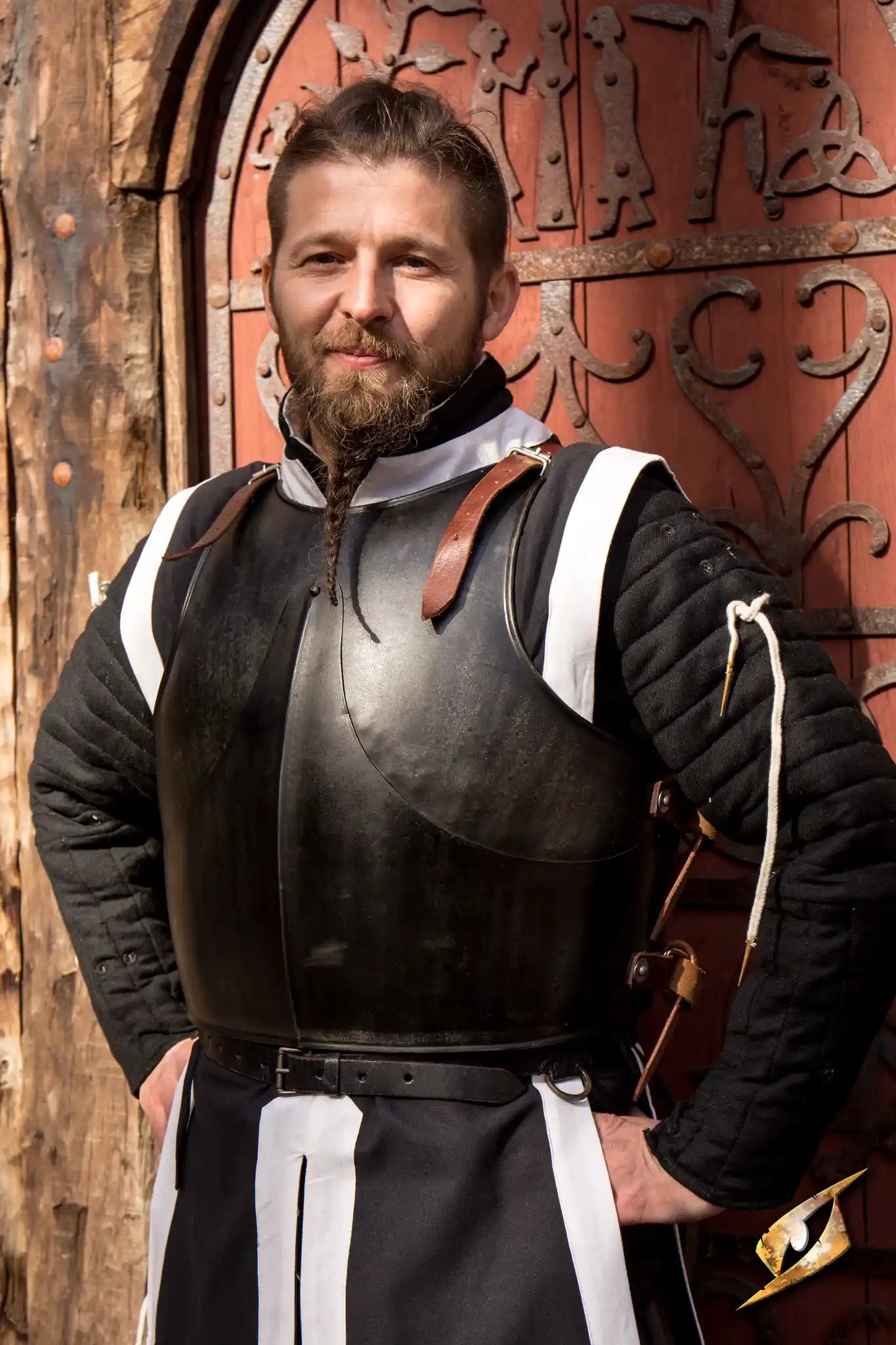
Likewise, surcoats and tabards evolved, to follow the tight fit and round shapes of the cuirass, rather than classic heraldic tabards, simply falling fro the shoulder down, showing crest and heraldry.
Why the design never really changed
The word reaches us through the Old French cuirace and the Latin corium, meaning leather, because the first ones were boiled hide rather than metal. Greece and Rome moved to bronze and shaped it to an idealized torso. Plate became established in Europe during the 14th century, and by the close of it the cuirass was standard for anyone who could afford one.
After that, most of the changes were surface. Mid 15th century breastplates were built in two overlapping pieces joined by a sliding rivet, buying back some of the flexibility that plate had taken away. Around 1550 a vertical ridge called the tapul appeared, drifted lower over the following decades, and left the breastplate with the pea pod bulge behind the names peascod and goose belly. Underneath all of it, the same two plates.
And it outlasted everything else. Helmets, gauntlets and leg harness fell away while the cuirass stayed. Foot soldiers in the 17th century wore corslets of breast and back, and their mounted colleagues wore heavier versions of the same idea. European heavy cavalry still rode in steel into the First World War, where the French covered theirs in canvas to kill the shine. Household and papal guards wear it to this day.
Seven hundred years of armorers tried alternatives and came back to two curved plates, because the engineering holds up. The torso barely flexes next to a shoulder or a knee, so a rigid shell costs almost nothing in movement there. A curved plate turns a square hit into a glancing one, which is geometry doing the work rather than mass. And splitting the shell in two is what lets it open, close around different bodies, and carry its own weight.
Before you order
Can I wear it over normal clothes?
Yes. Over padding, over mail, or over a shirt. That is part of why one cuirass covers a battle, a photo shoot and a fair weekend.
Is steel allowed at my event?
Reenactment groups and Renaissance Faires expect it. LARP rules vary, and some systems cap metal armor or ask for it to be covered, so check your event’s rules first.
How do I keep it from rusting?
Dry it before it goes away, keep a light film of oil on bare steel, and store it loose rather than sealed in a bag where moisture gets trapped. The Care Guide has the rest
What if it does not fit when it arrives?
You have 30 days to send it back. Orders leave the warehouse in 1 to 2 business days, from Denmark or the USA depending on your address.