
Will a Canvas Tent Keep You Dry in Heavy Rain?
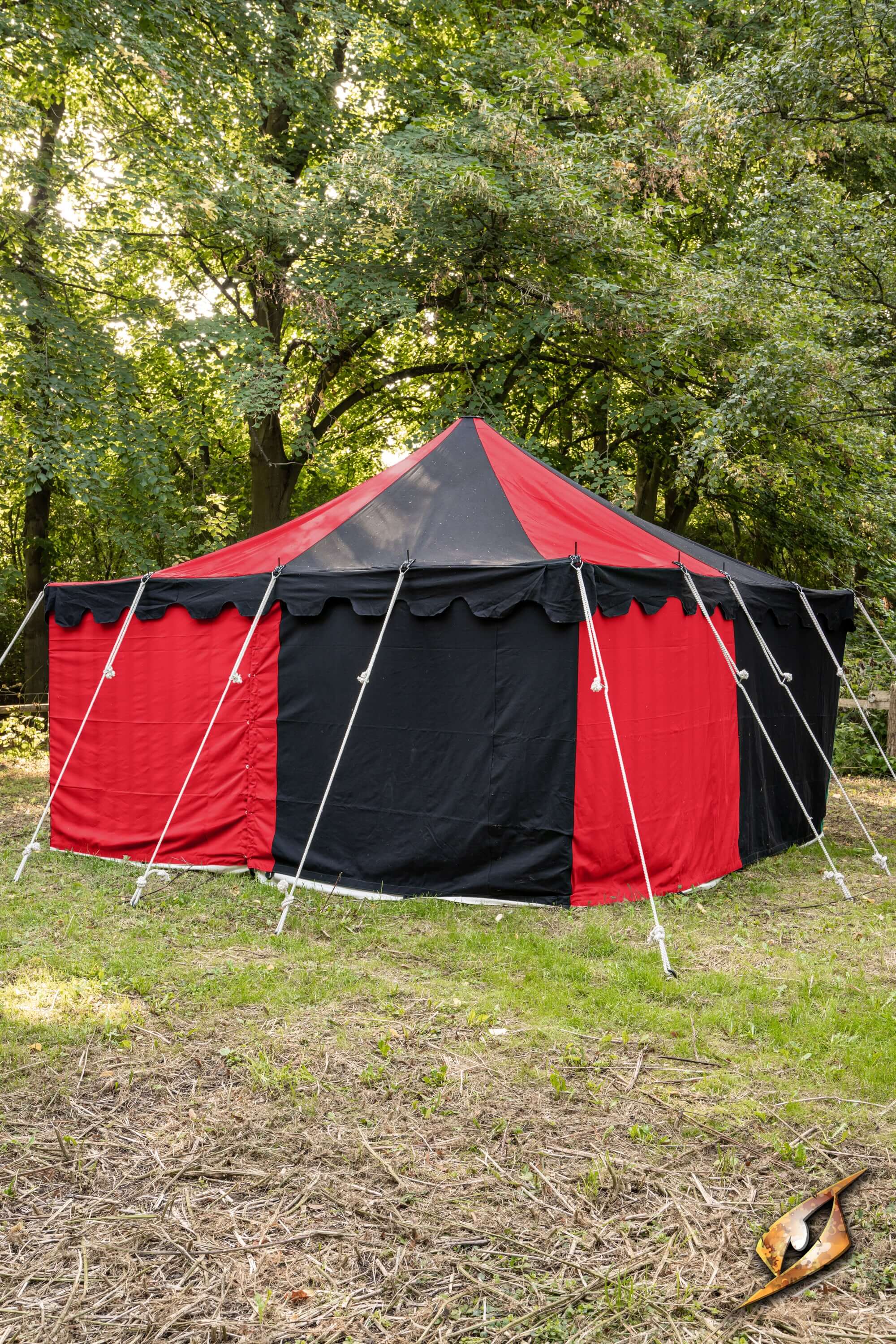
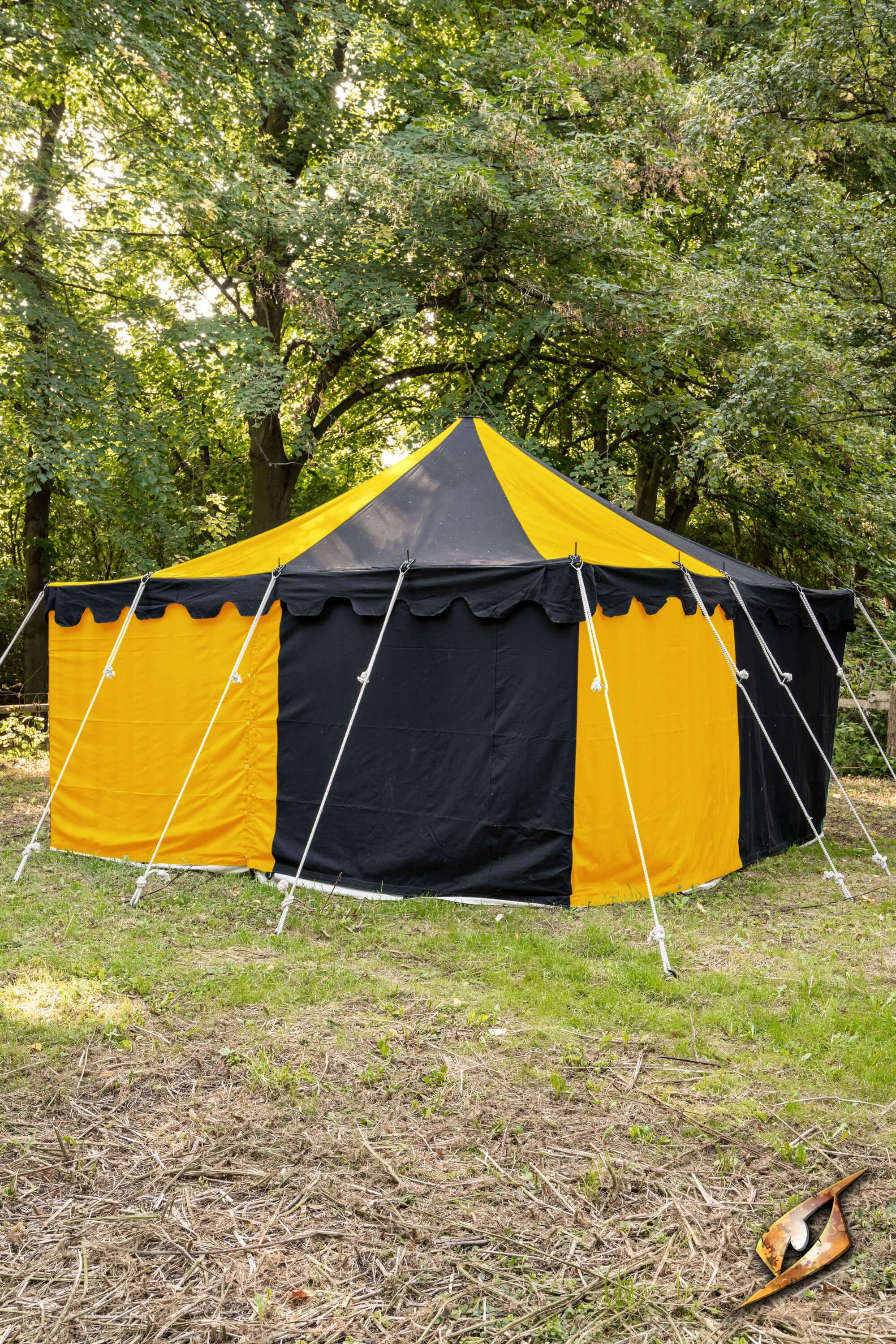
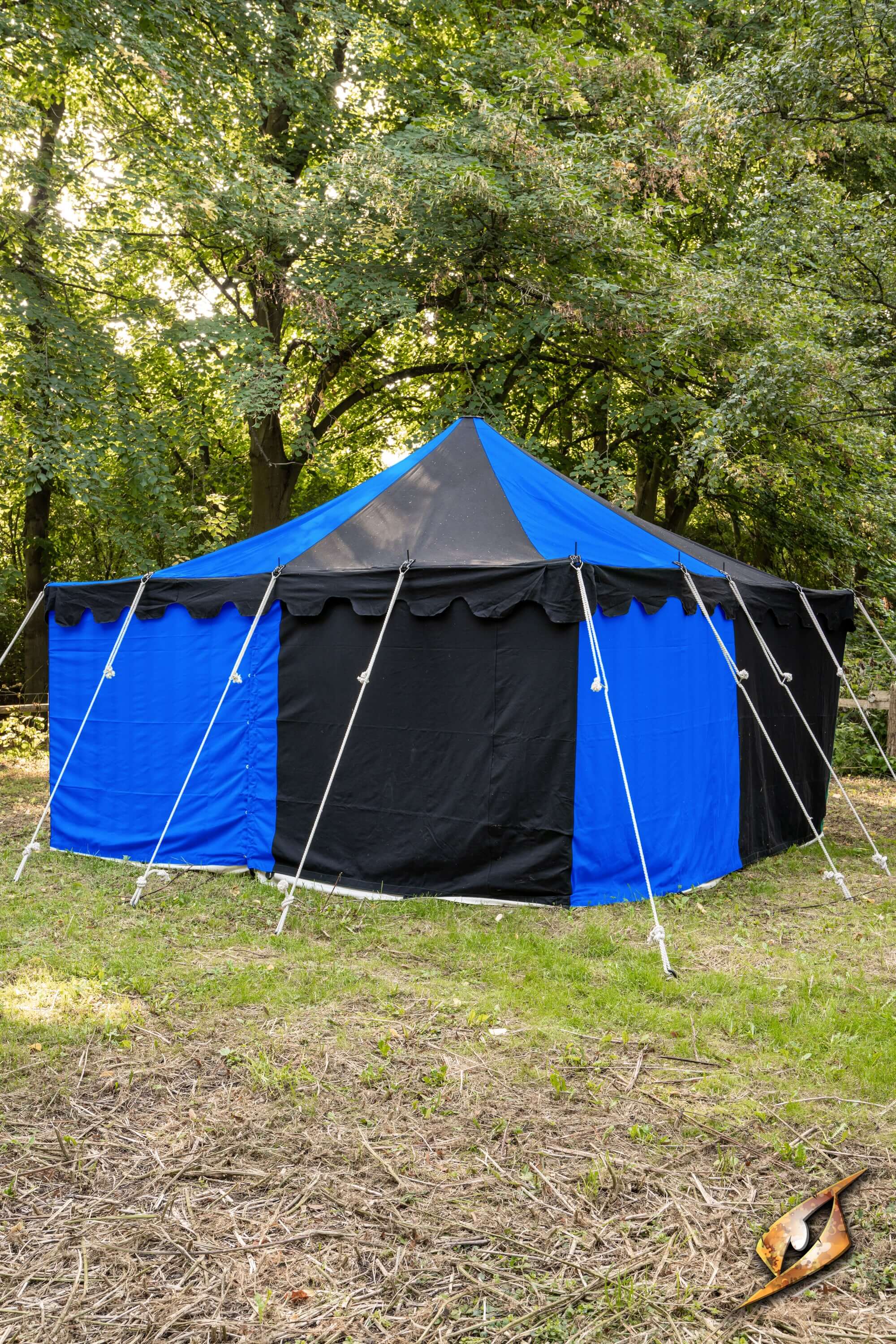
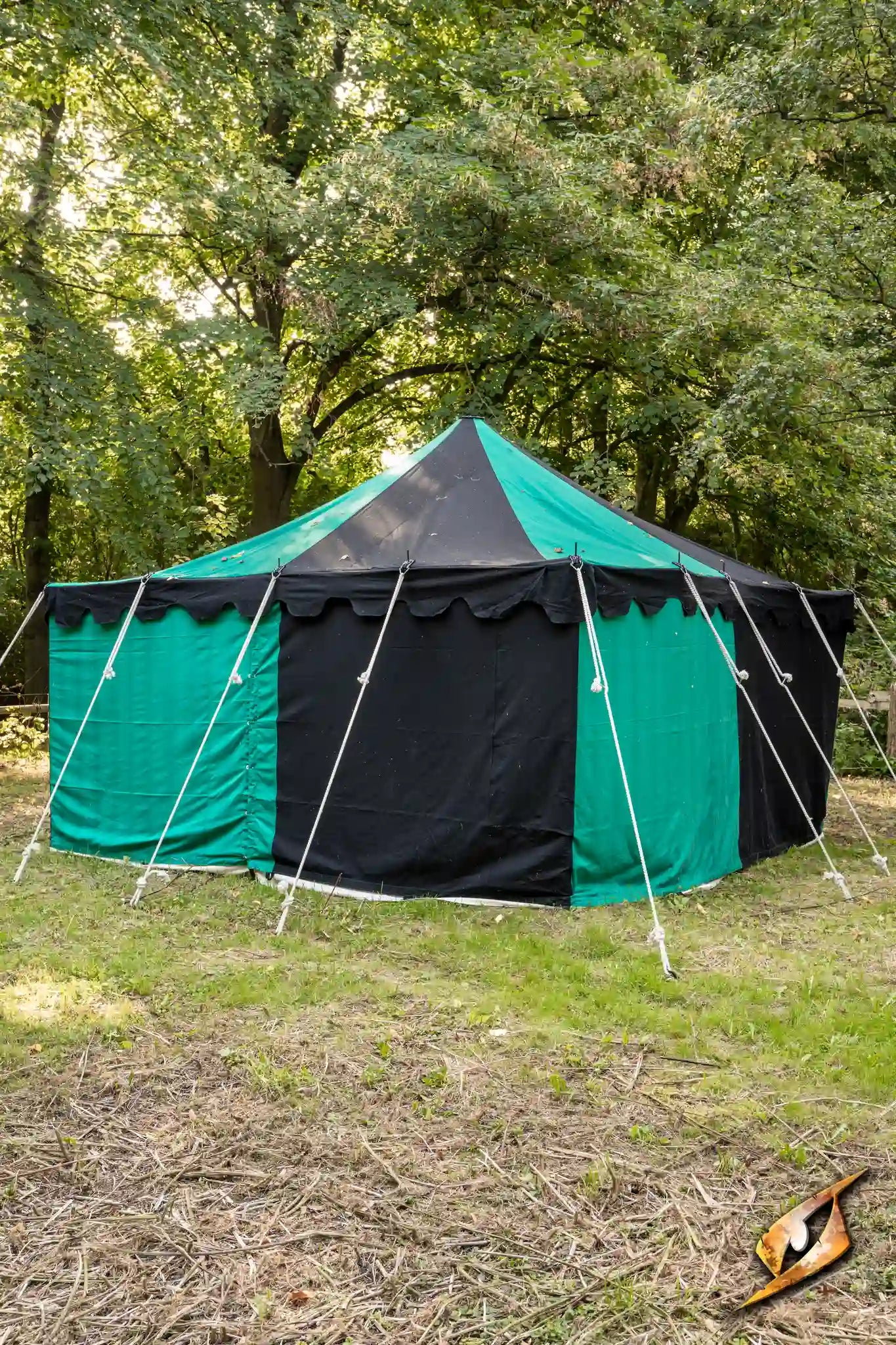
The sun sets, the campfire crackles, and your medieval tent stands proudly at the edge of camp, its colours true to your character and with room for your whole fellowship. Then the clouds roll in, and one question creeps in: will it hold when the rain comes?
Read on, and we’ll answer that and the other questions you might have before you pitch your canvas home.

Short Answer
A well-made canvas tent will keep you dry through a full weekend of rain, including heavy downpours, but it is water-repellent rather than waterproof. It does not block water the way a plastic sheet does. It swells shut, and it only works properly if you understand that mechanism and cooperate with it.
Almost every "my canvas tent leaked" story comes down to one of three things:
- the tent was never weather proofed,
- somebody touched the inside, or
- the pitch was wrong.
All three are avoidable.
How canvas actually keeps water out
Canvas doesn't block rain with a waterproof coating — the cotton fibers themselves absorb water, swell, and close the gaps in the weave until the fabric is effectively watertight.
Epic Armoury's tents are pre-treated with paraffin, which acts as an additional water-repellent mechanism. Wax sits on and in the fibers and makes water bead off the surface from the first drop, rather than waiting for the weave to swell shut. It's the same logic as a waxed jacket: the coating does the immediate work, while the fabric underneath is still the backup system for anything that gets past it.
Dry cotton canvas is a tightly woven natural fiber with visible gaps between the threads; hold it up to the light and you can see them. When rain hits it, those fibers take up water and expand, and as they expand the gaps close.
Synthetic tents, by contrast, have no fiber-swelling backup at all: polyester doesn't absorb water, so a coated synthetic tent is waterproof only as long as its coating holds, with nothing underneath it if that coating fails.
- A paraffin-treated tent is less prone to the "misting through" effect that a bare, unweathered canvas tent can show in its first few minutes of rain, because the wax is already beading water on the surface.
- The canvas has to be free to swell. Anything pressing against it from the inside interferes with that process (more on this below).
Should you still weather a pre-treated tent?
Yes — one soak-and-dry cycle before first use is still worth doing, because the paraffin finish is applied to the fabric and doesn't coat the inside of the needle holes along every seam.
Weathering means soaking a new canvas tent and letting it dry, at least once, so the needle holes along every seam close before you depend on it in real weather.
This is the step most often skipped, and the one most responsible for first-weekend leaks. Stitching perforates the fabric — every seam is a line of needle holes, and on a new tent those holes are still open. Cotton only closes them by swelling around the thread once it has been thoroughly wetted.
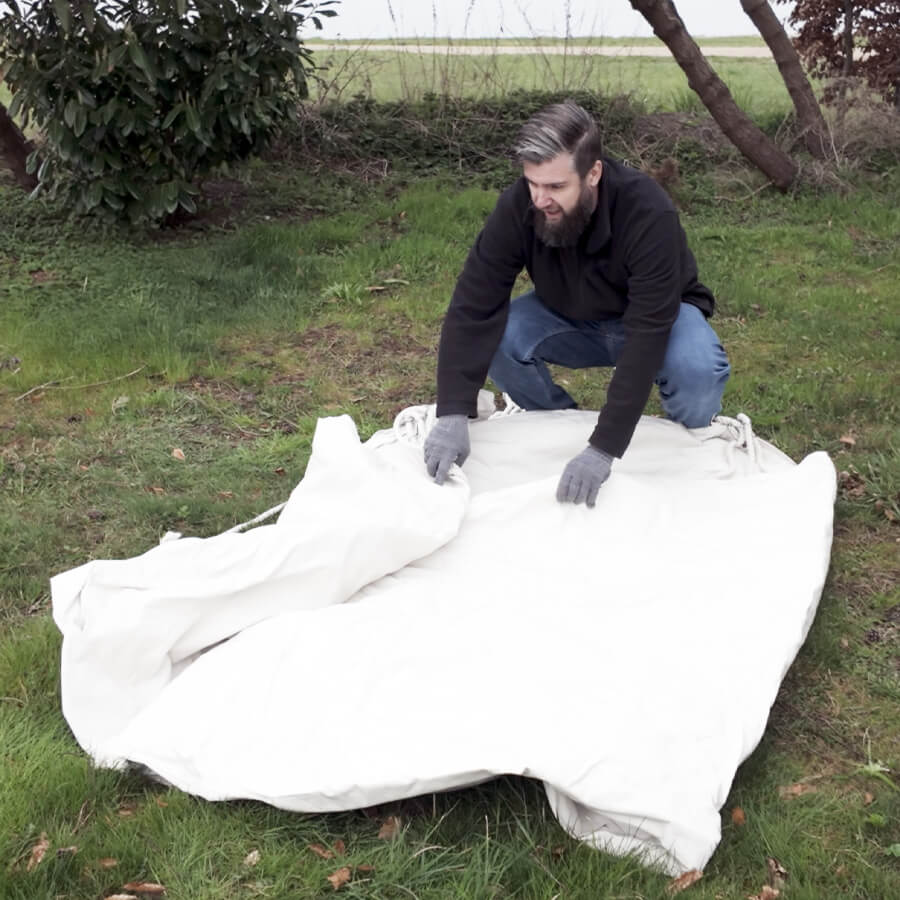
1. Pitch it fully: Set it up completely in a yard or open space, with guy lines tensioned as you would at a real event.
2. Soak it completely: Use a hose, or leave it out through a rainy day. Don't be gentle — pay particular attention to seams, corners, and reinforcement panels.
3. Let it fully dry: Leave it pitched until it's completely dry, inside and out.
4. Repeat if needed: If the first soak showed any misting at the seams, a second cycle is worth doing. On a factory-treated tent this is usually unnecessary.
Decoding canvas tent specs
What the tent canvas gsm tells you
Canvas tents are rated by fabric weight in grams per square meter (gsm), typically 280–450 gsm; heavier canvas absorbs more water, resists prolonged rain better, and lasts longer, at the cost of weight and drying time.
More fiber in the weave means more material available to absorb and swell. Fabric in the mid-300 gsm range is a common general-purpose weight. Heavier canvas — around 400 gsm and up — suits long events, exposed sites, and a tent you plan to keep for decades.
The trade off is real. Heavier canvas costs more, is heavier to transport, and takes longer to dry. A large pavilion in heavy canvas is a serious lift when wet, which is worth thinking about before you buy rather than after.
Why hydrostatic head numbers undersell canvas tents
If you have shopped for modern tents you have seen hydrostatic head figures, given in millimeters of water column. Synthetic tents are marketed on them constantly.
Applied to cotton canvas, the number is close to meaningless. The test measures how much water pressure a fabric resists before water passes through, which suits a coated synthetic where the coating either holds or does not. Canvas seals by absorbing water, so a test that forces water through the fabric is measuring it during precisely the phase it is designed to pass through.
The practical result is that canvas often scores poorly on paper while outperforming its rating in the field. Comparing a canvas tent to a synthetic one on hydrostatic head alone will give you the wrong answer.
Medieval Canvas Tents
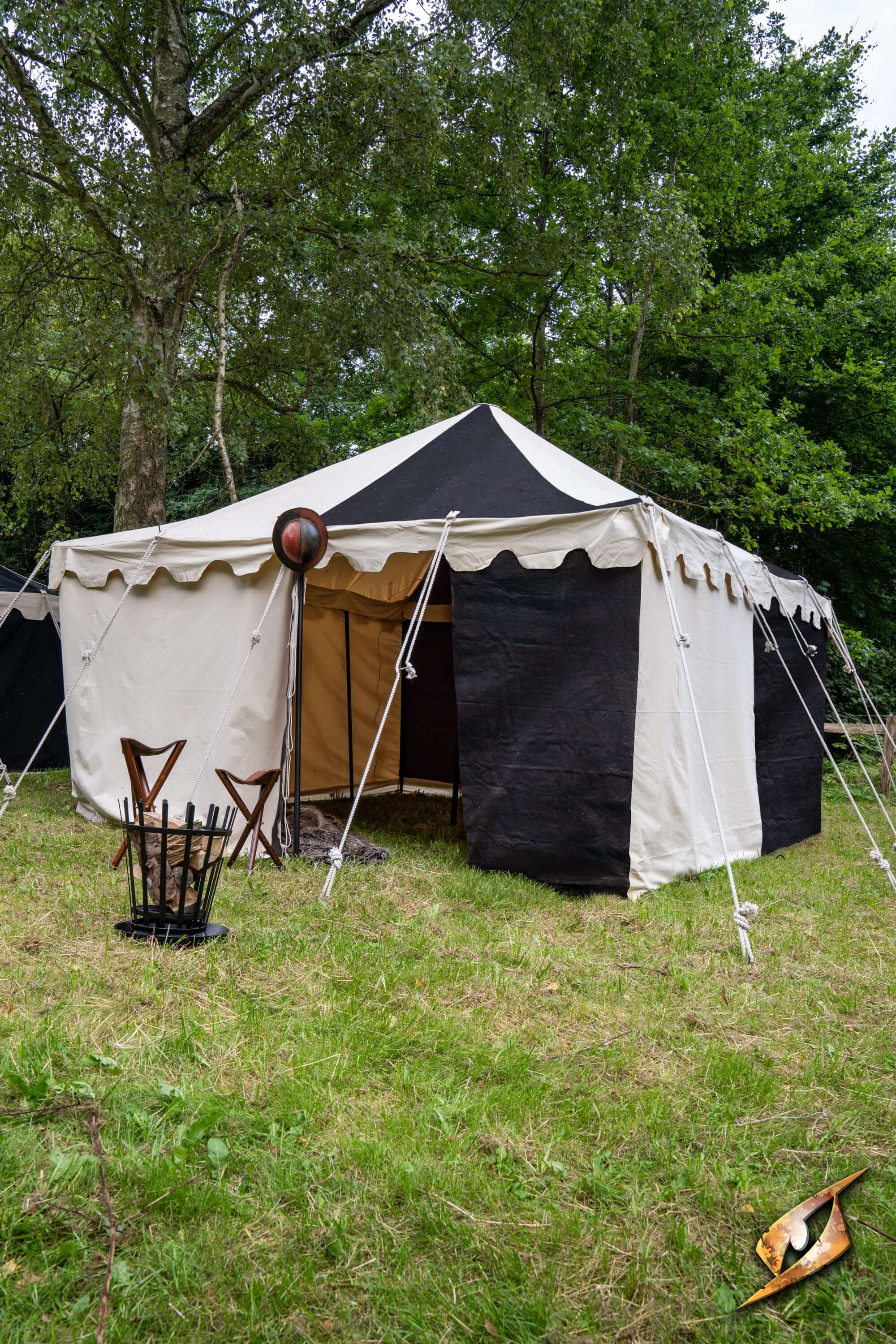
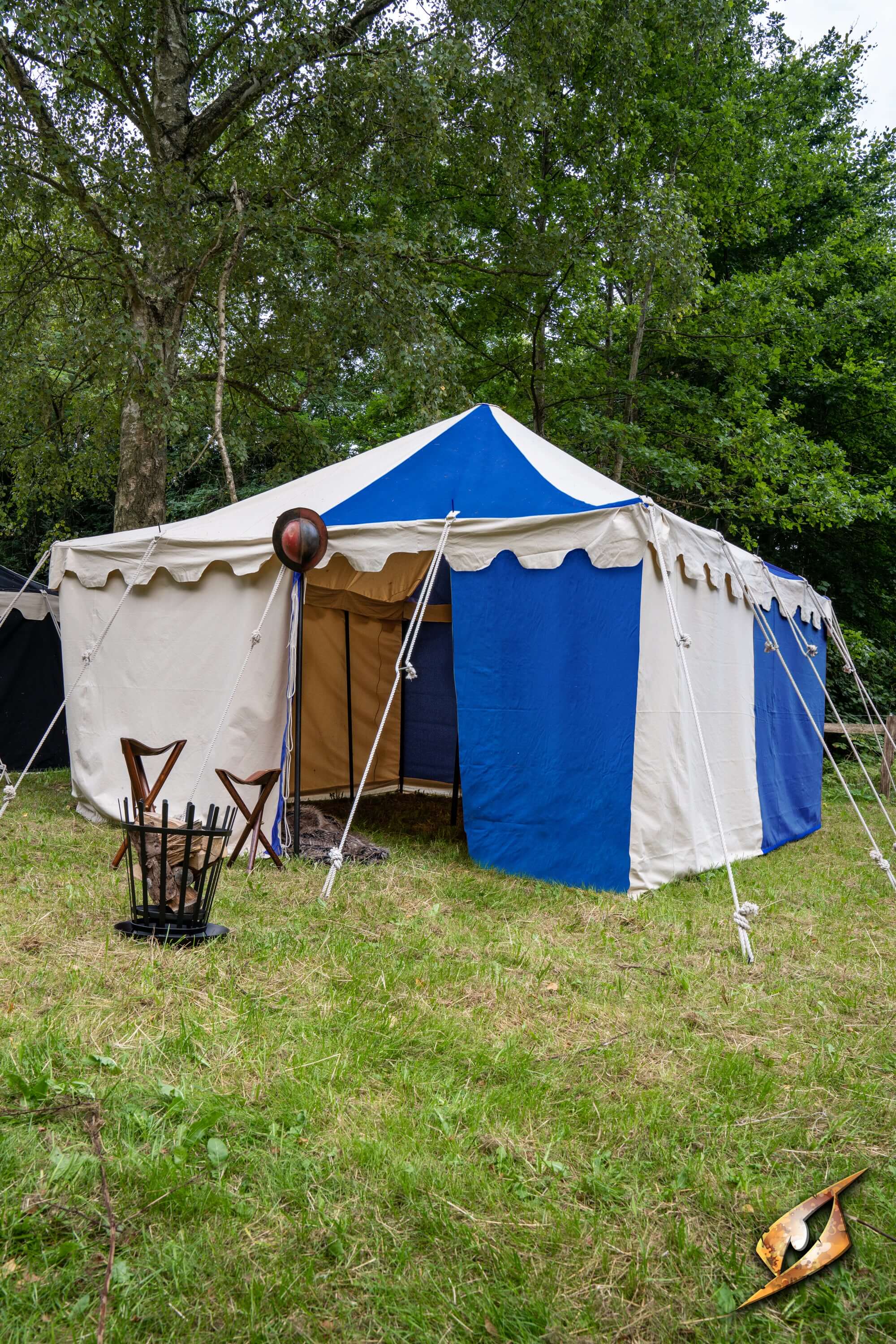
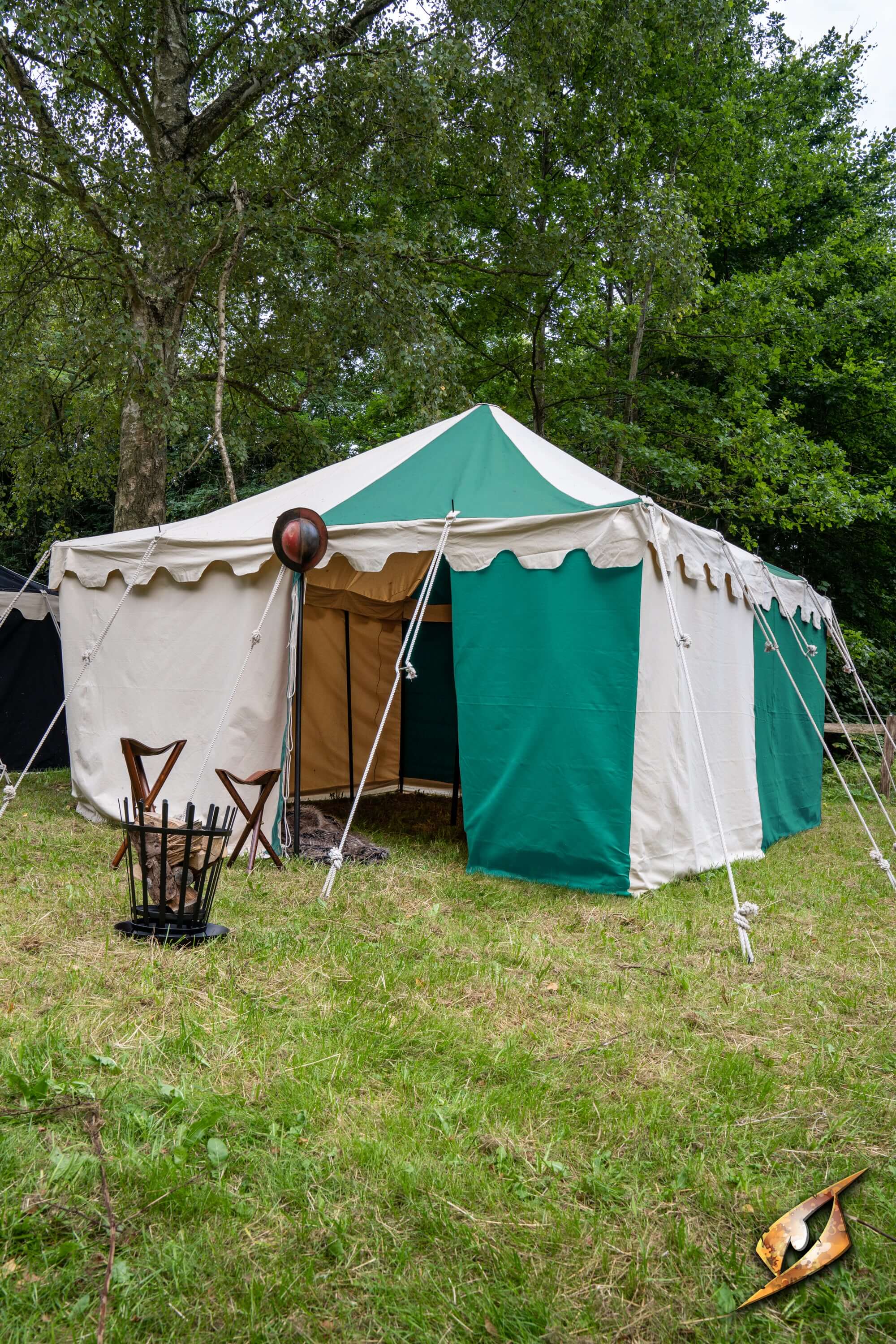
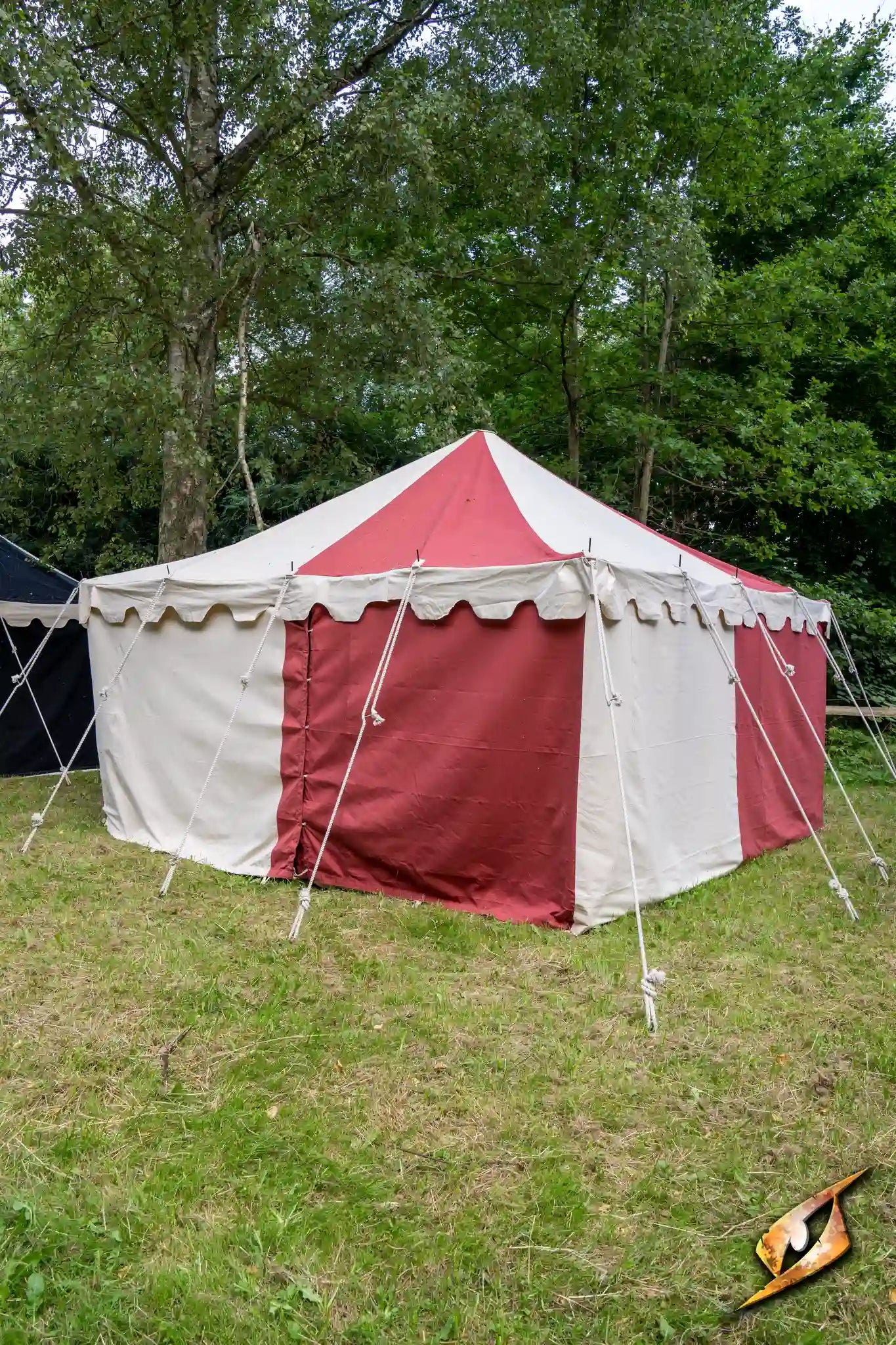
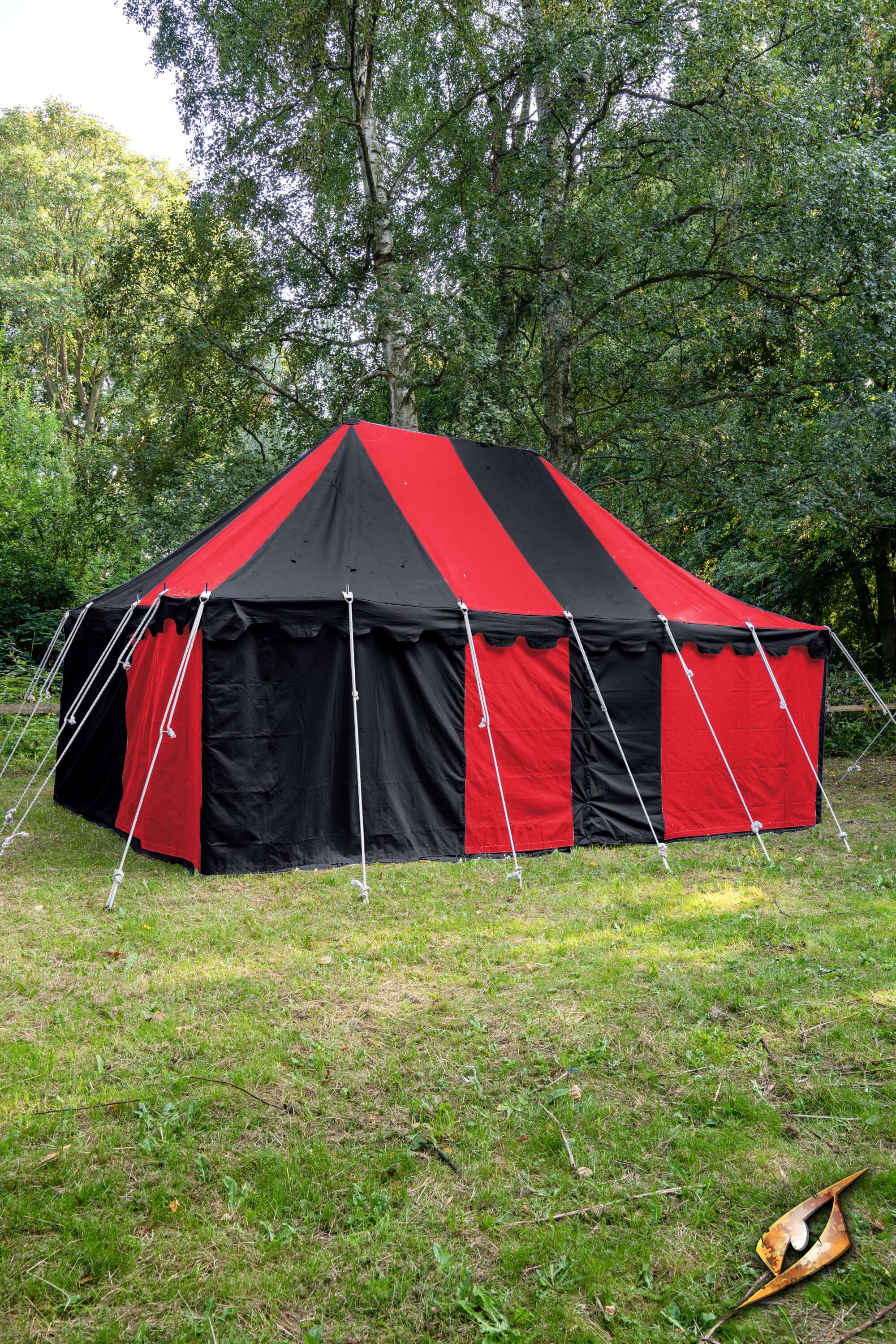
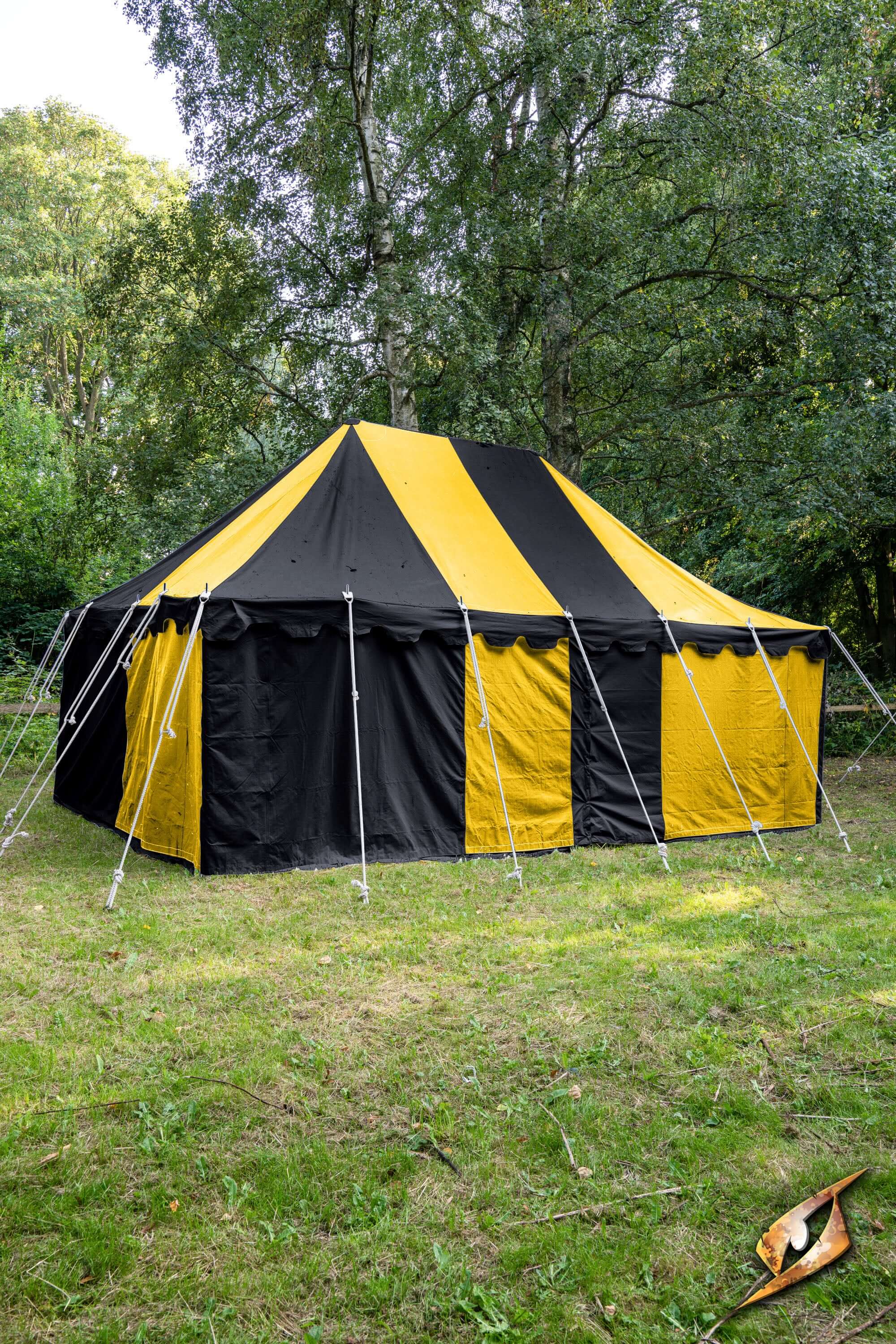
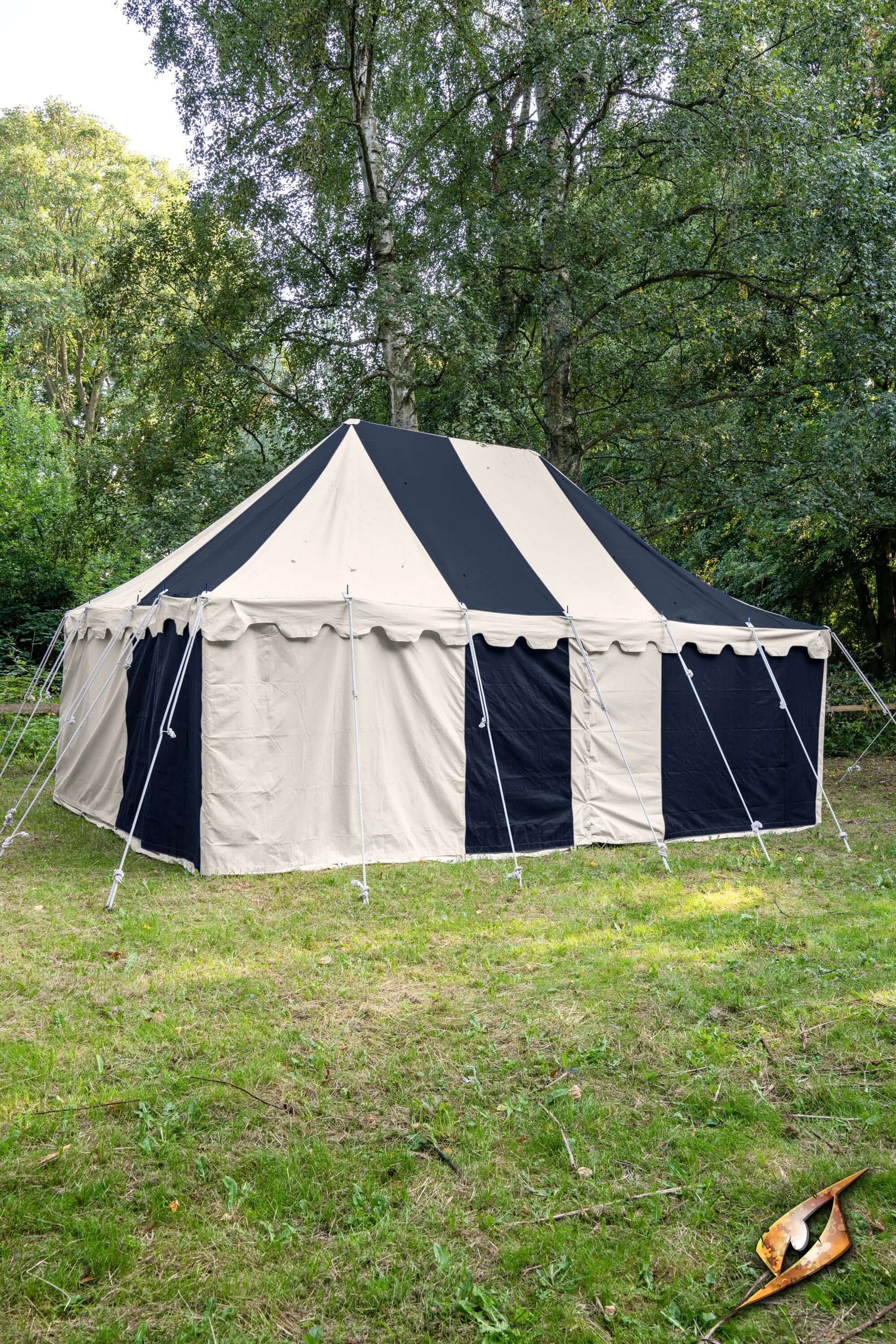
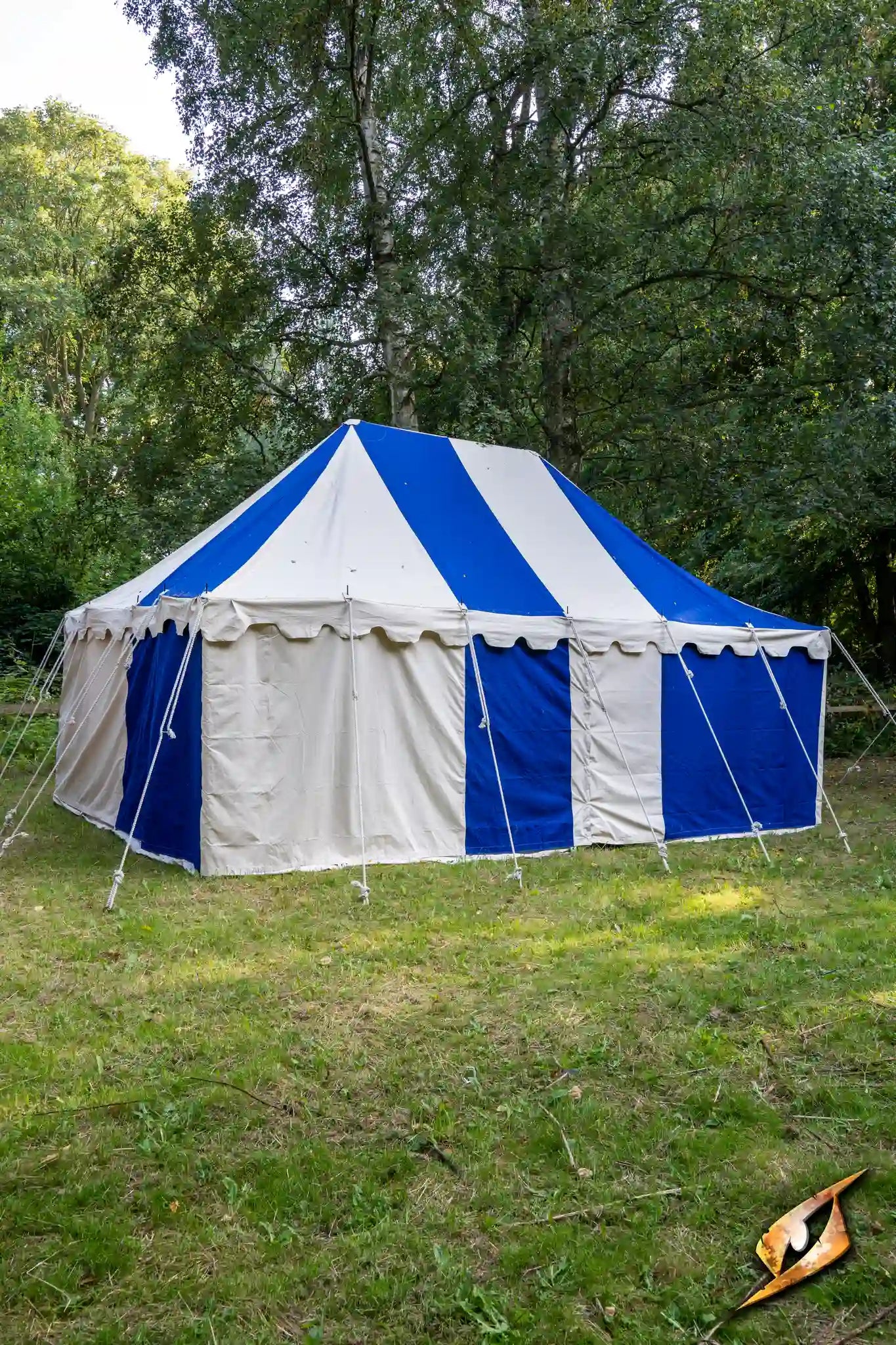
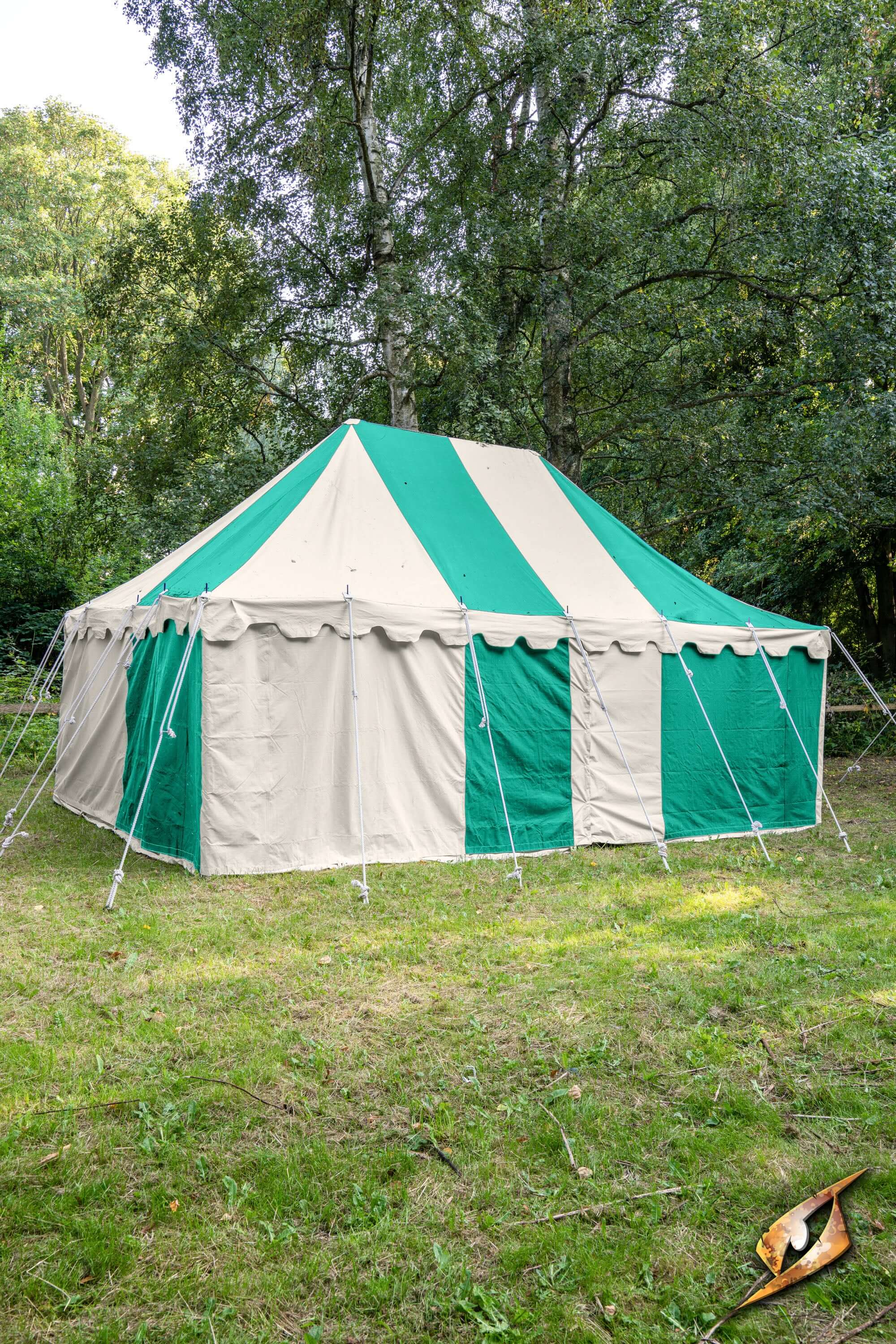
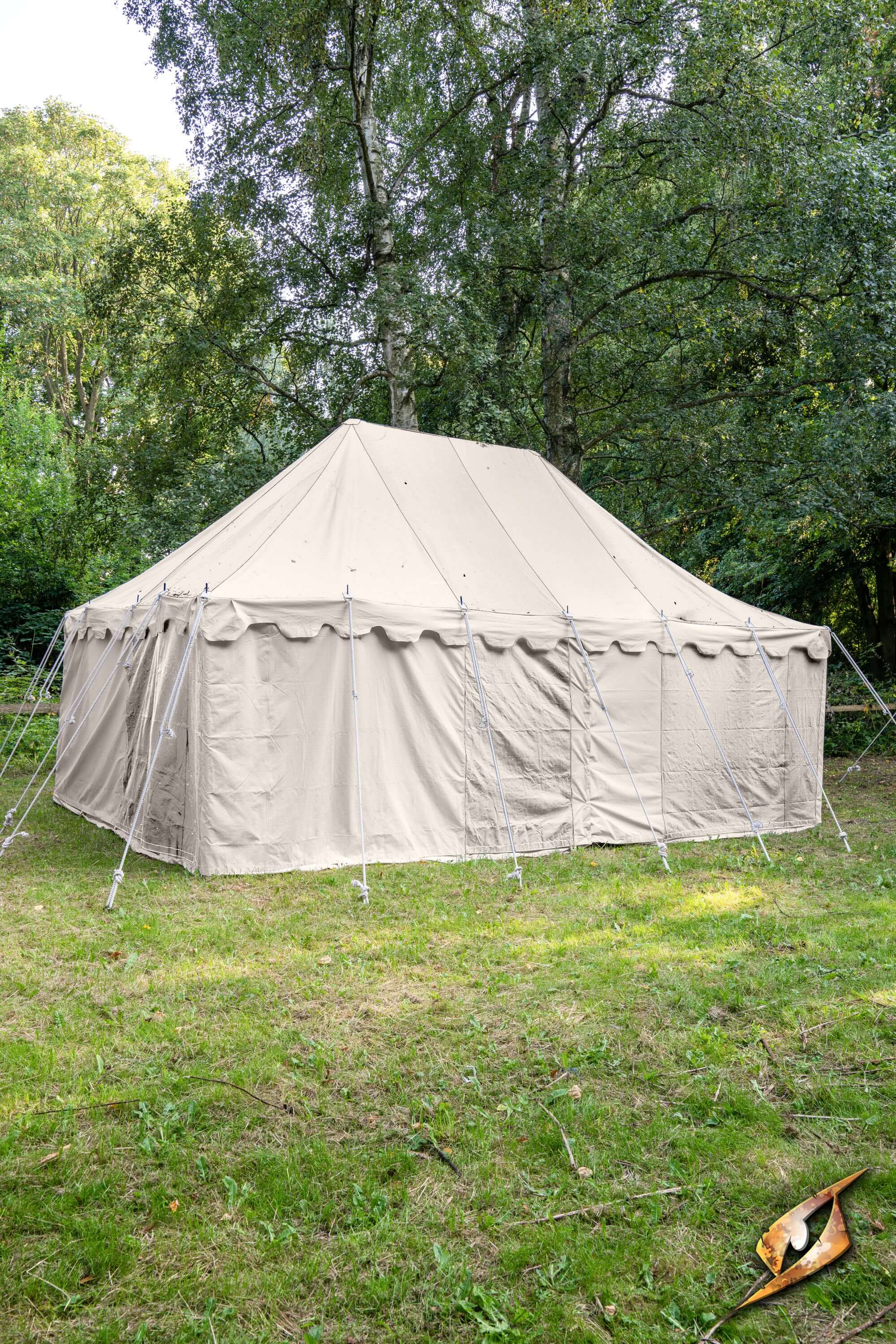
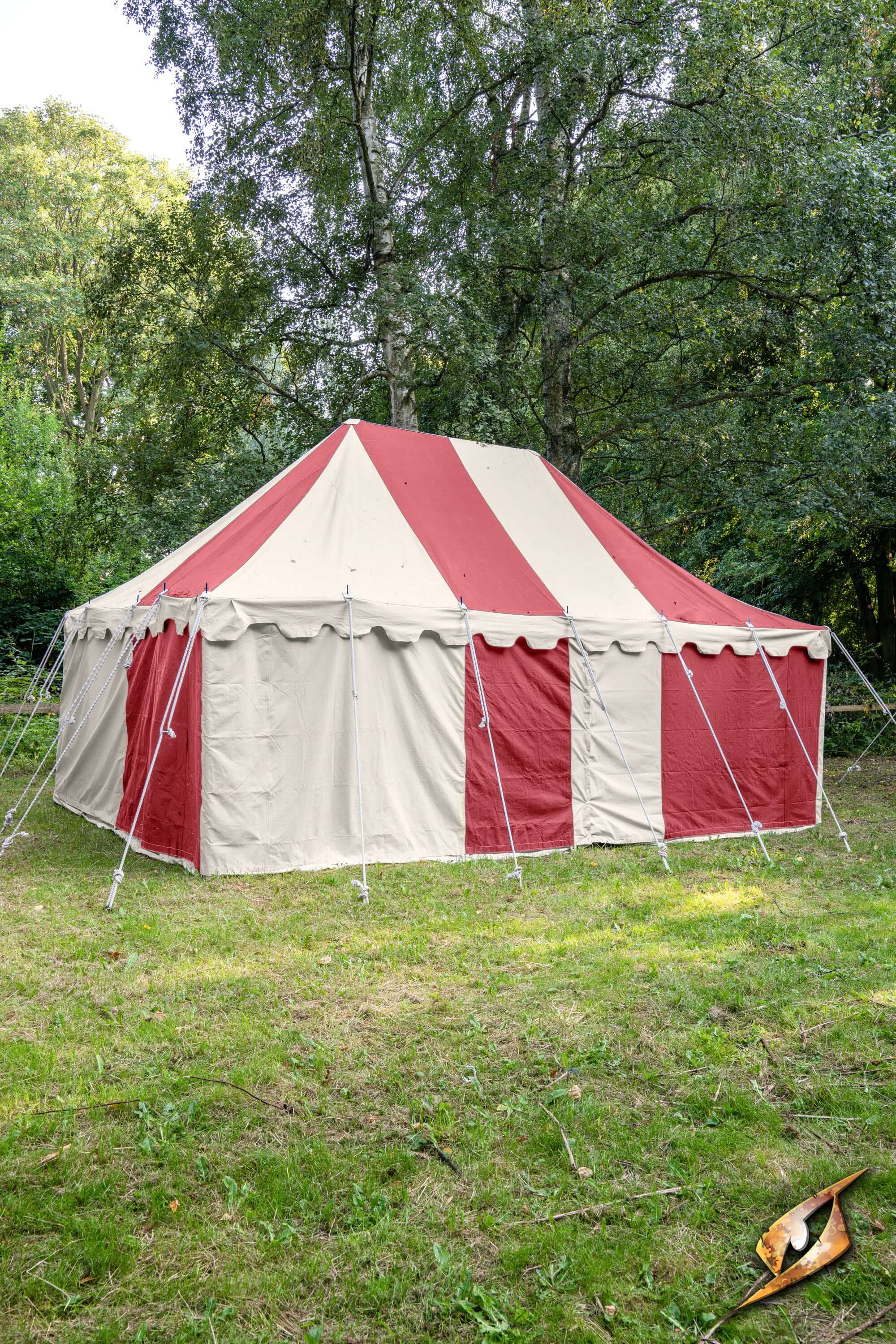
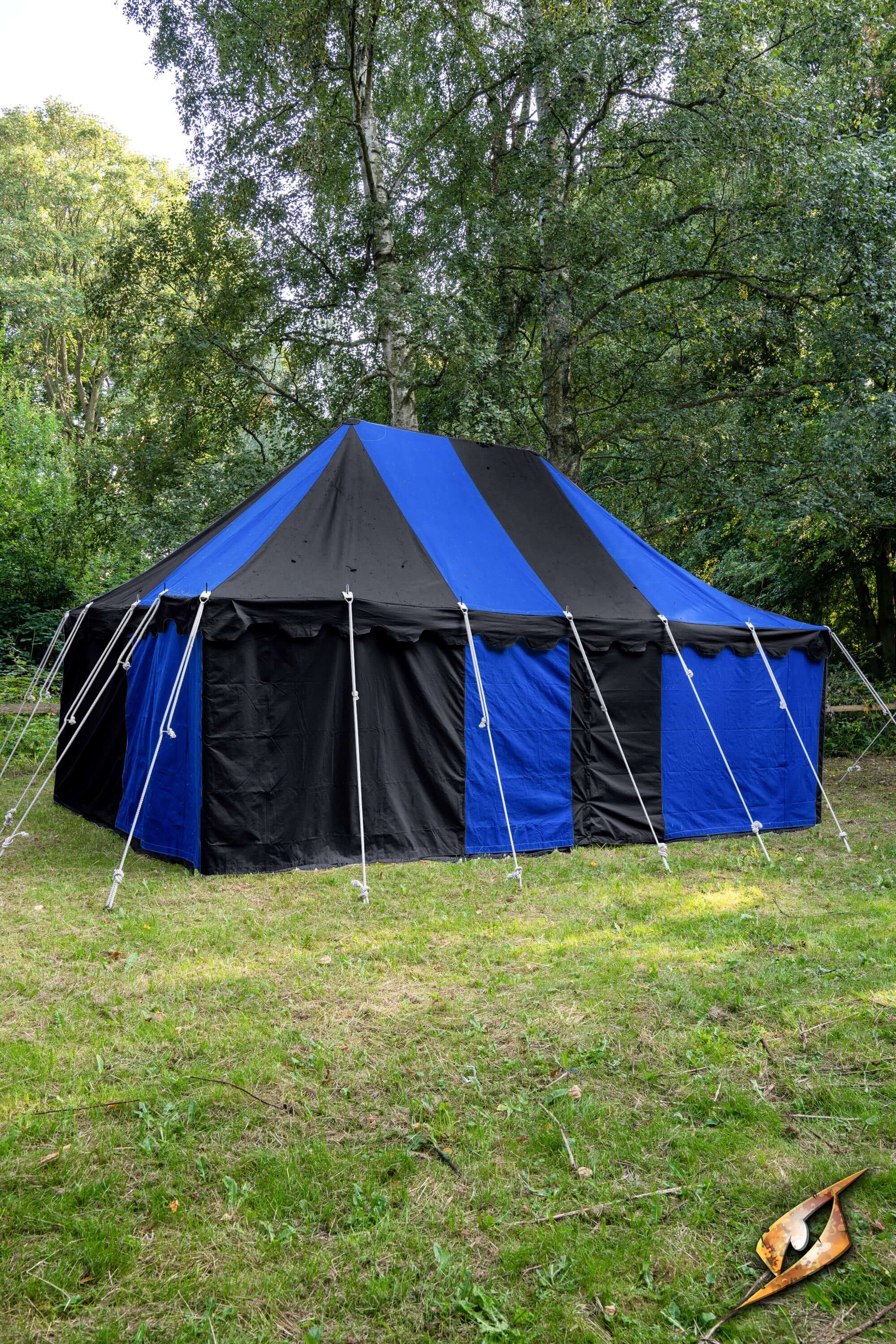
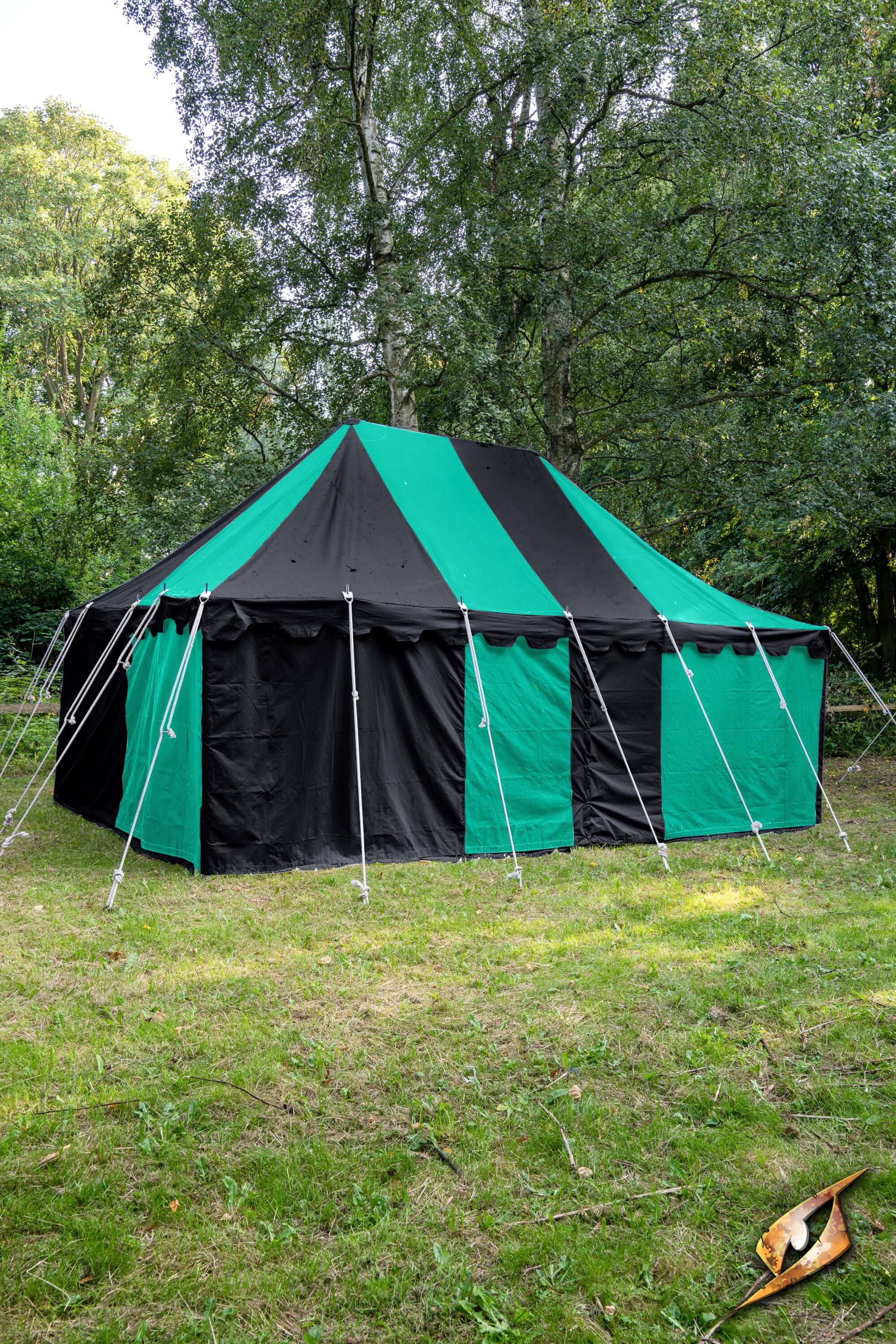
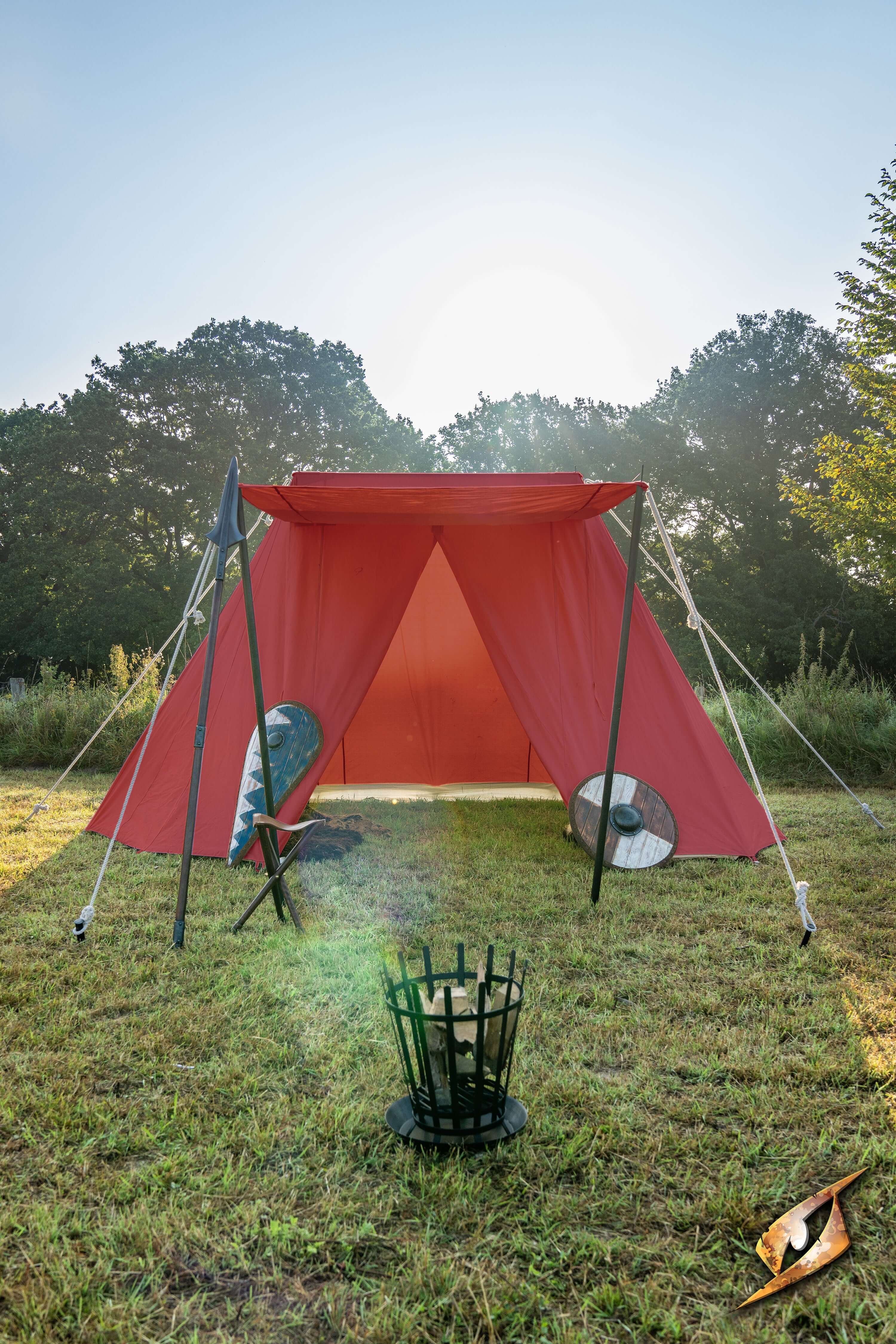
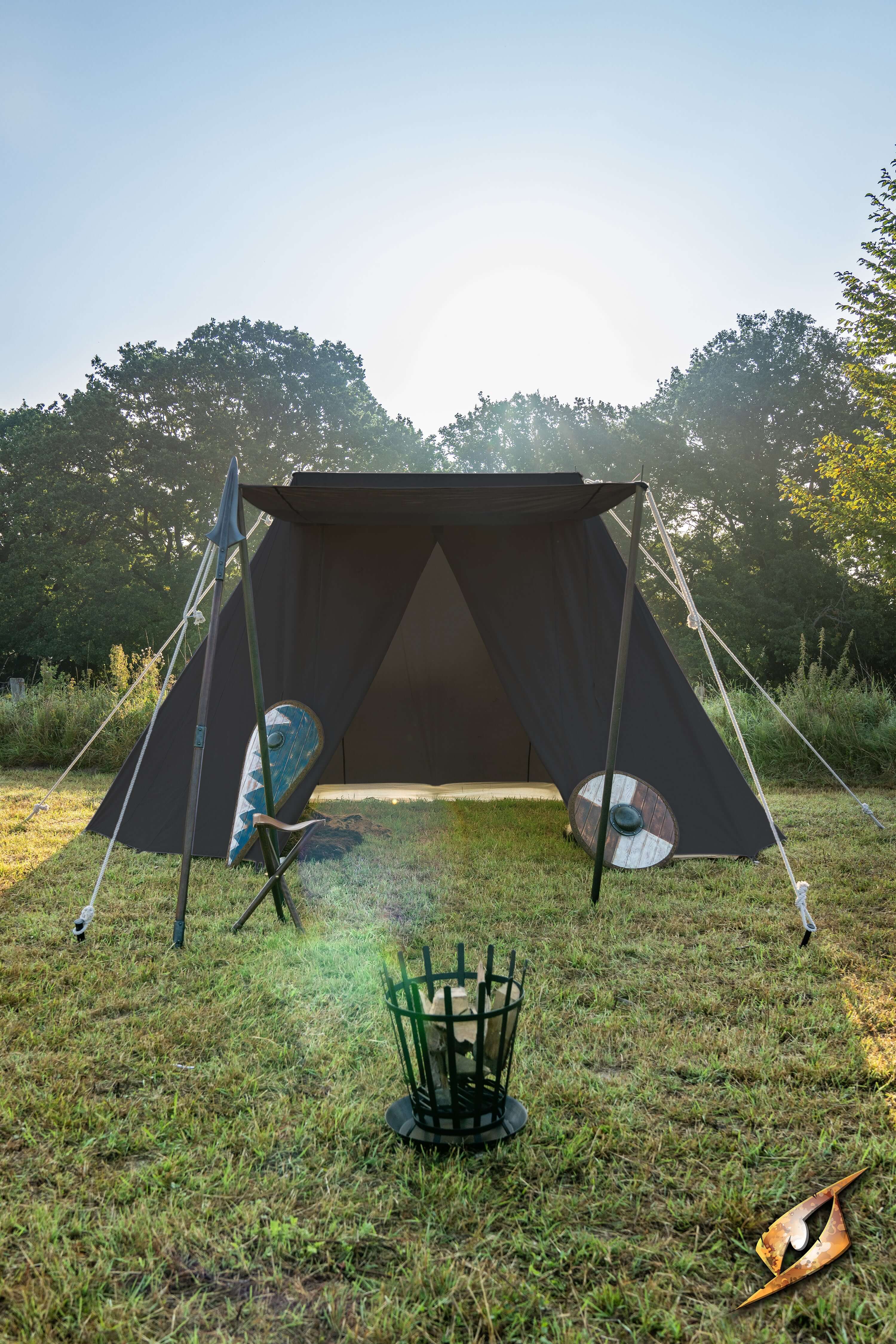
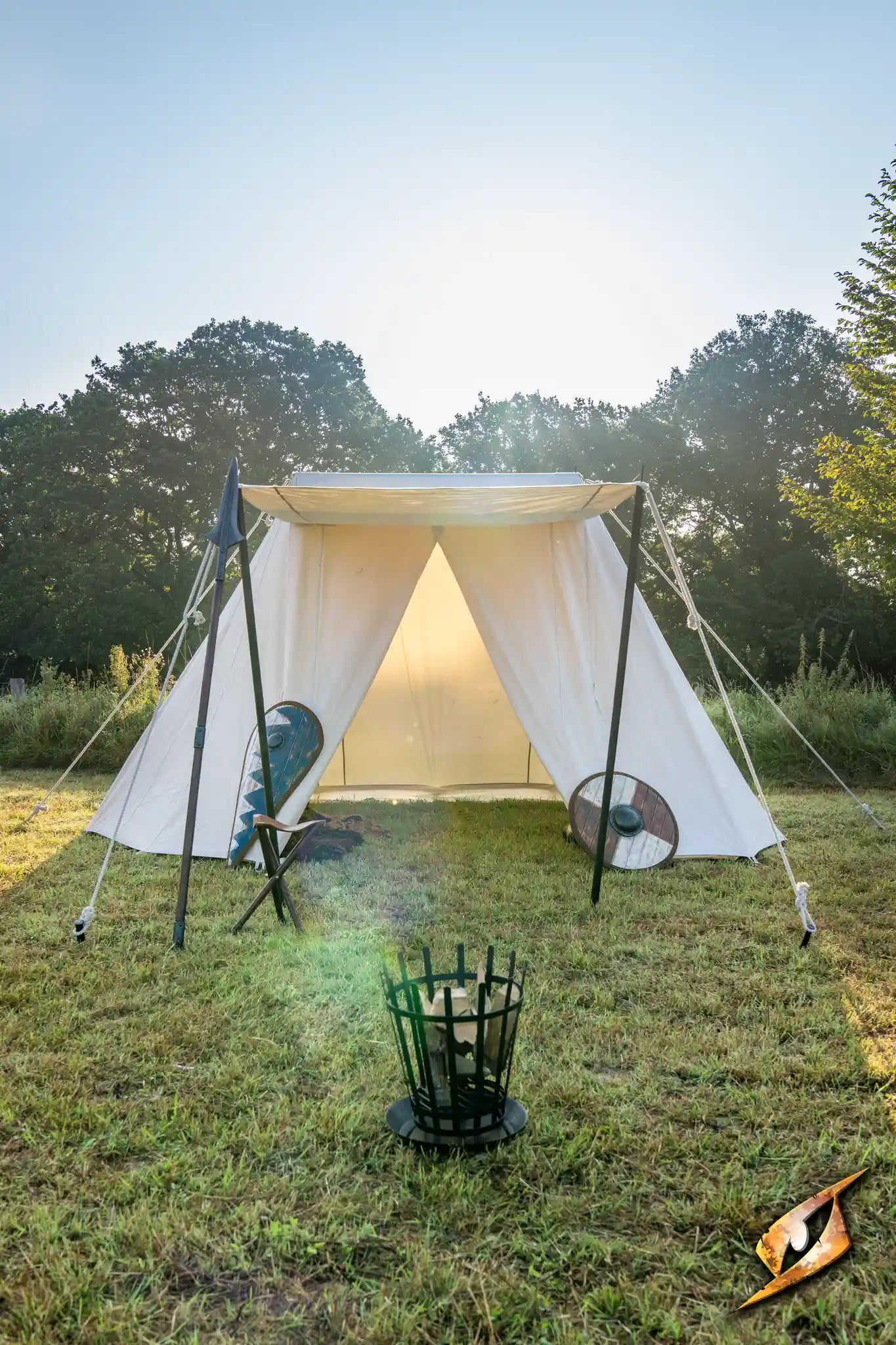
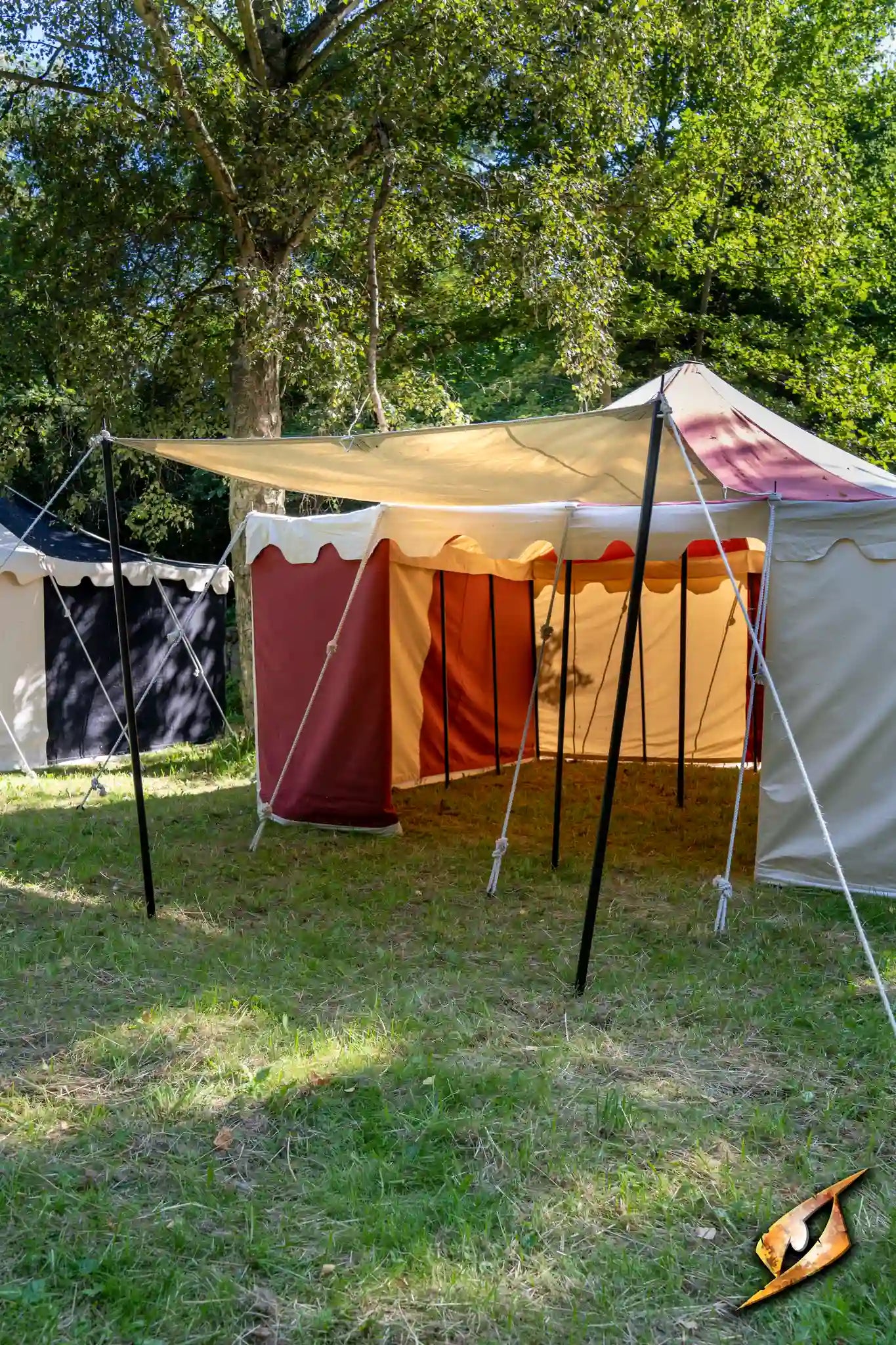
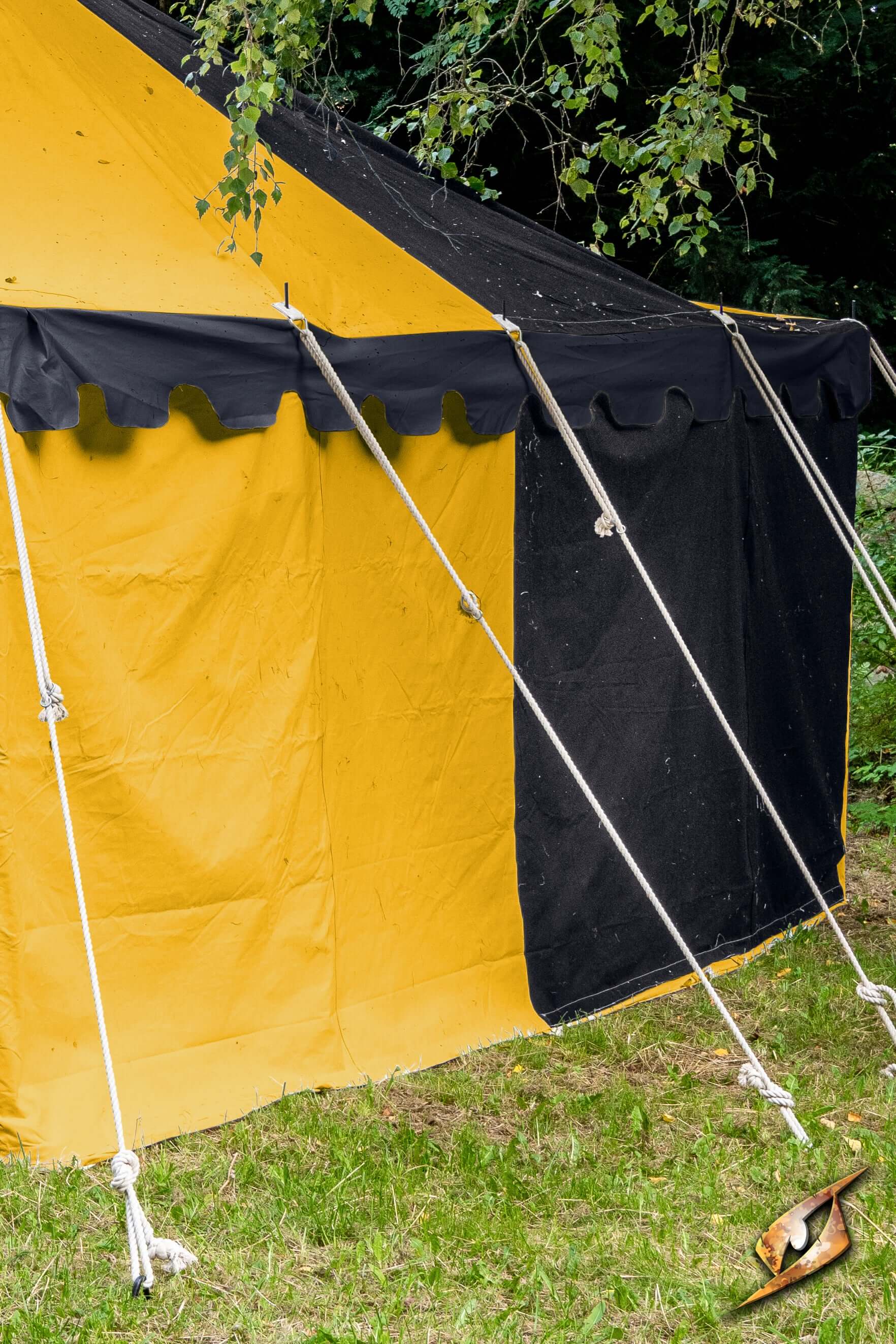
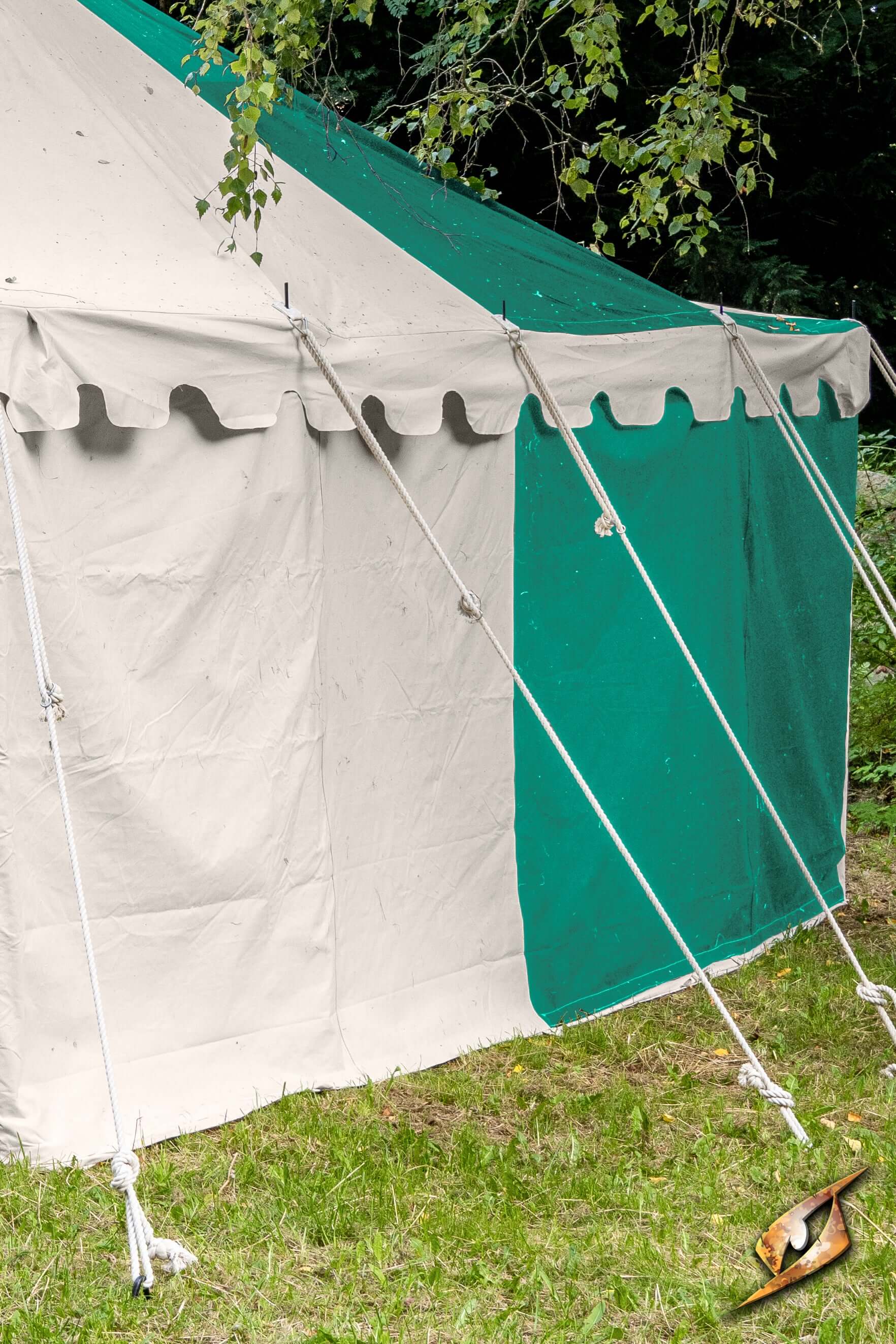
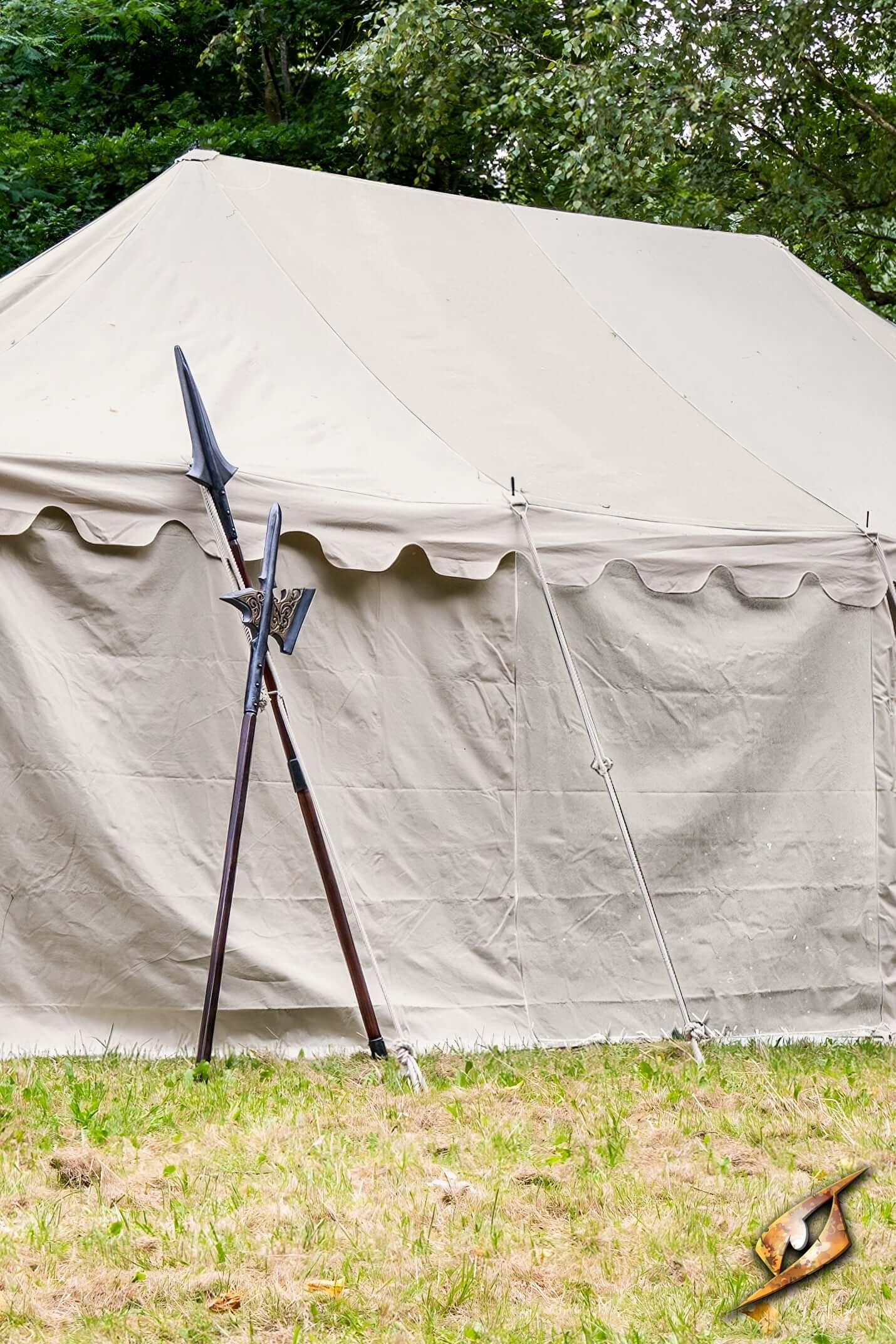
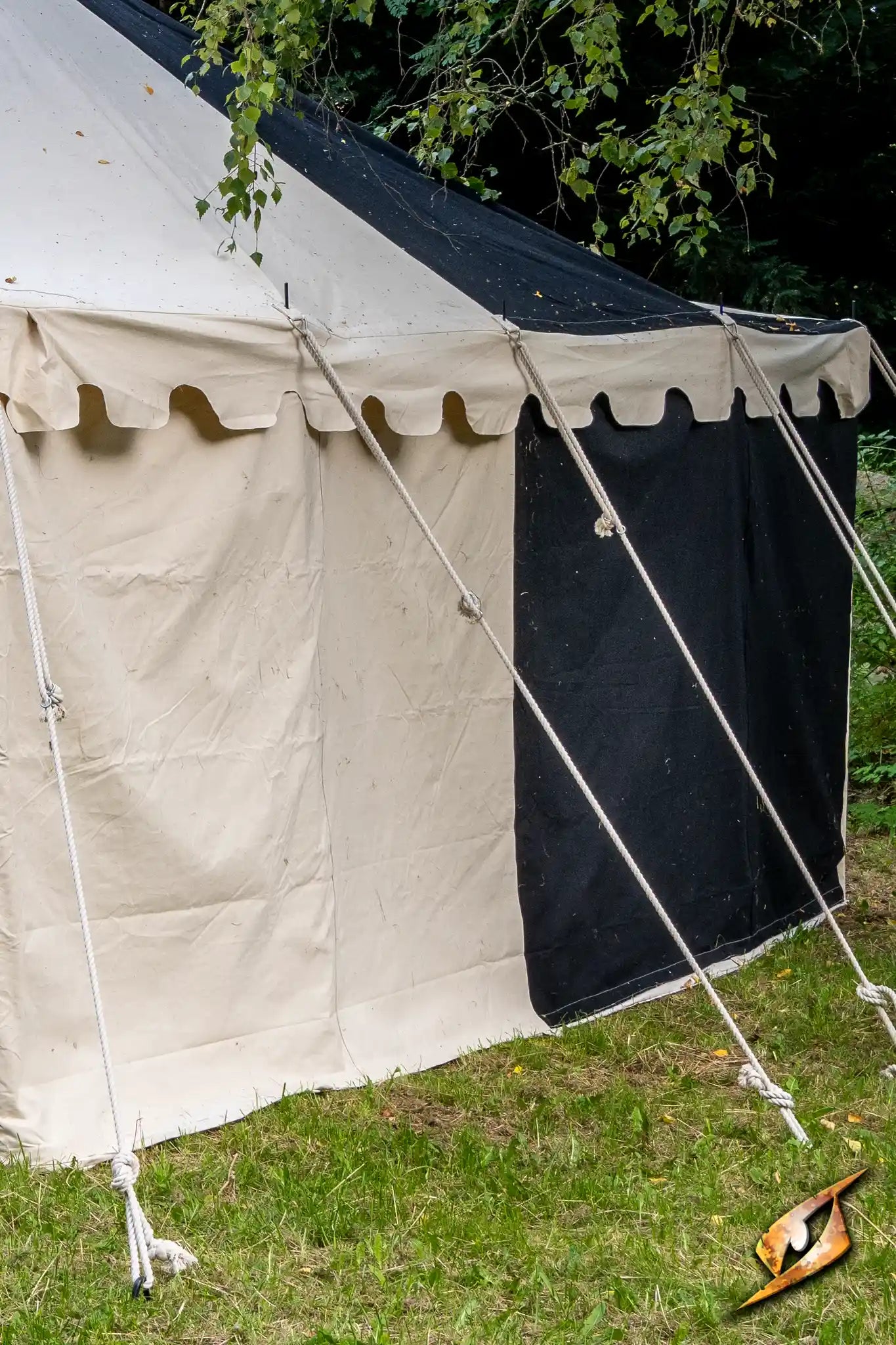
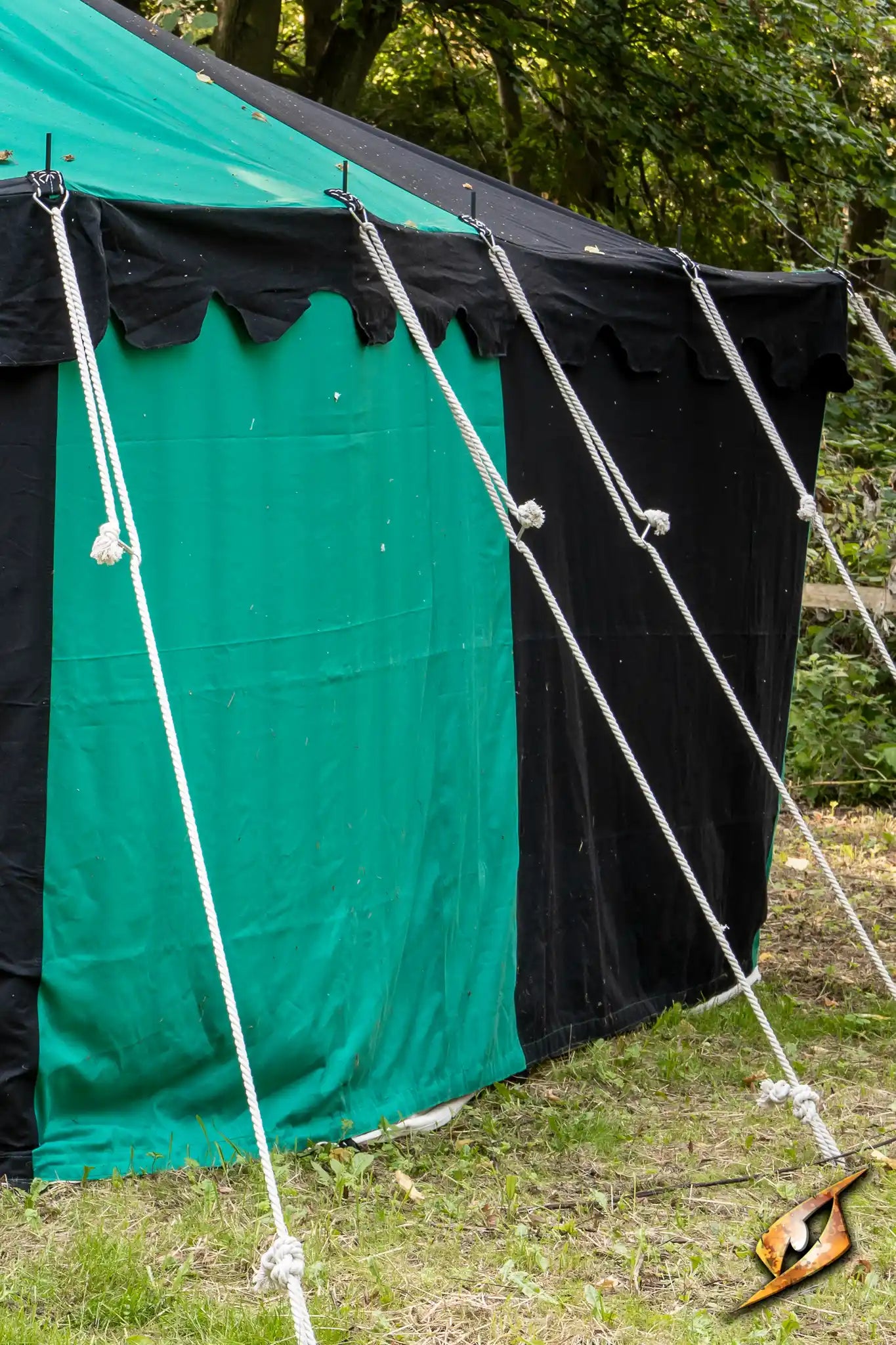
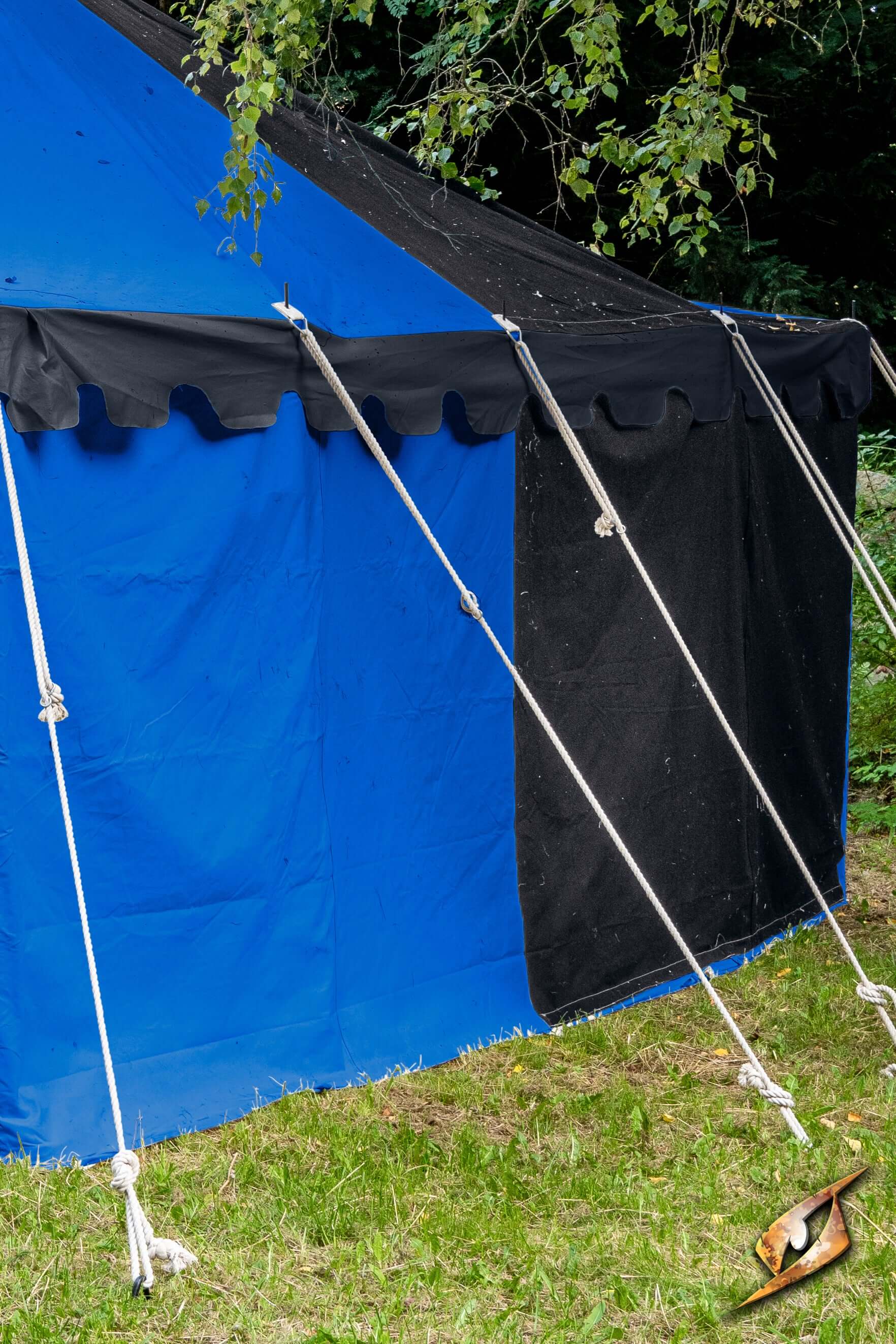
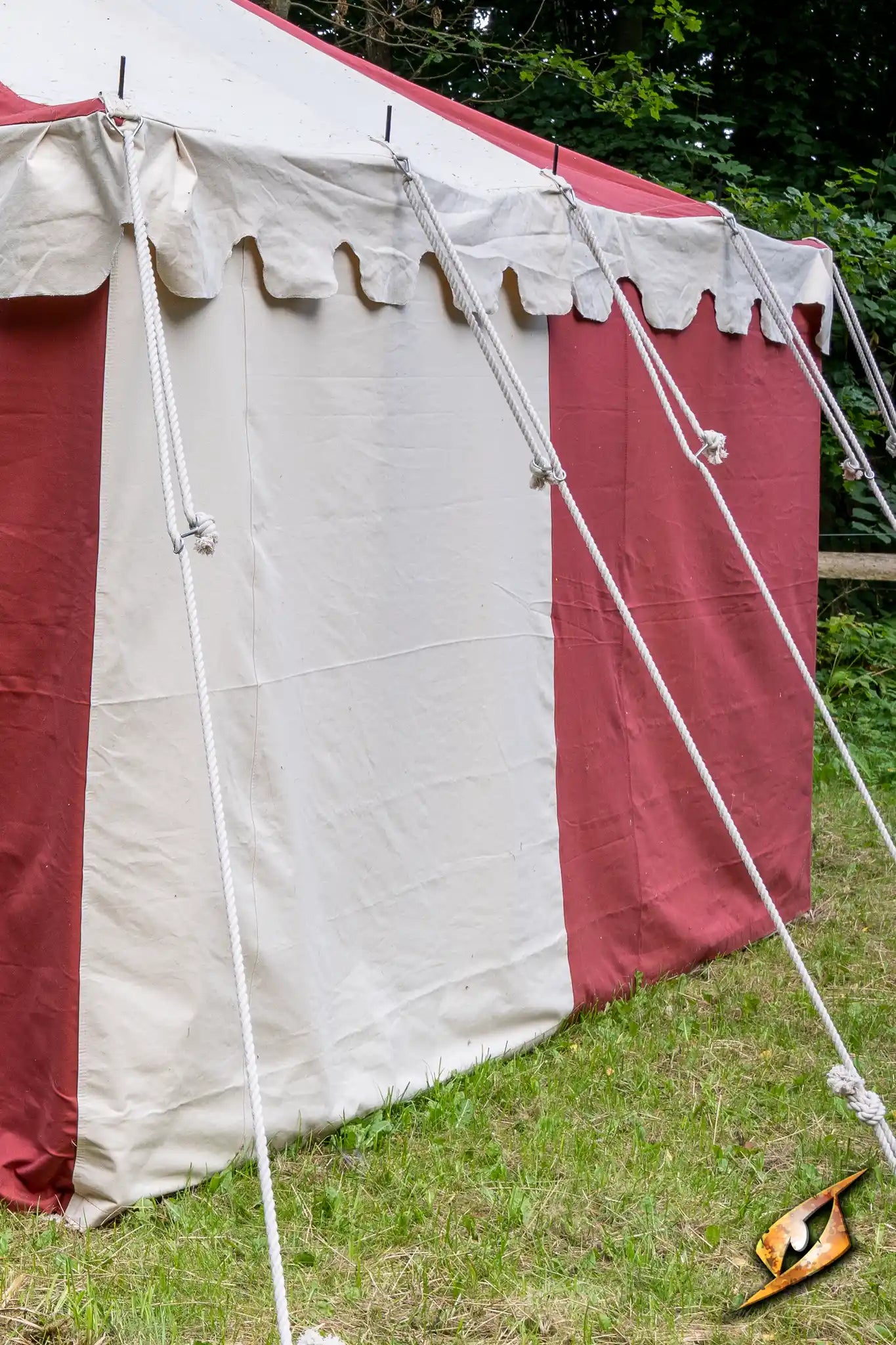
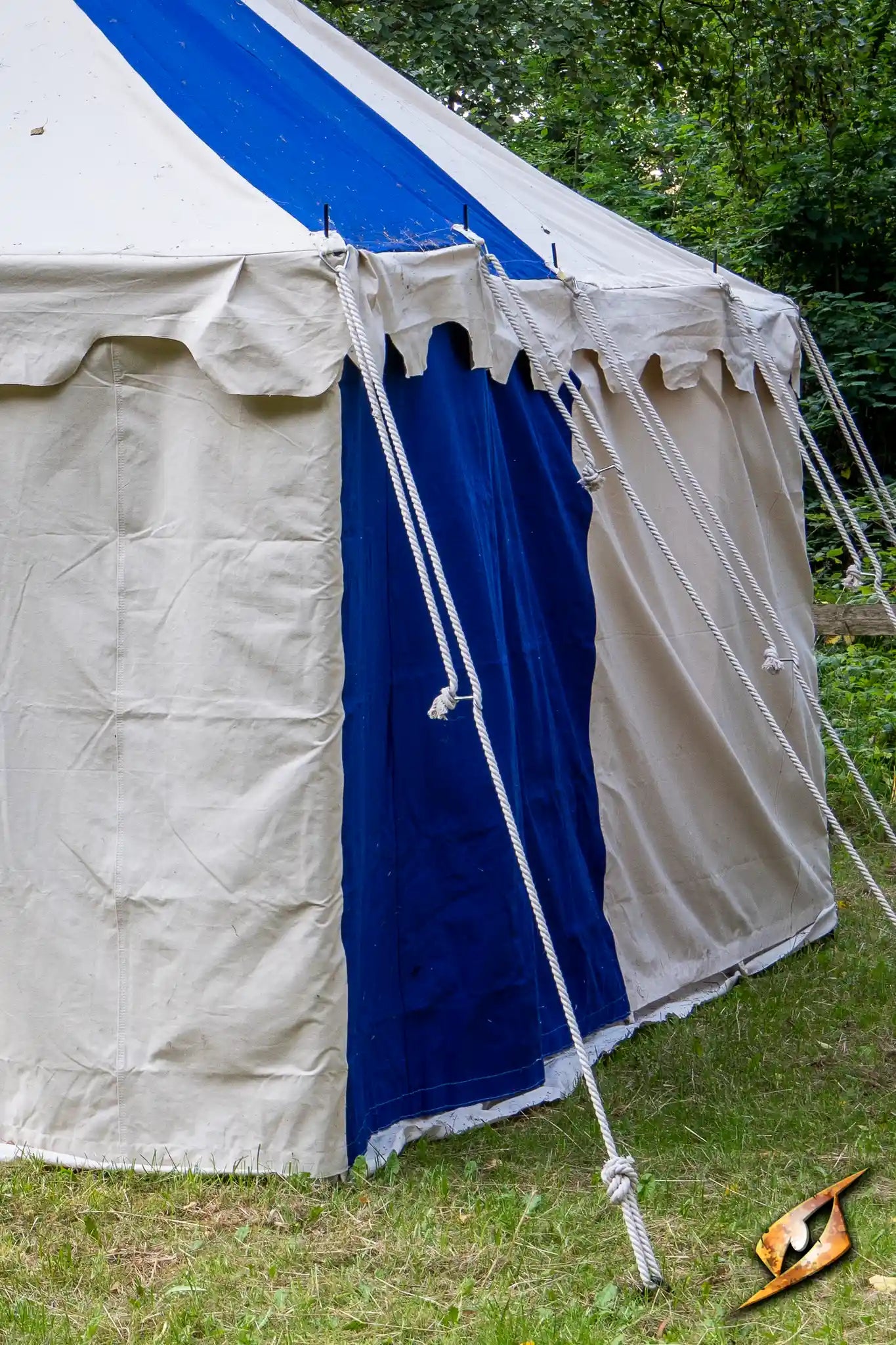
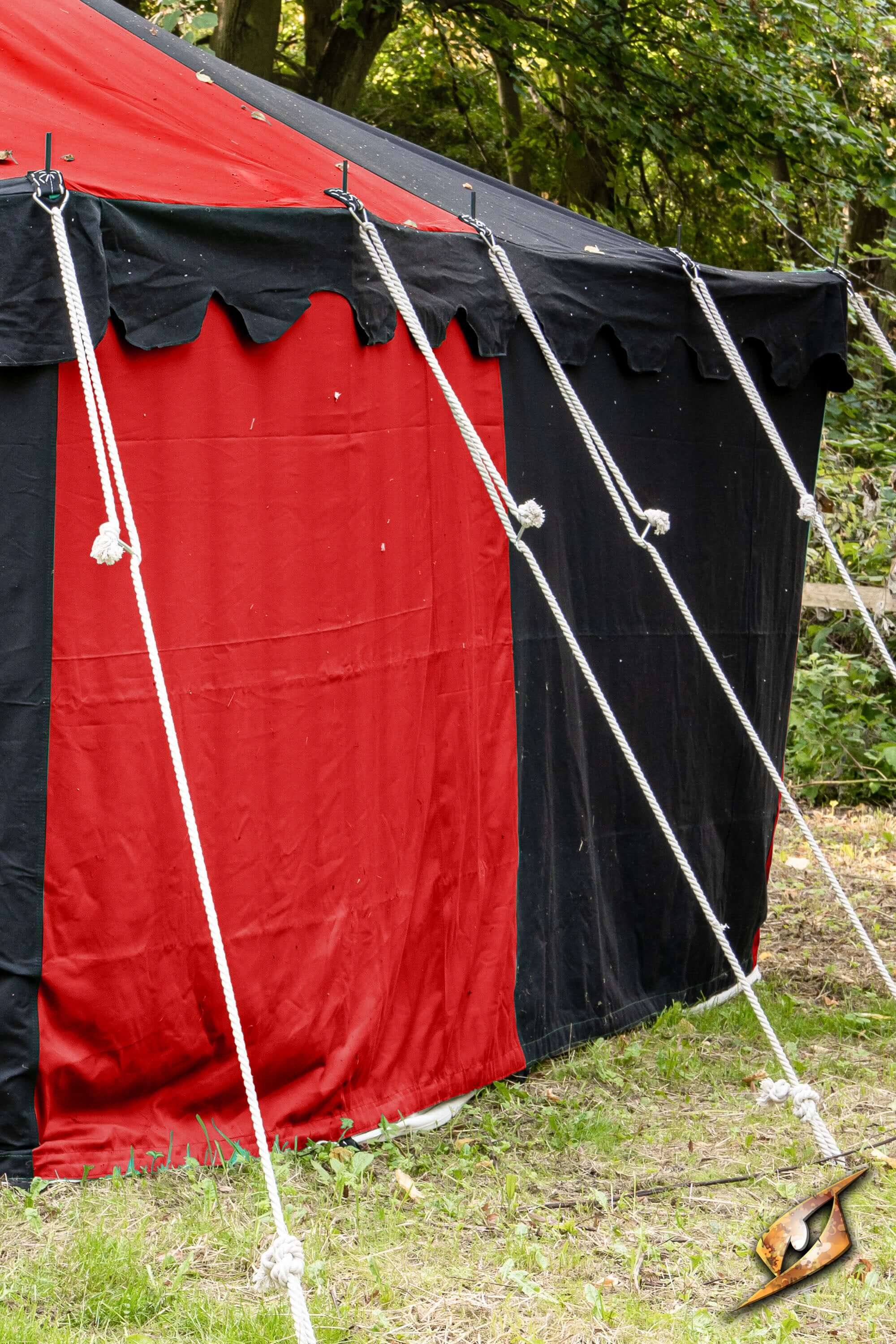
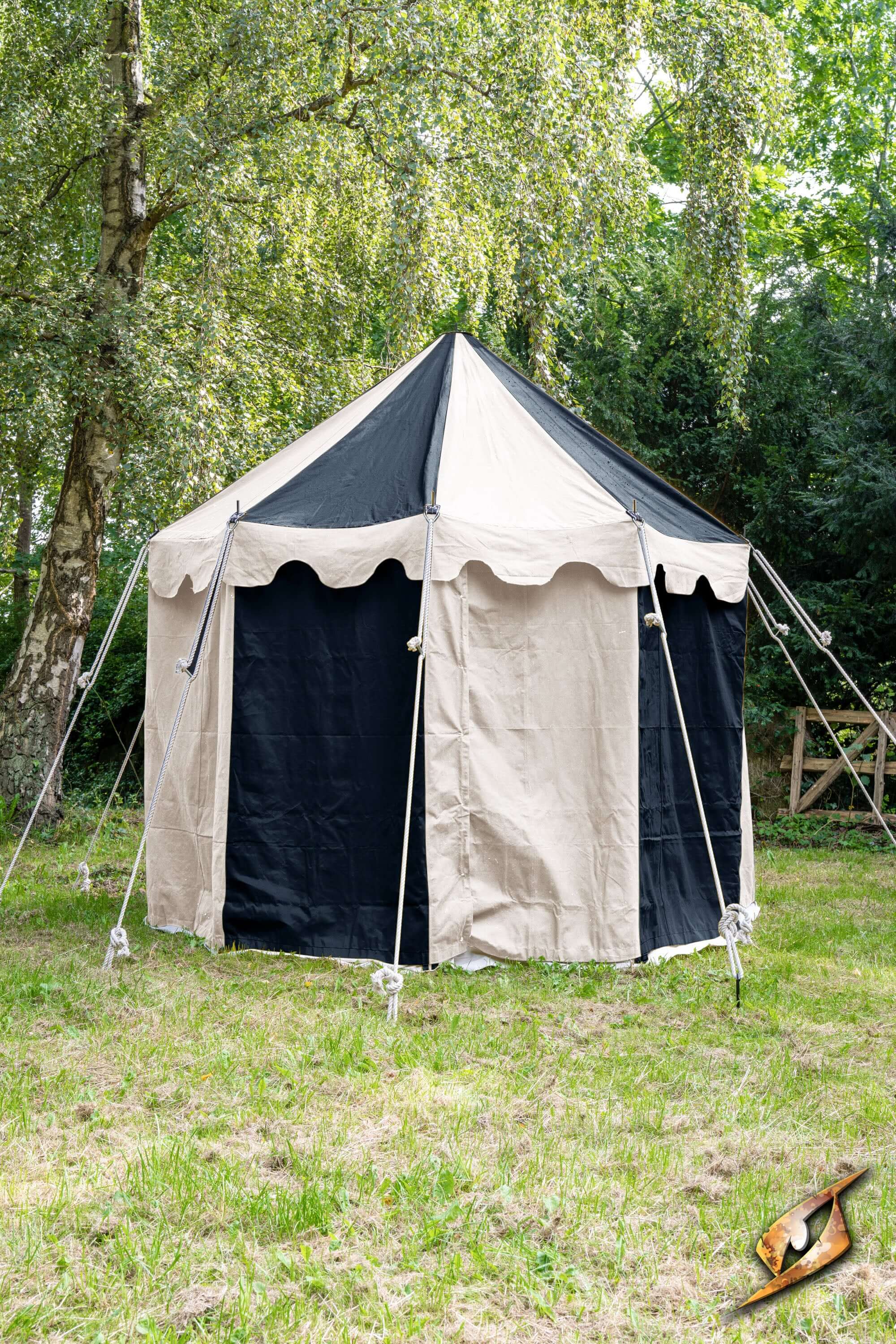
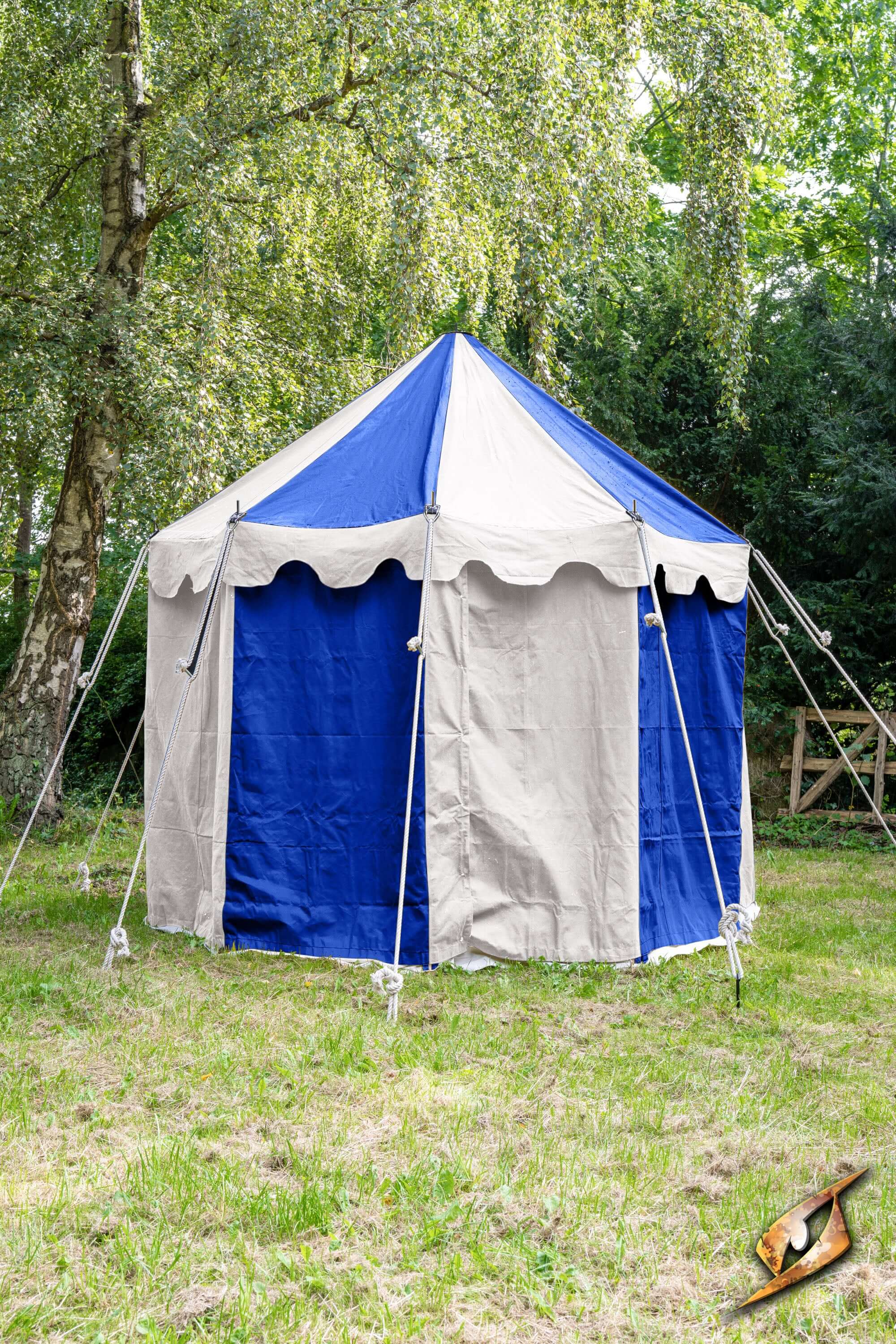
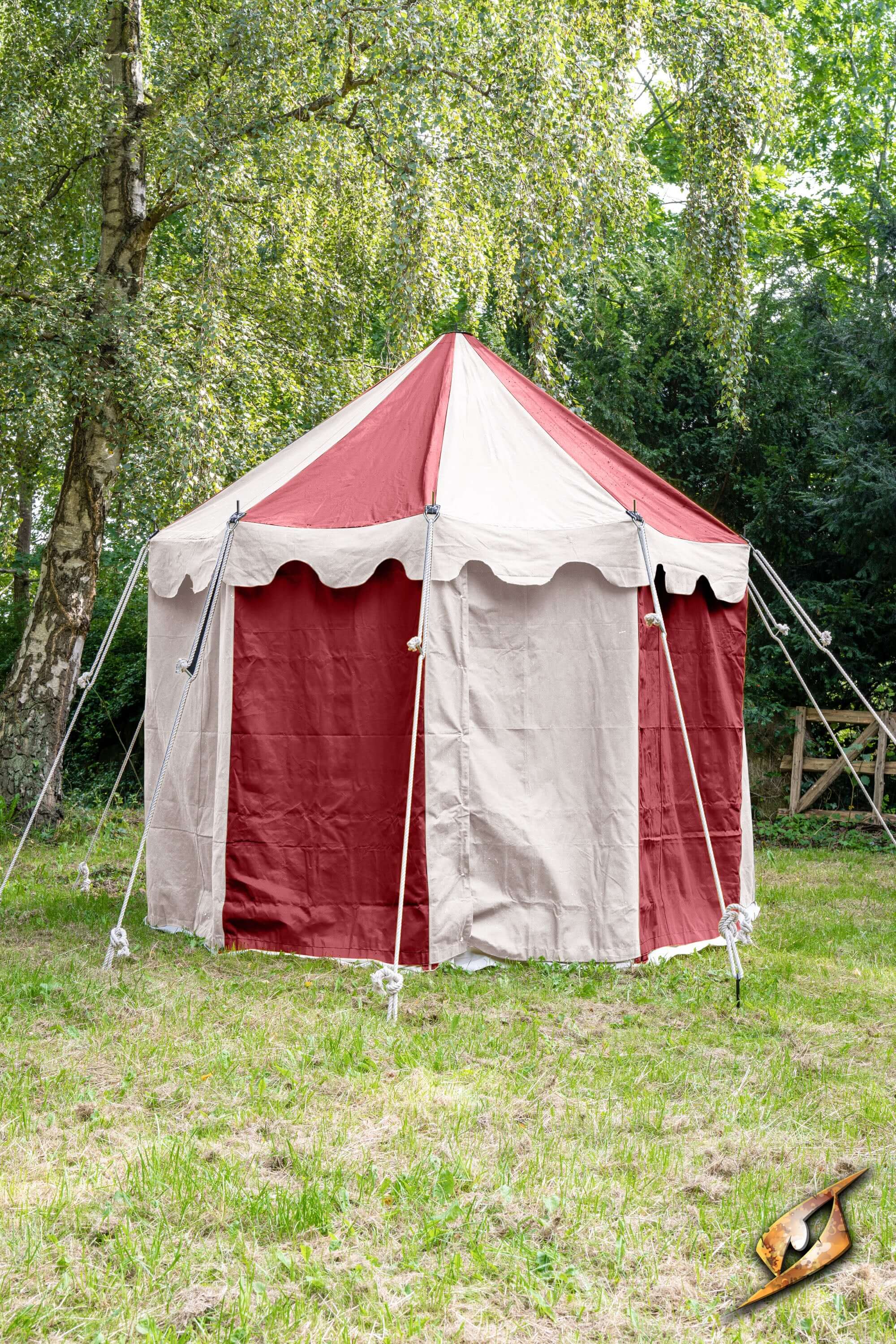
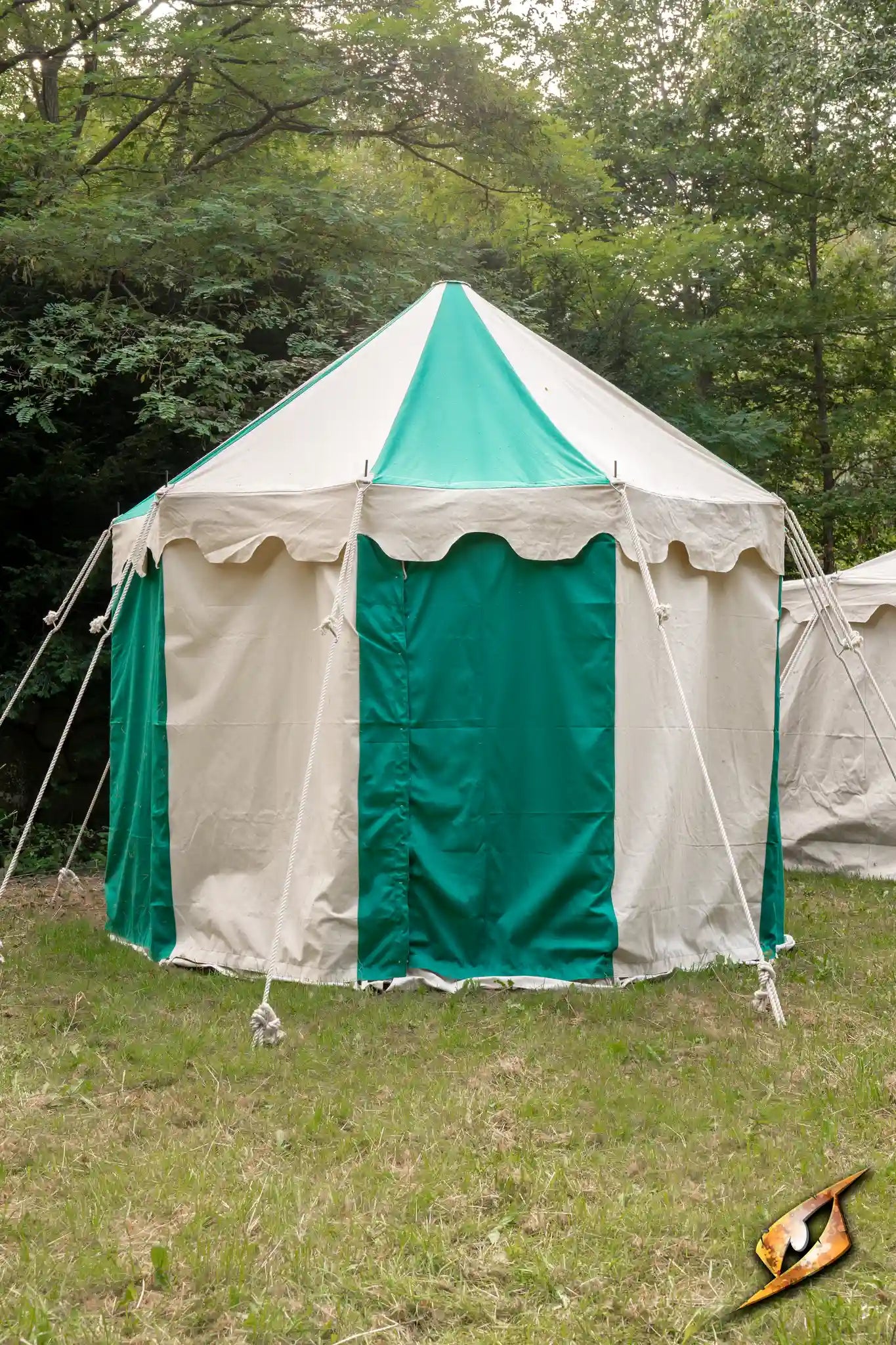
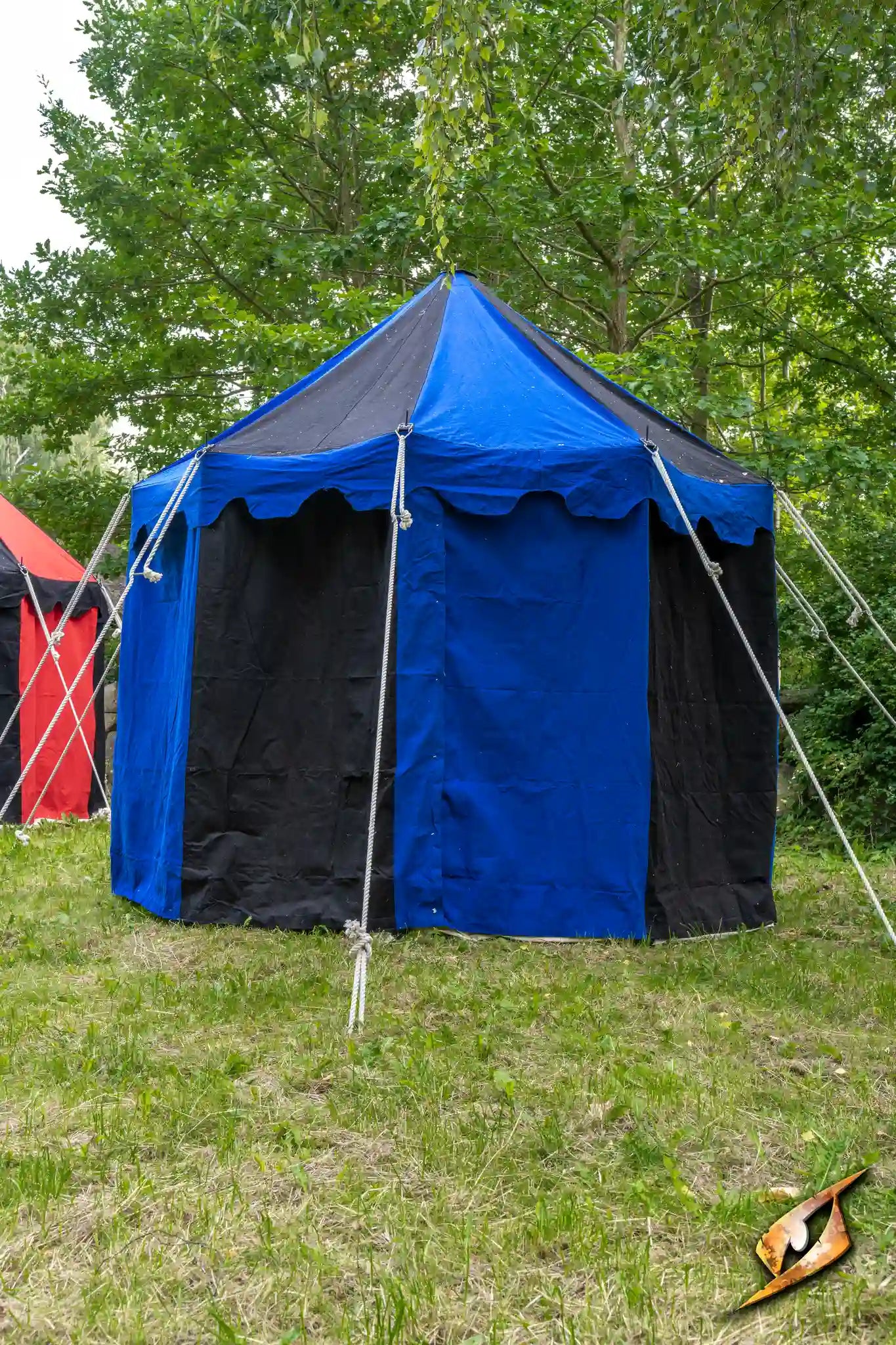
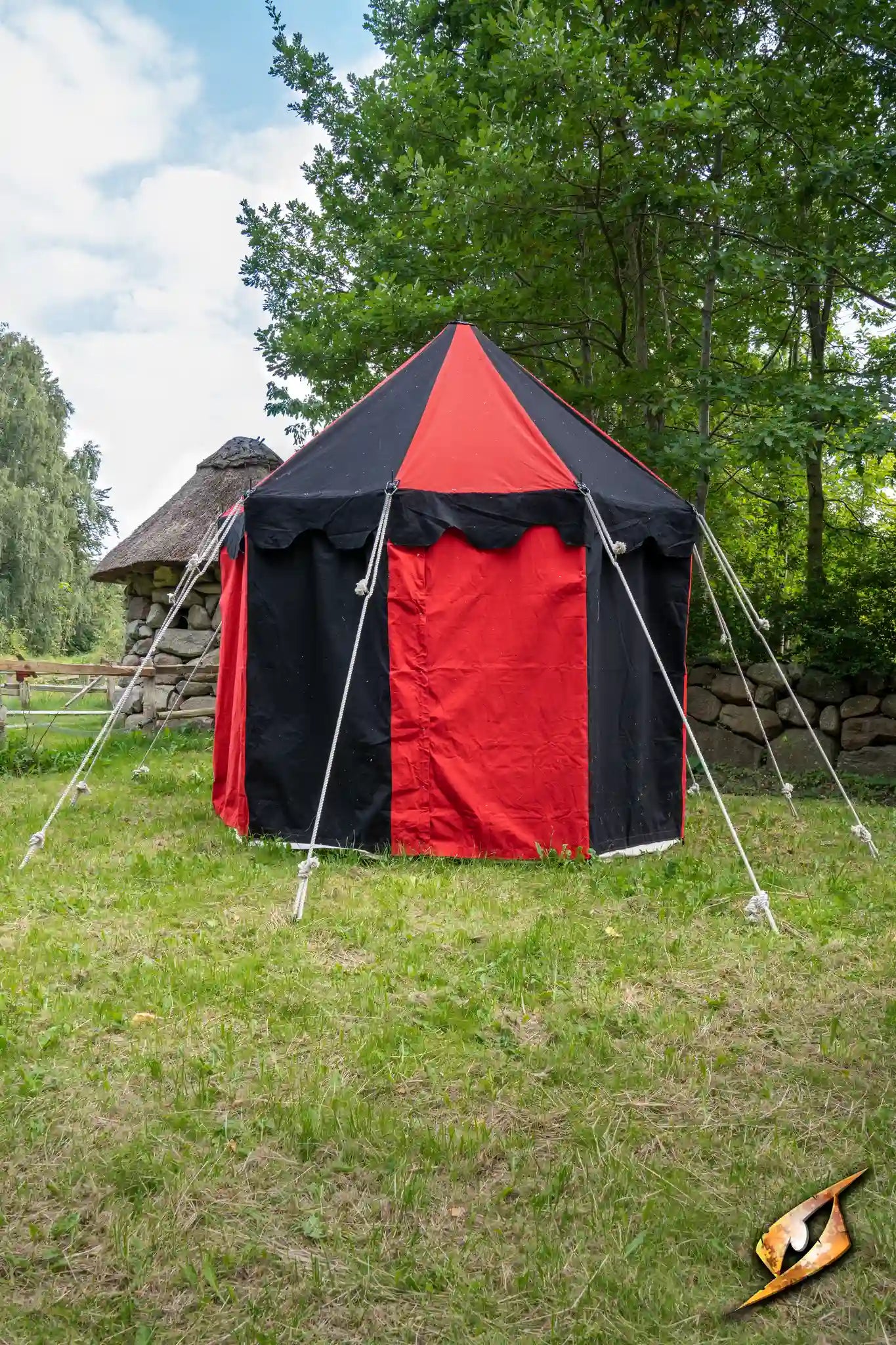
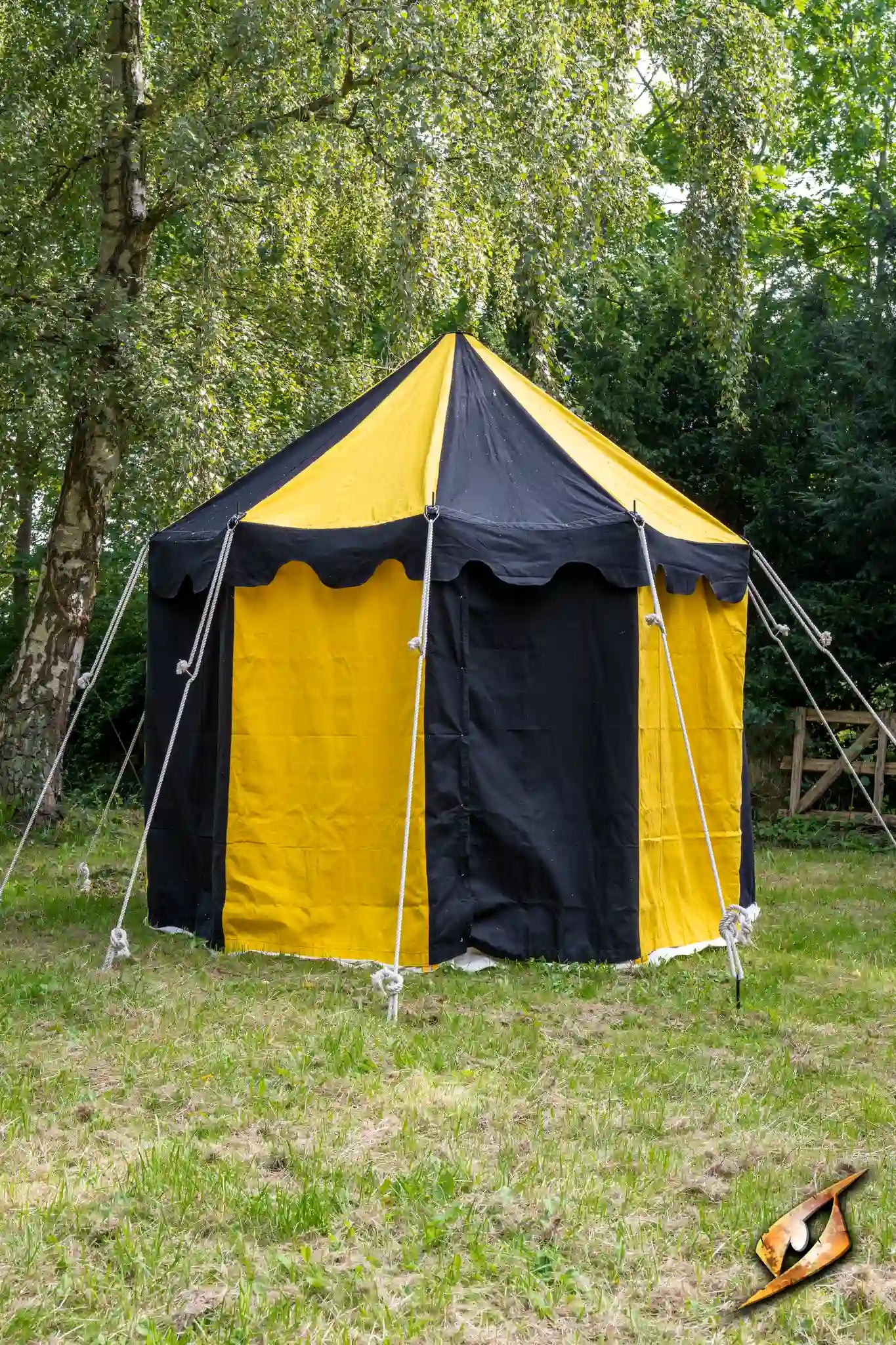
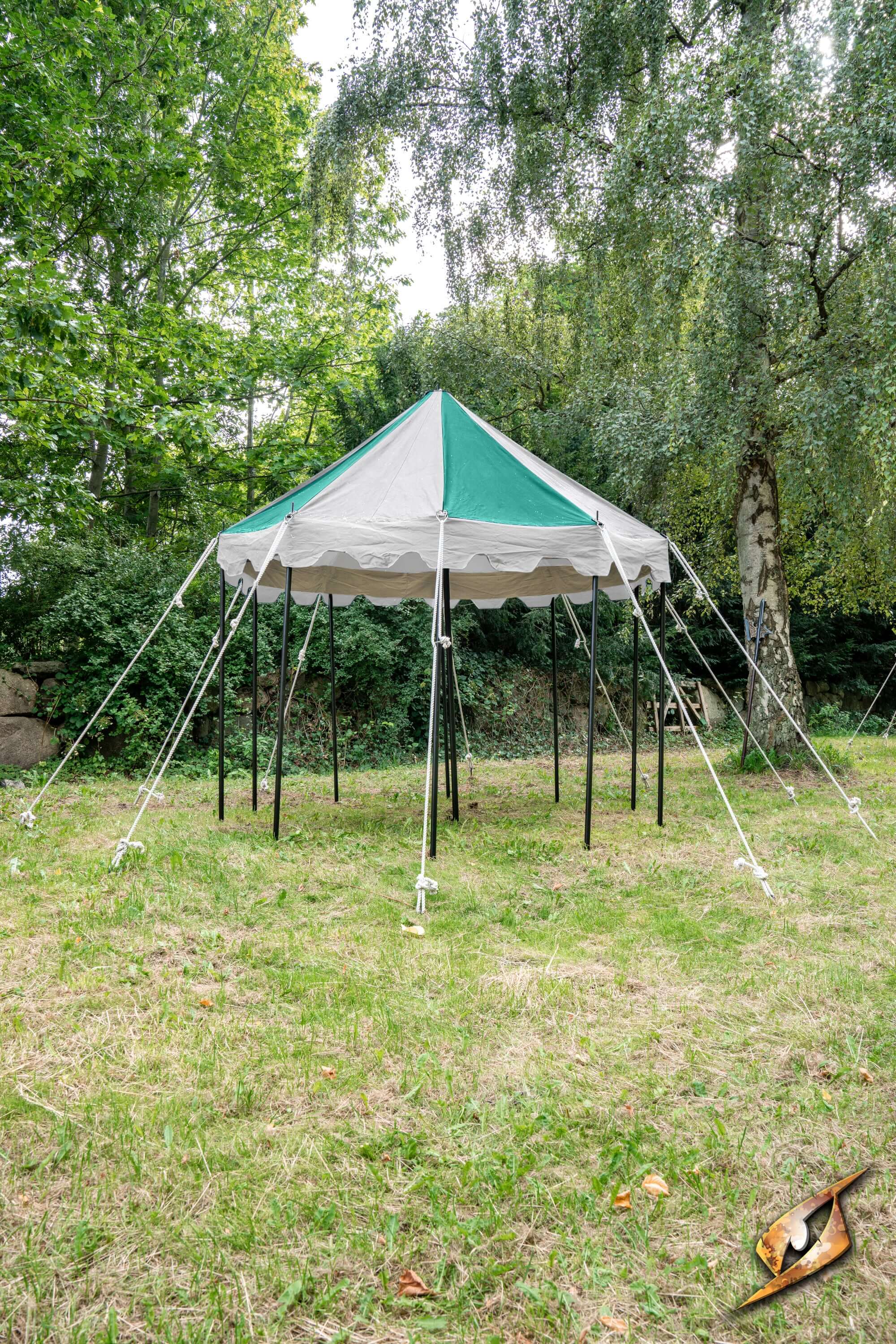
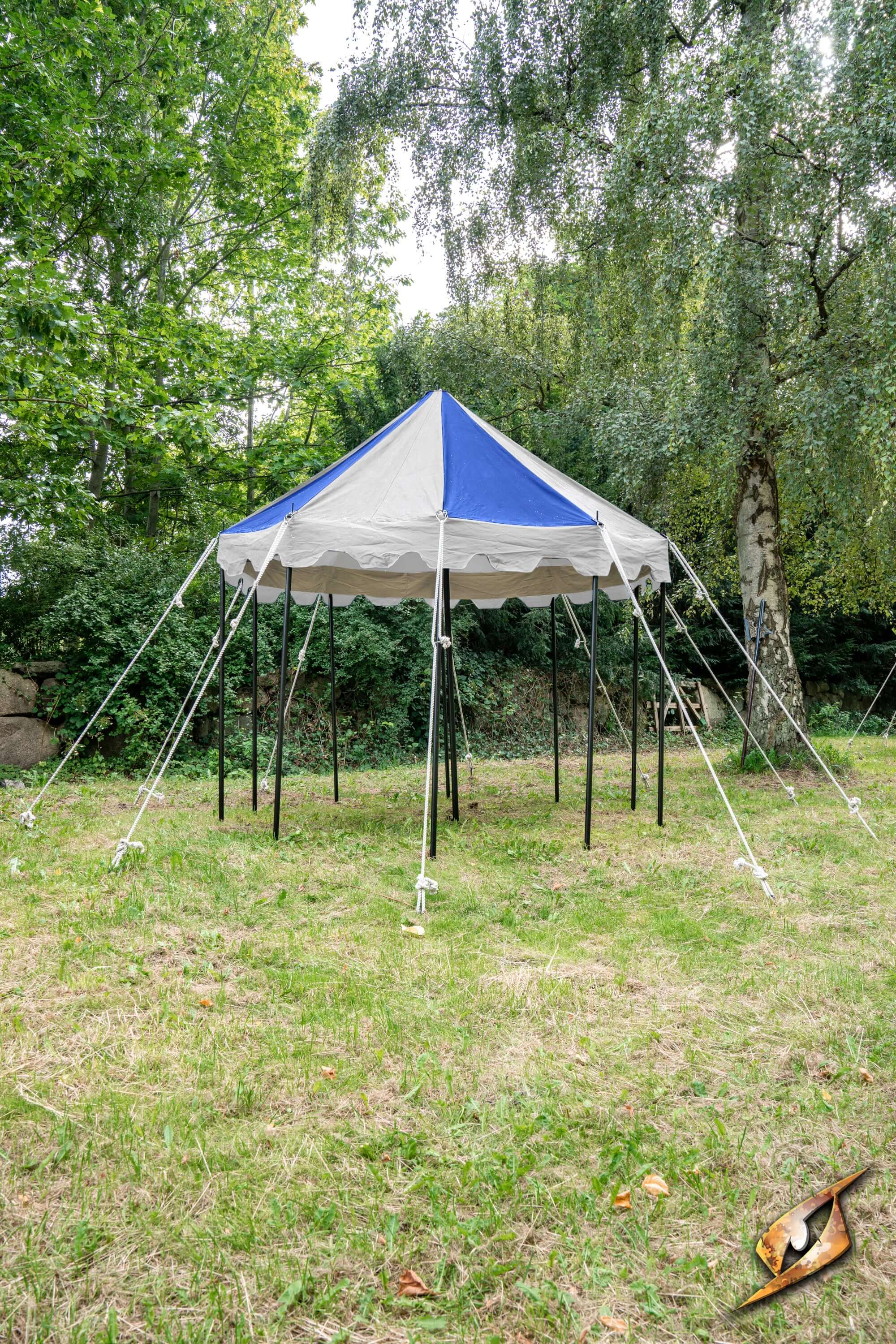
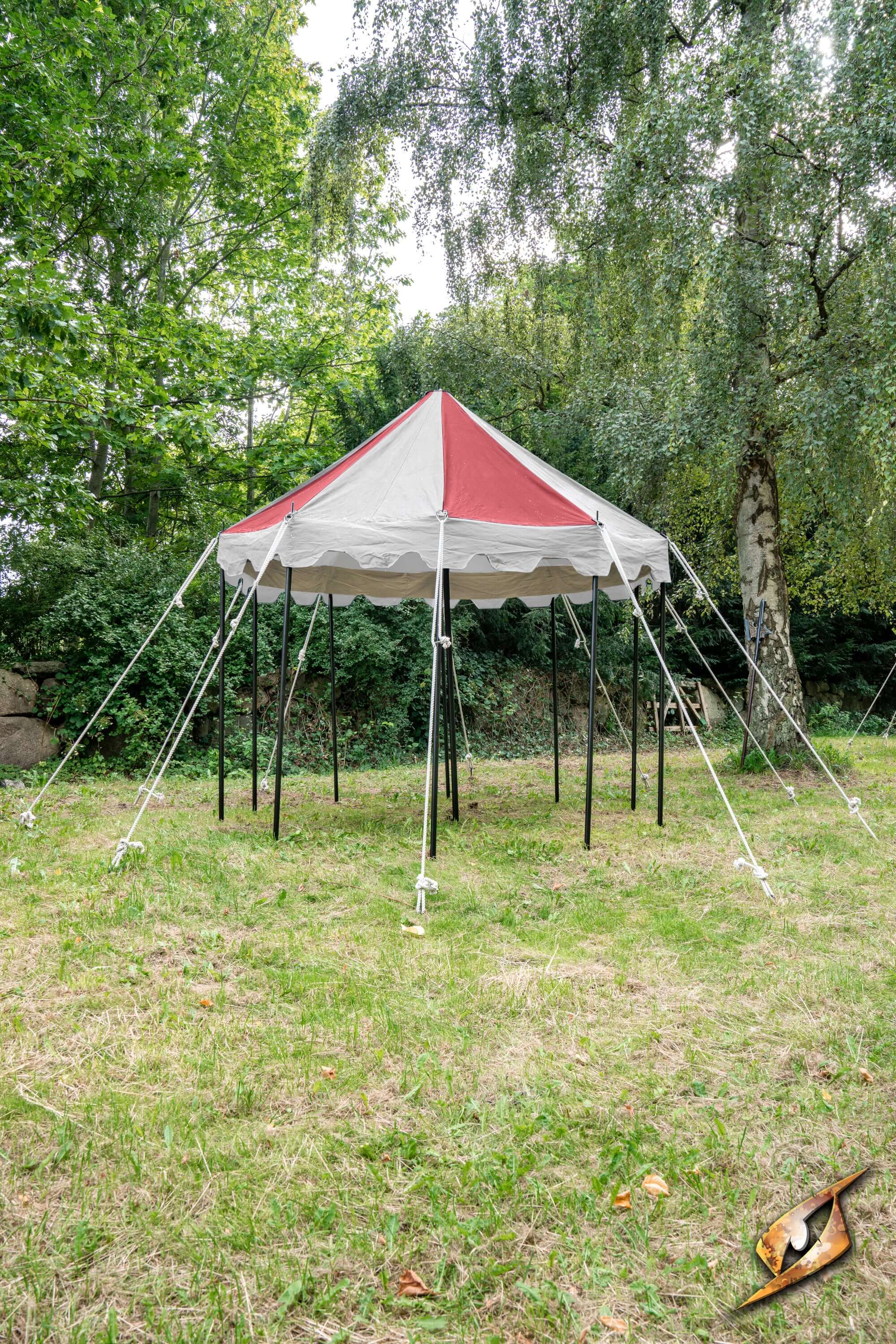
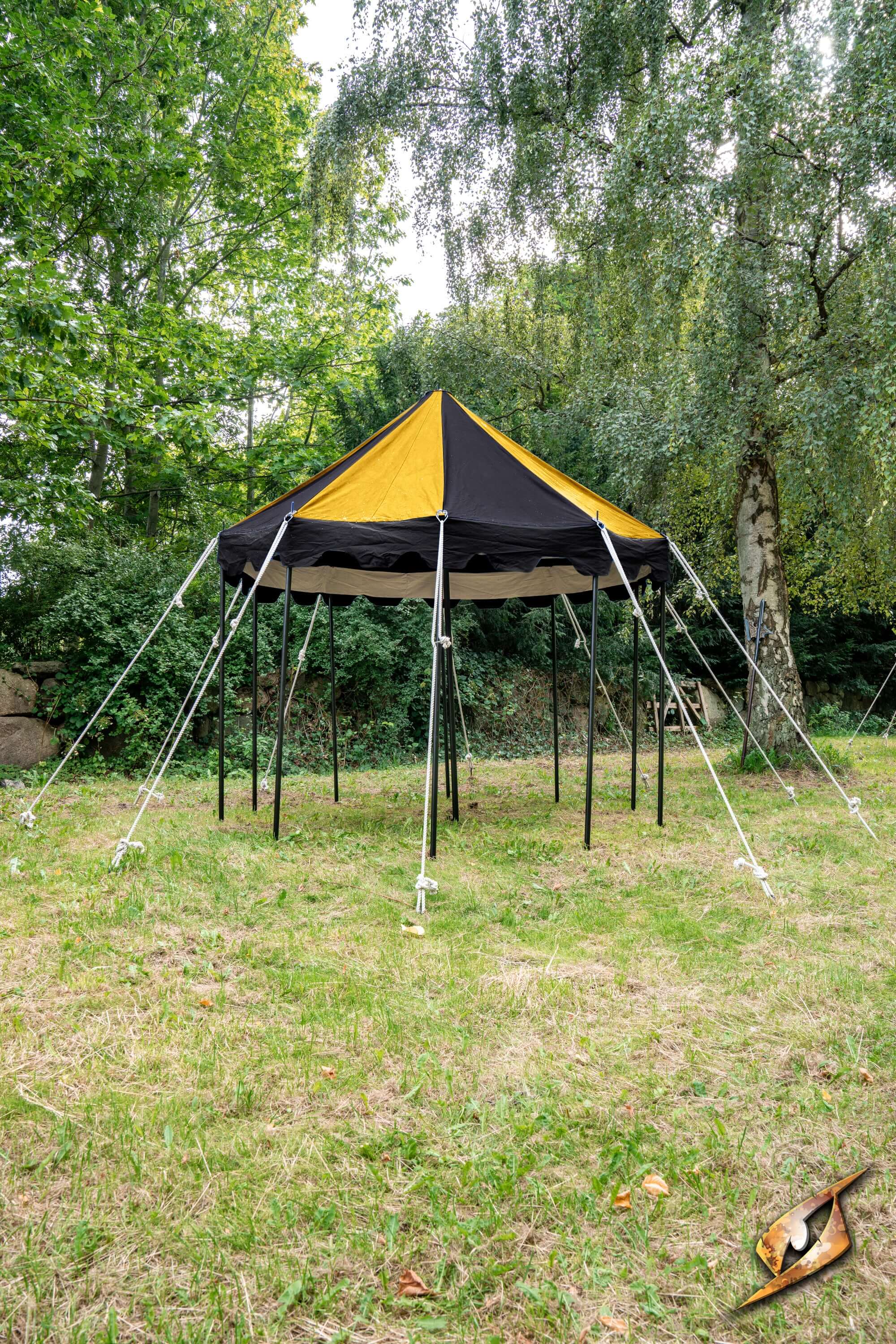
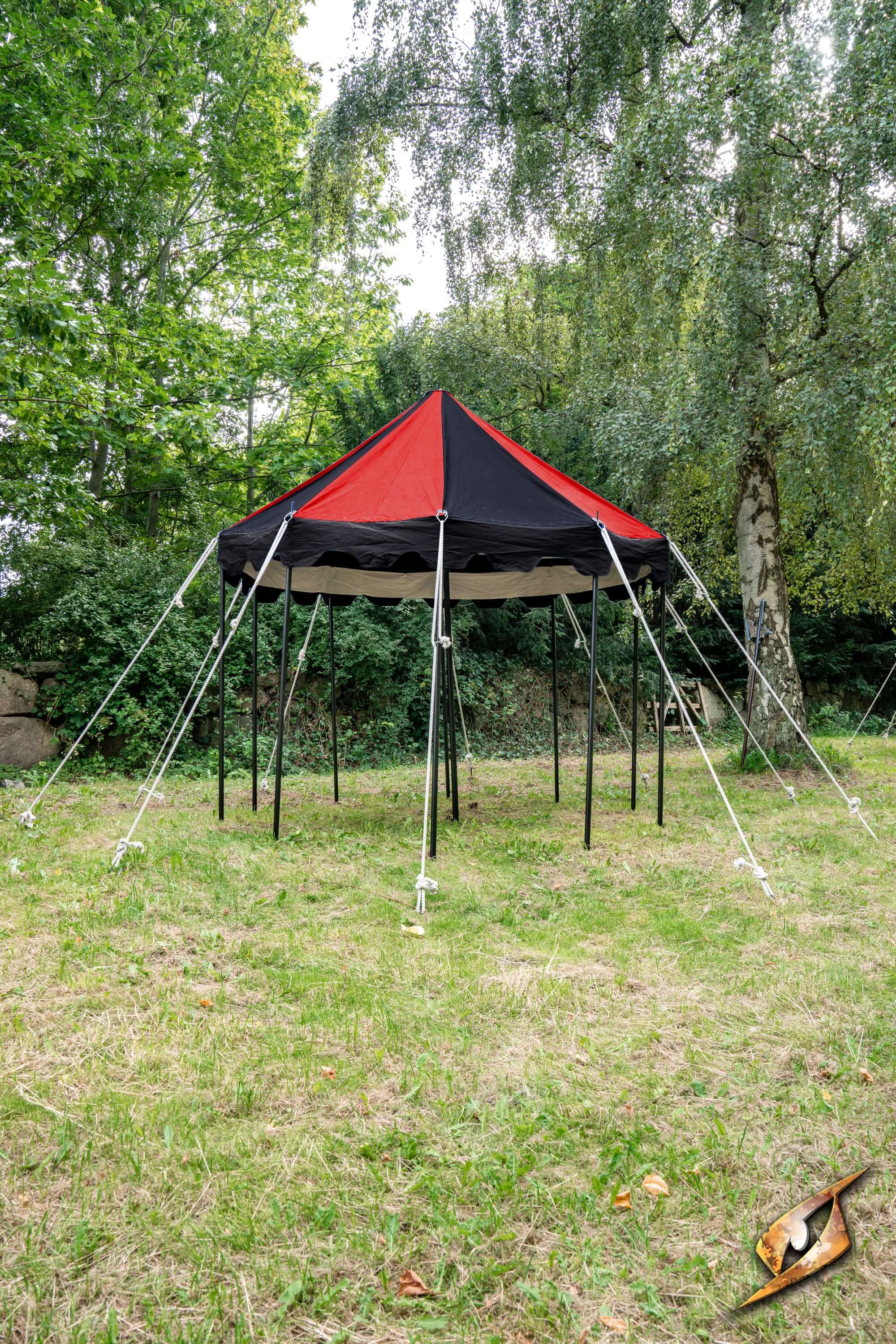
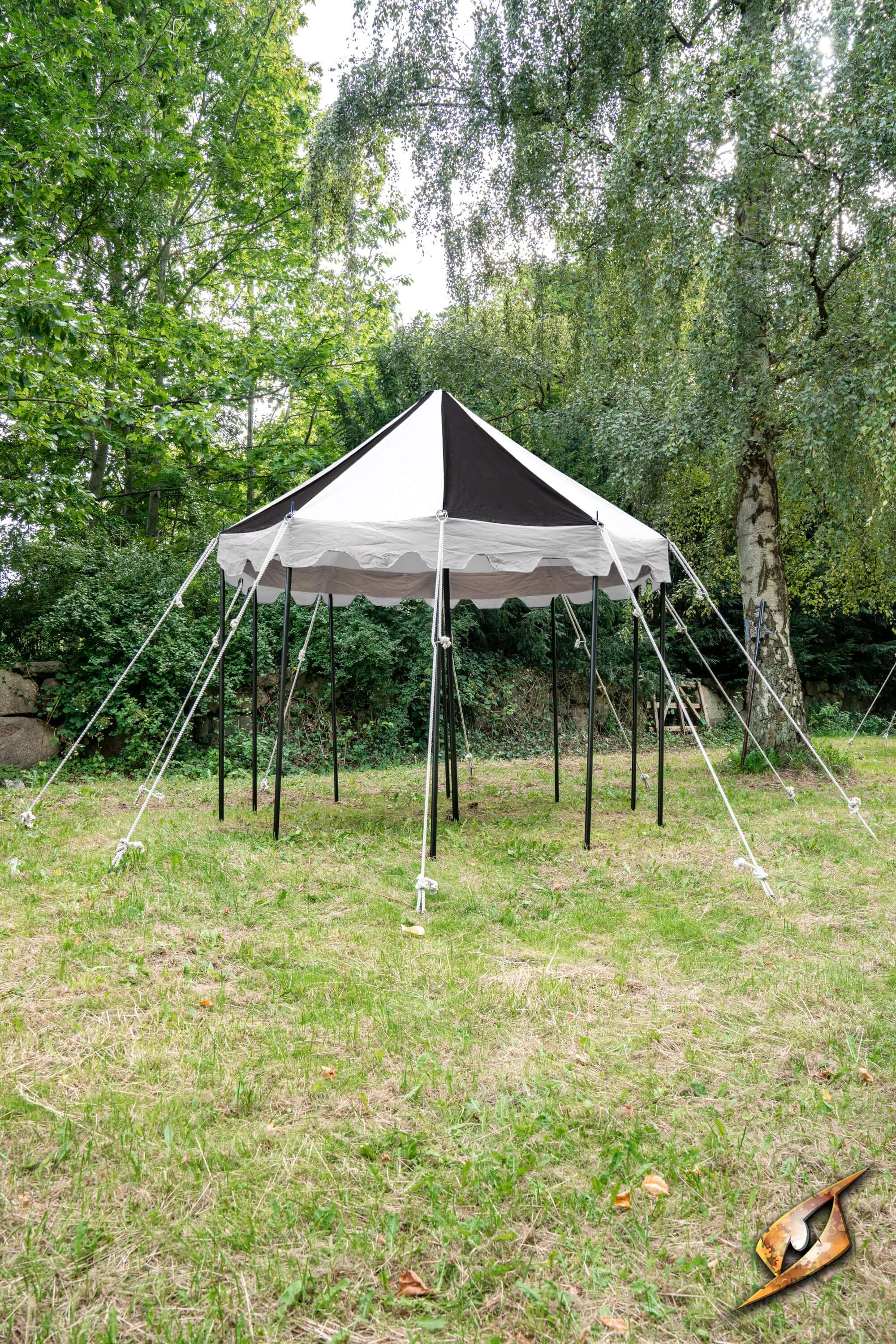


The rule everyone breaks
Do not touch the inside of a canvas tent while it is raining.
Touching the inside surface of a canvas tent while it's raining breaks the water's surface tension and opens a capillary path, causing a persistent drip at that exact spot for as long as the rain lasts.
This applies to more than just touching with your fingers:
- Bedding, bags, and clothing leaning against the walls
- Chair backs and furniture pushed to the edges
- Rope, lanterns, and kit hung against the canvas rather than from the frame
- Anything stored in the corners where roof meets wall
Leave a hand's width of air between your belongings and the fabric — it's the cheapest waterproofing measure there is. If someone does brush the inside and a drip starts, you can't undo it mid-storm: put a cloth or bucket under it, keep everything else clear, and let the canvas dry out afterward.
How to pitch a canvas tent for rain
Check guy lines & pegs
Wet cotton shrinks. The instinct to tension a sagging tent is exactly backward, and over-tight lines on shrinking canvas tear seams, rip out loops and pull pegs. Ease the tension when rain sets in, and reset it as the canvas dries.
If it looks like it's going to rain at night, it's worth checking the guy lines and pegs before dark. Adjusting a pitched tent on a wet night is not a job you want to do in the middle of your event.
Avoid Pooling
Water collecting on a flat section adds weight, which increases sag, which collects more water. Pitch with enough slope on every panel that water runs off, and push any pooling off from underneath early rather than waiting for it to get heavy.
Choose a site with drainage in mind
Slightly raised ground beats a scenic hollow. Look at where water would run if it rained hard for six hours, then pitch somewhere else. Many events prohibit digging drainage trenches, so site selection is usually your only control.
Remember to keep the tent walls off the ground by using a ground tarp — permanently damp ground wicks soil moisture upward, and even the best location for the tent won't help that.
handling moisture & leaks mid-event
Condensation or a leak? How to tell the difference.
Canvas breathes, so it produces far less condensation than a coated synthetic, but less isn’t none. Four people sleeping in a tent release a surprising amount of moisture overnight, and in cold conditions it settles on the coldest surface available.
So how do you tell condensation from a leak? Look at where the water is first. Condensation spreads as fine droplets evenly across the roof. A leak runs or drips from one spot, usually a seam, a corner, or somewhere someone touched. Then consider the timing: condensation builds overnight and is worst at dawn, while a leak appears during and after rain. Still unsure? Open the vents or the door for a while. Condensation eases as the air moves, but a leak won’t change.
What to do if a canvas tent leaks during the event
- Stop anything and everything from touching the inside surface.
- Slacken over-tight guy lines and clear any pooling from the roof.
- Contain the drip with a cloth or bucket rather than trying to fix it wet.
- If a specific seam is the problem, note exactly where and treat it once the tent is home and dry.
- Dry the tent fully before storage. A damp packed tent turns a small leak into a mold problem, and mold on cotton stains permanently.
Reproofing a canvas tent
How often, and Why more isn't better
Reproof canvas every two to three seasons of regular use, or sooner if water stops beading and starts soaking straight in — and apply a light coat rather than a heavy one, since over-proofing clogs the weave and worsens condensation.
Reproofing restores the water repellency lost to sun, dirt, and cleaning. Let the water test beat the calendar: a tent used for eight events a year needs it more often than one used for two.
Two cautions:
- First, heavy or repeated coats in one session clog the weave so the fabric stops breathing properly — you trade a small rain-resistance gain for a real increase in condensation. A canvas tent sealed like a plastic bag will rain on you from the inside.
- Second, match the product to the fabric: use a proofer intended for cotton canvas, applied to a clean, dry tent, with a second pass over seams and stress points. Test the result with a jug of water before trusting it to a weekend away.
Frequently Asked Tent Questions
It's water-repellent out of the box, not fully waterproof. The paraffin wax makes water bead and run off the weave immediately, but the stitch holes along the seams still need to close through a soak-and-dry cycle, and the fabric still relies on swelling cotton fibers as the real seal in sustained rain.
We recommend doing it at least once. The tents are pre-treated, but the needle holes along the stitching are open. This is the most common reason a brand-new tent leaks.
Almost always because something touched the inside of the canvas there, breaking the surface tension and creating a capillary path. Move whatever is against the wall and keep everything clear of the fabric.
No. Wet cotton shrinks, so tensioning during rain strains seams and pegs. Slacken the lines when rain sets in and reset them once the canvas dries.
Synthetic is waterproof out of the bag and lighter to carry. Canvas is quieter, warmer, far less prone to condensation, repairable panel by panel, and lasts decades with care. For a weekend event in changeable weather, a properly weathered canvas tent is the more comfortable place to be.
Decades, if it's dried before storage and reproofed every few seasons. Almost every canvas tent that dies young was packed away wet.
Read more

How to Add Rust to Your Latex LARP Gear
In this guide, our guest writer and fellow LARPer Glenn Lieberkind walks you through painting latex LARP gear to look rusty. Glenn turned his Epic Armoury Raider Shield into an orc-style shield usi...
Read more