











Recently viewed products
Plate Armor
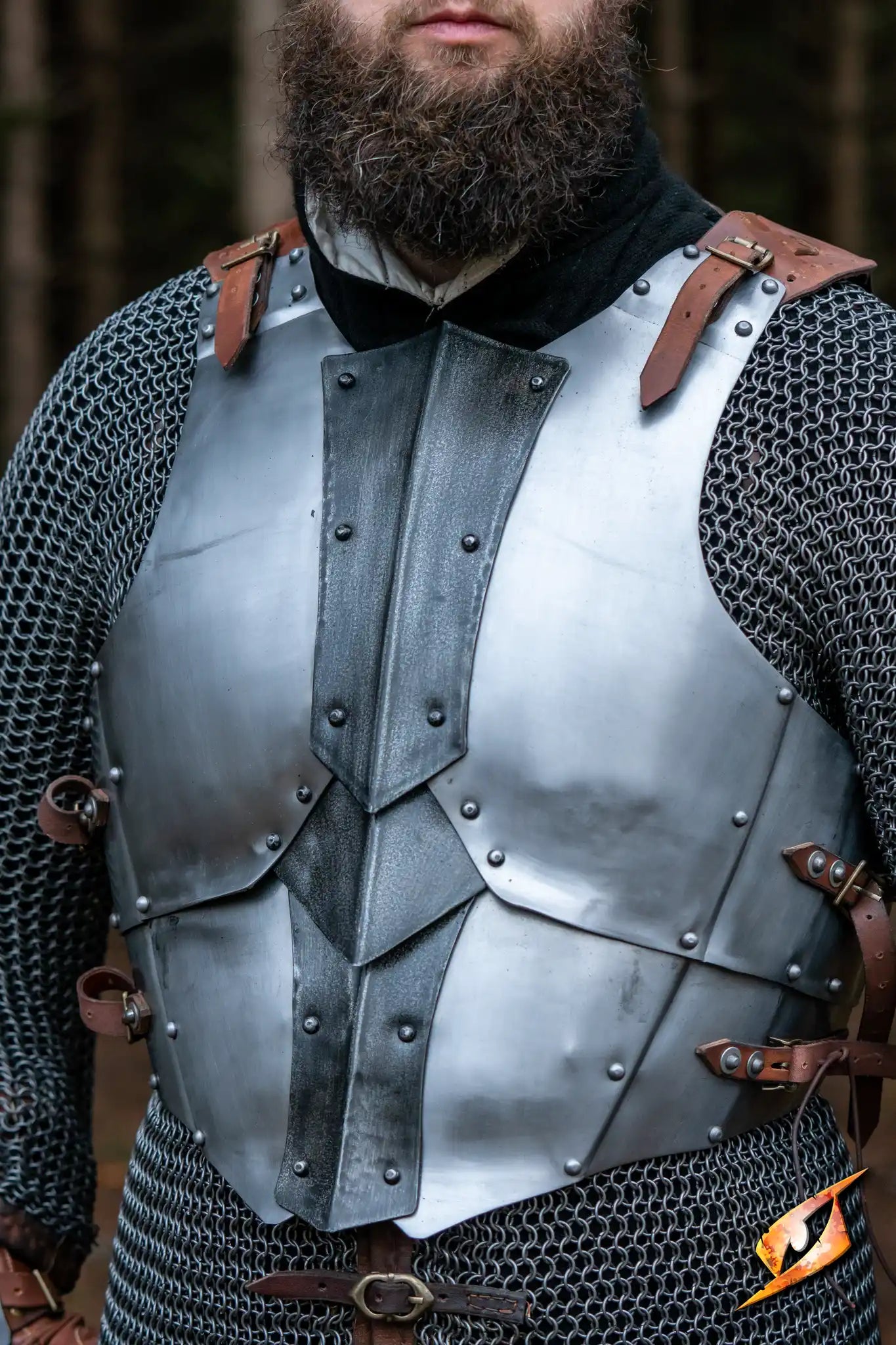
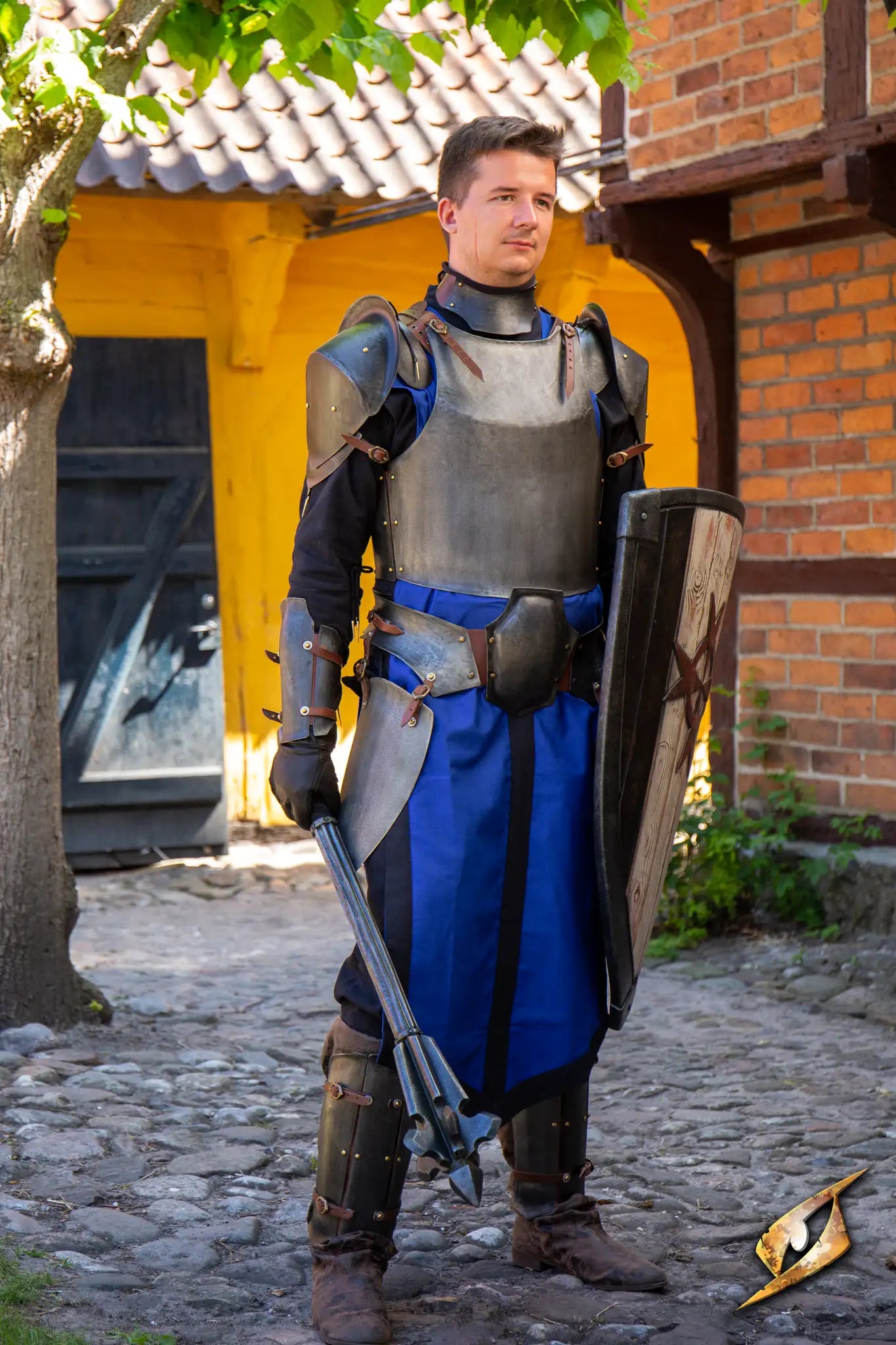
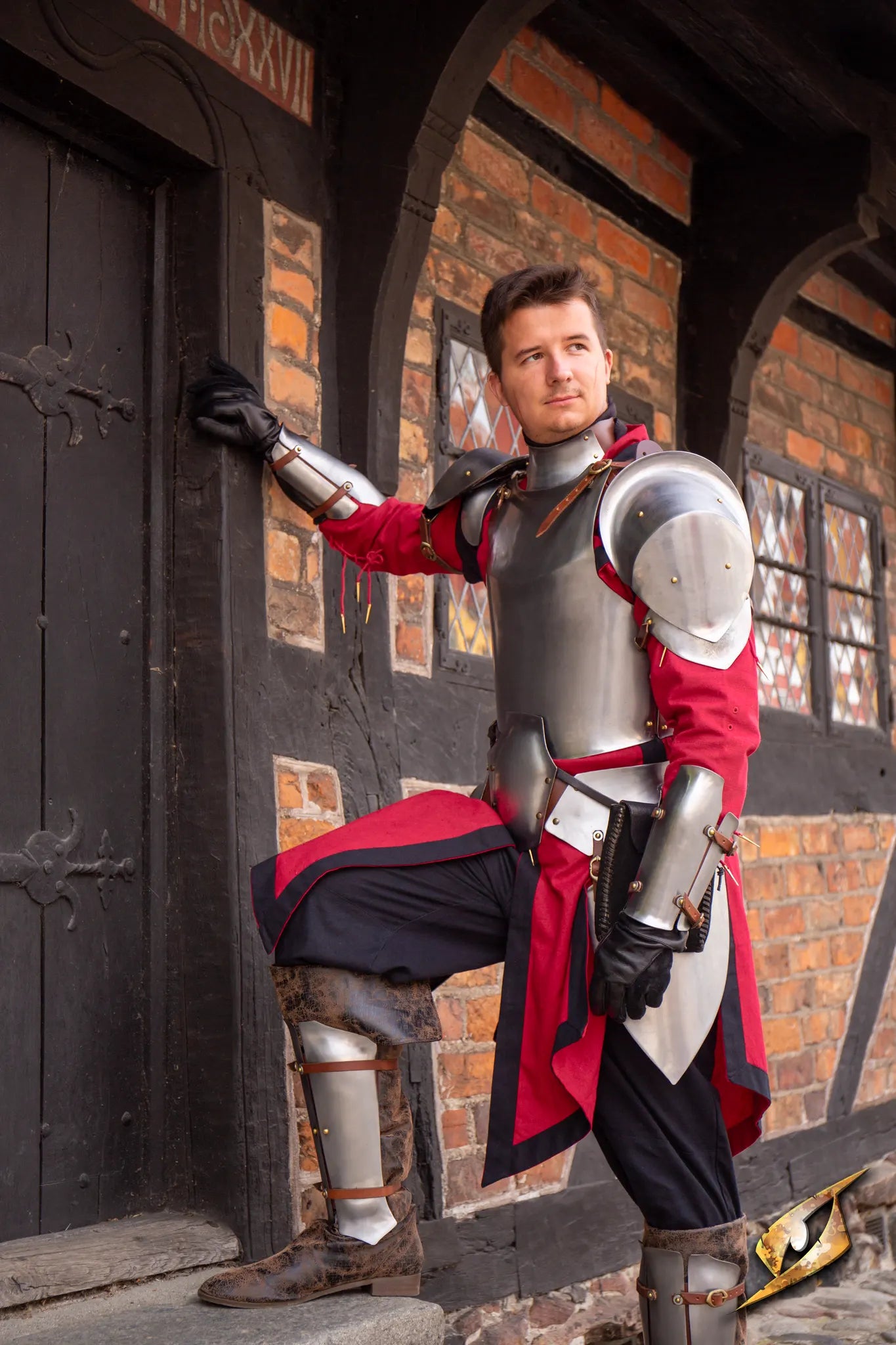
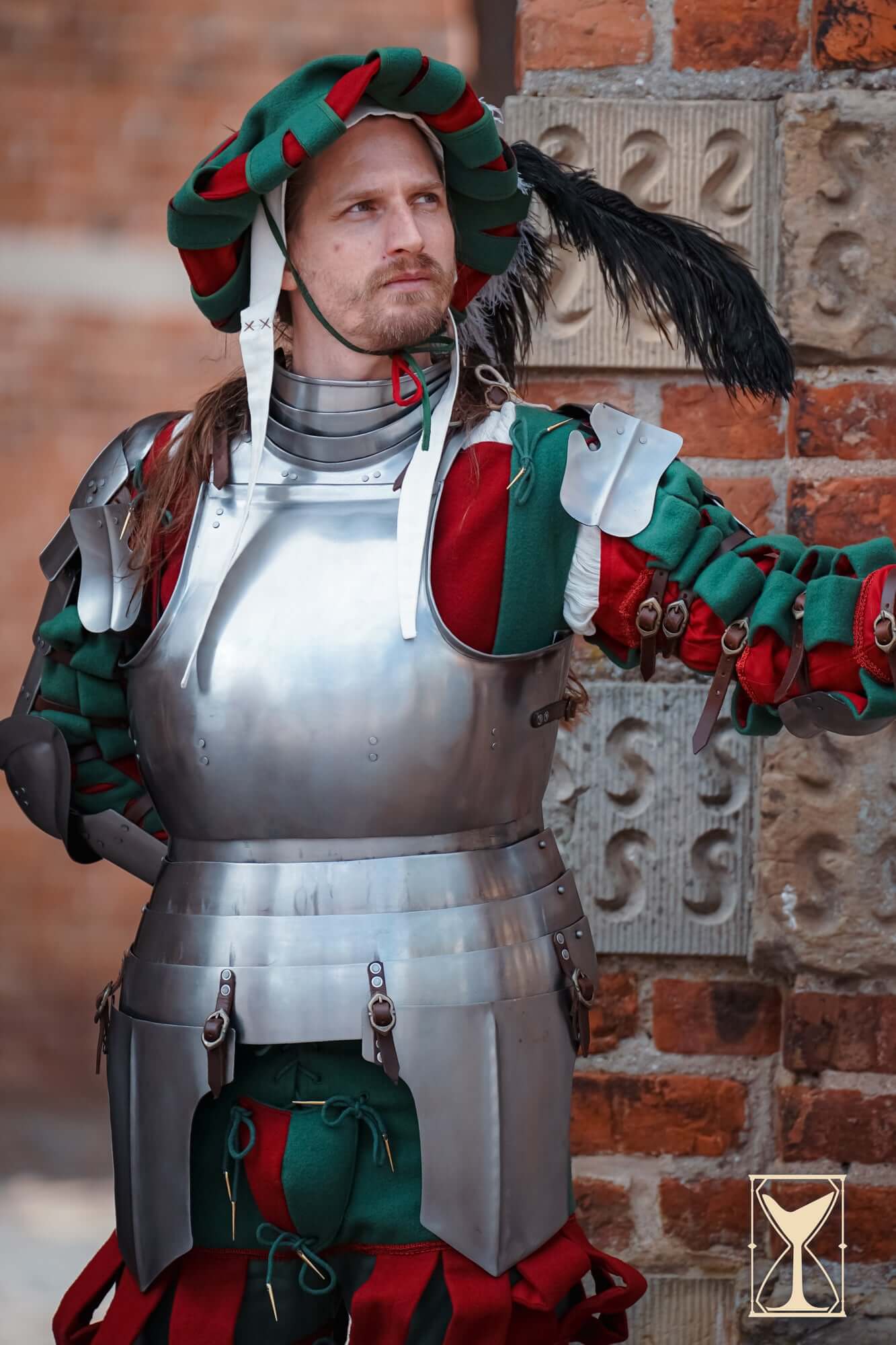
Plate armor is the most recognizable form of protective equipment in the Western military tradition, and one of the most enduring images in history, fantasy, and living history alike. A fully armored knight in late medieval plate is instantly legible across centuries of art, literature, and imagination: the shaped steel chest, the articulated limbs, the visual weight of a body entirely enclosed in metal. That image did not emerge from nowhere. It was the product of two centuries of incremental engineering, as European armorers refined the combination of individual steel components into a complete protective system that remains visually compelling and technically impressive today.
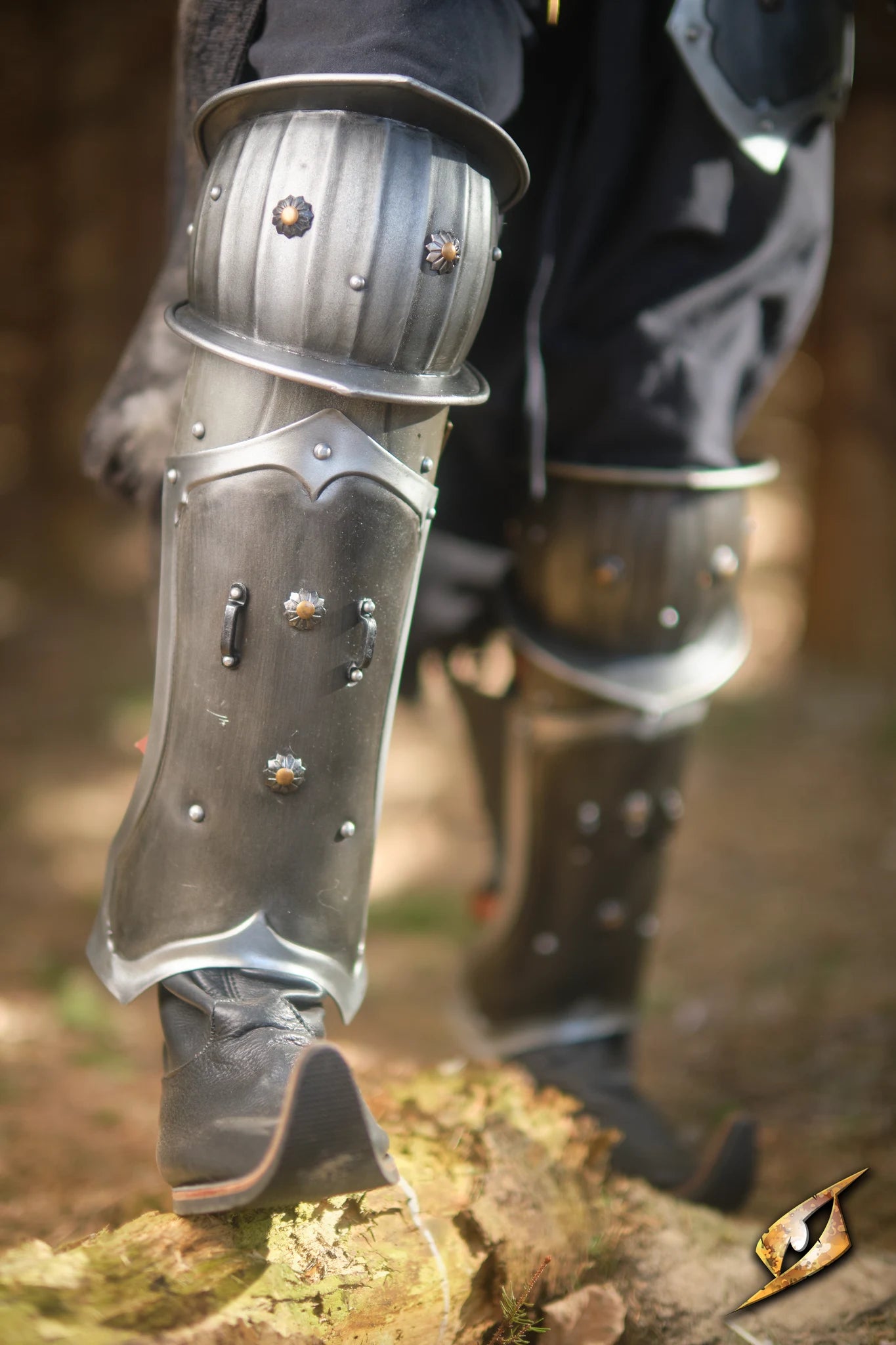
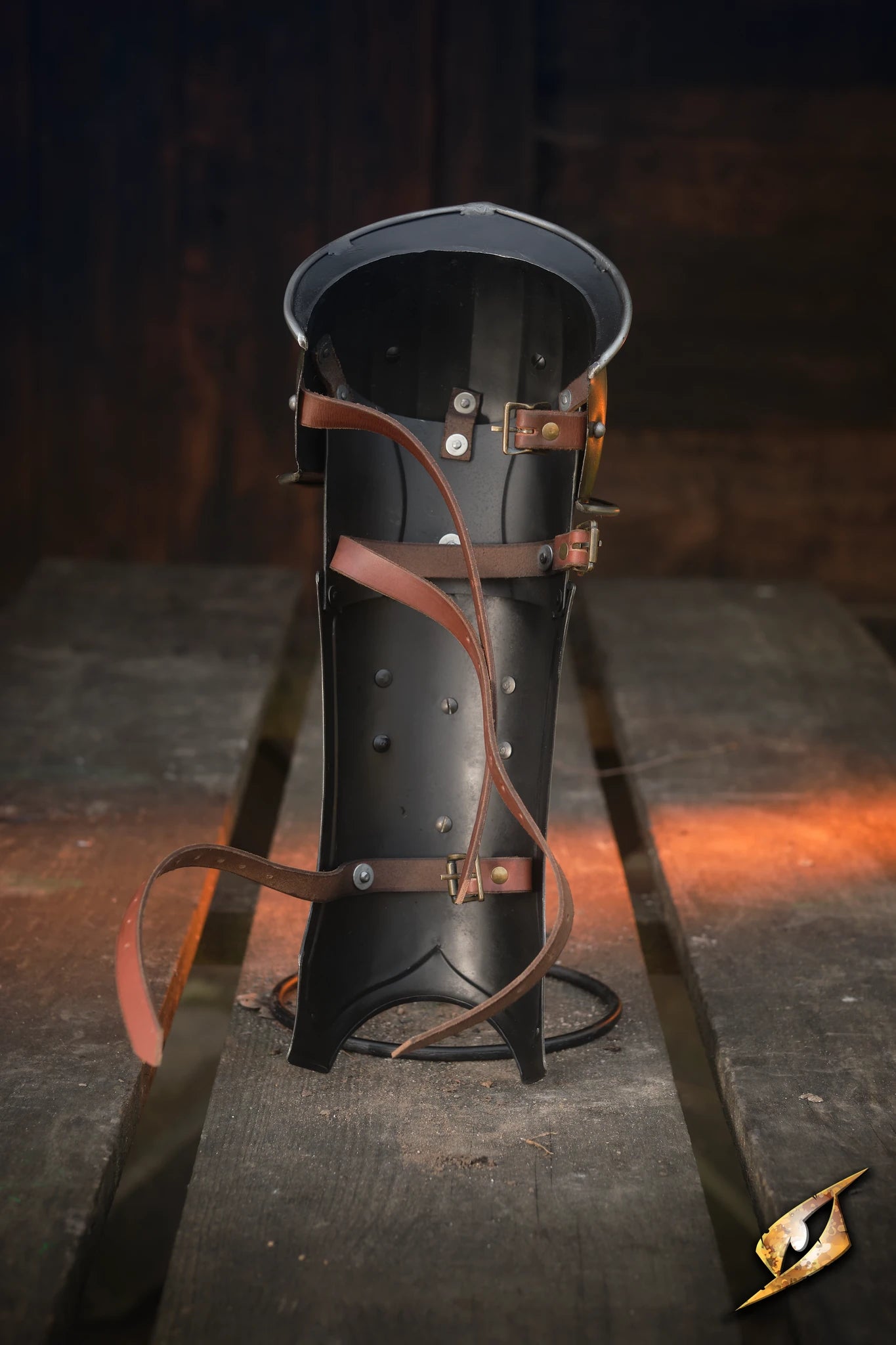
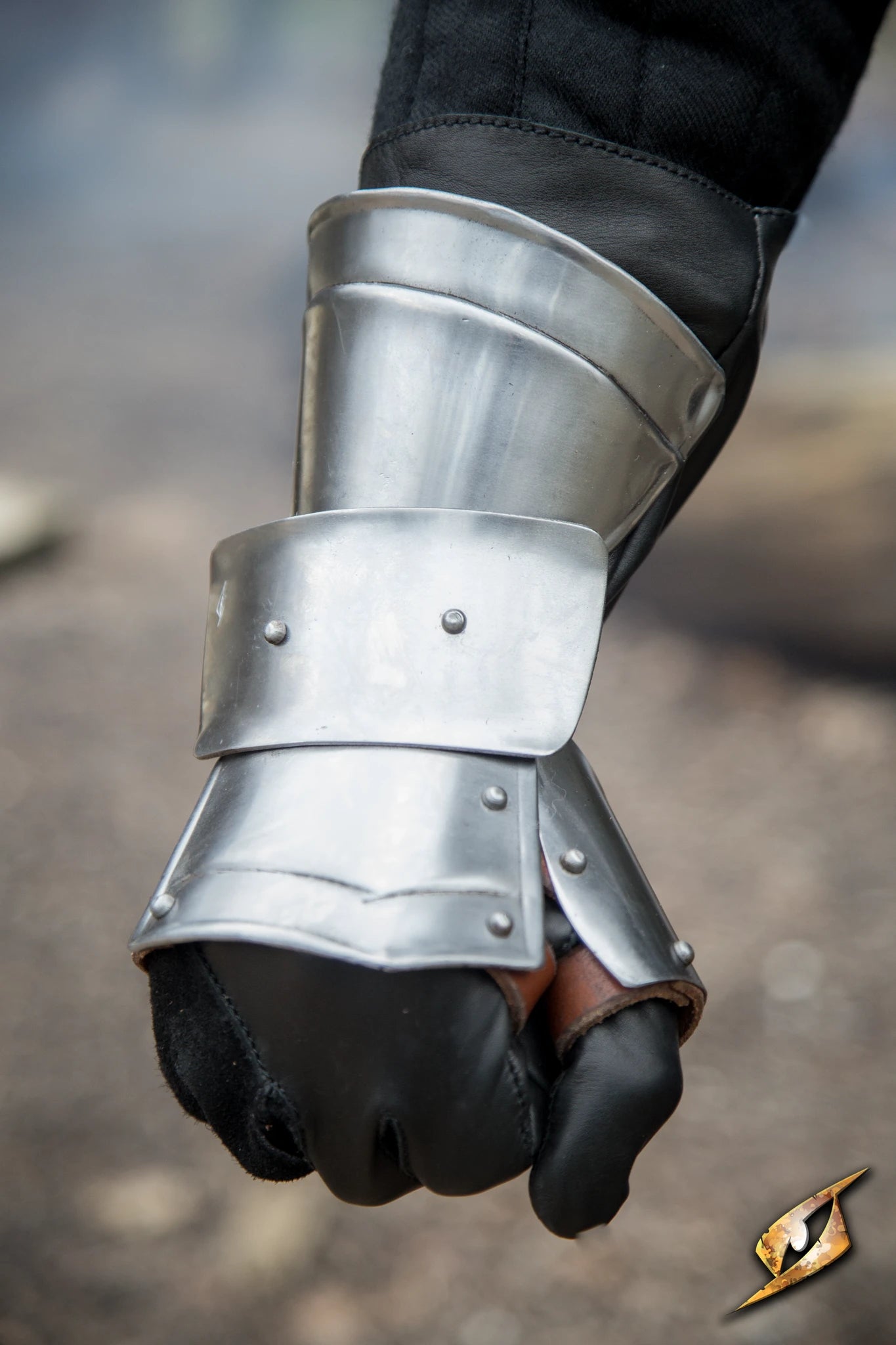
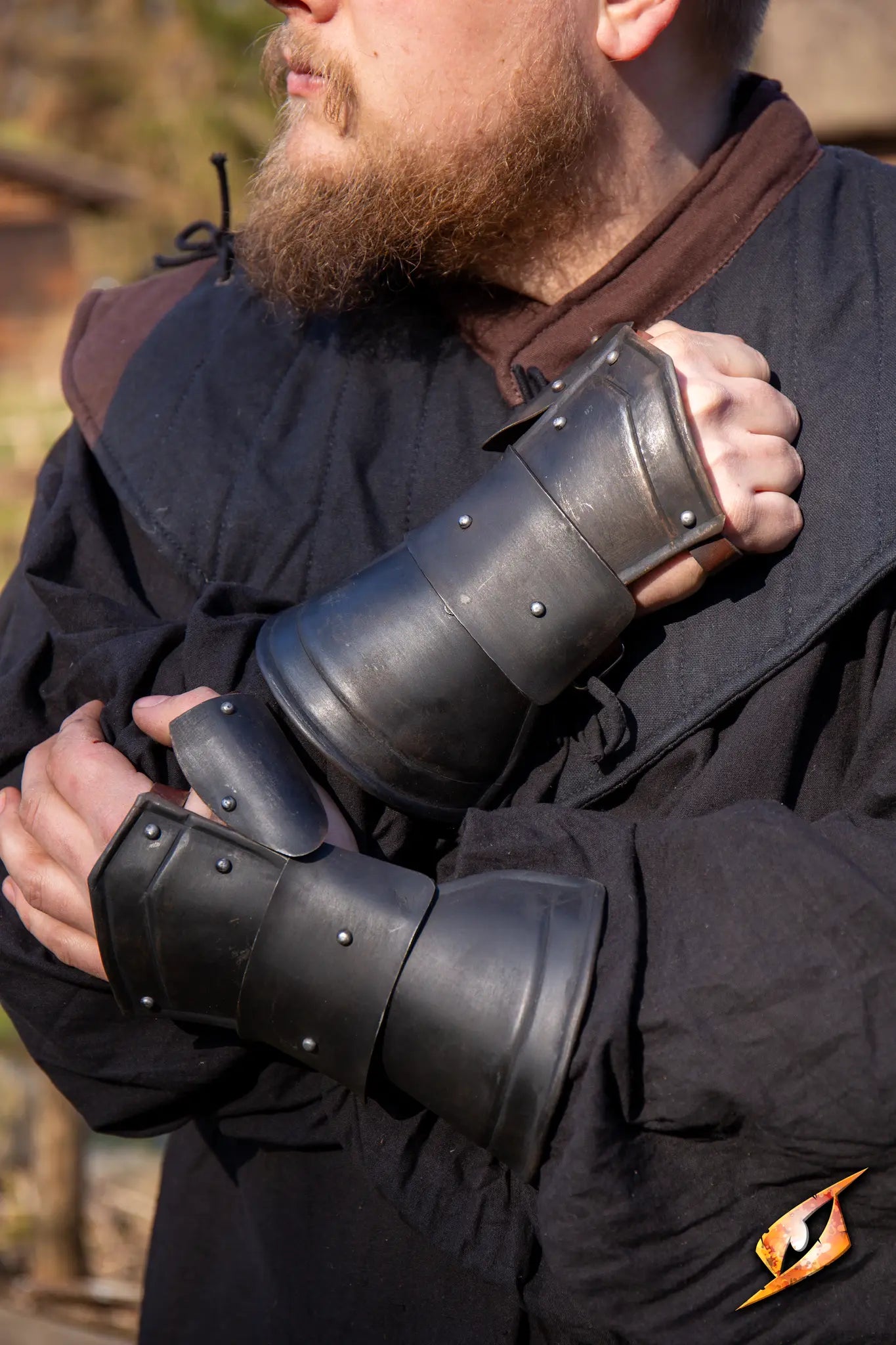
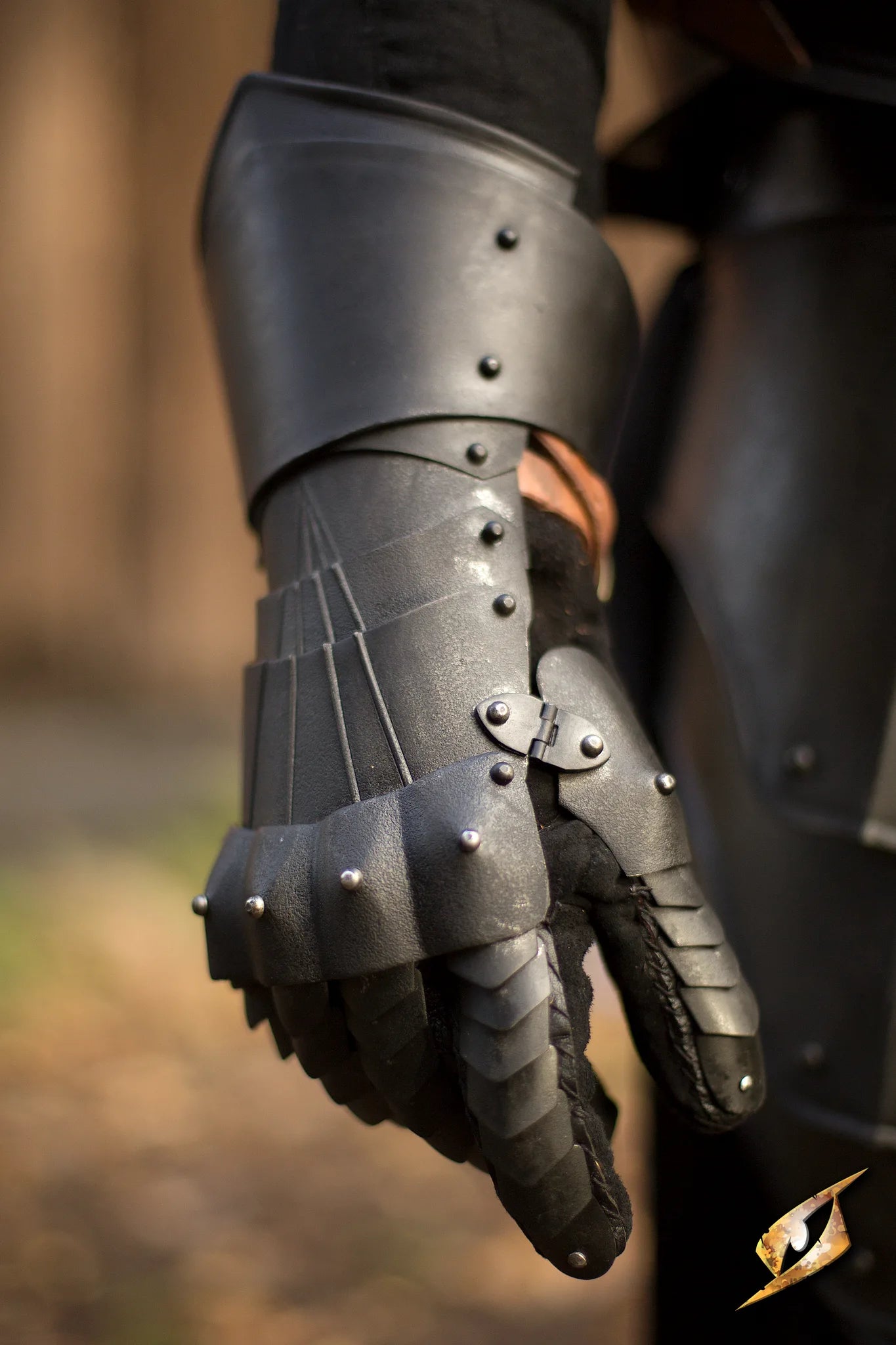
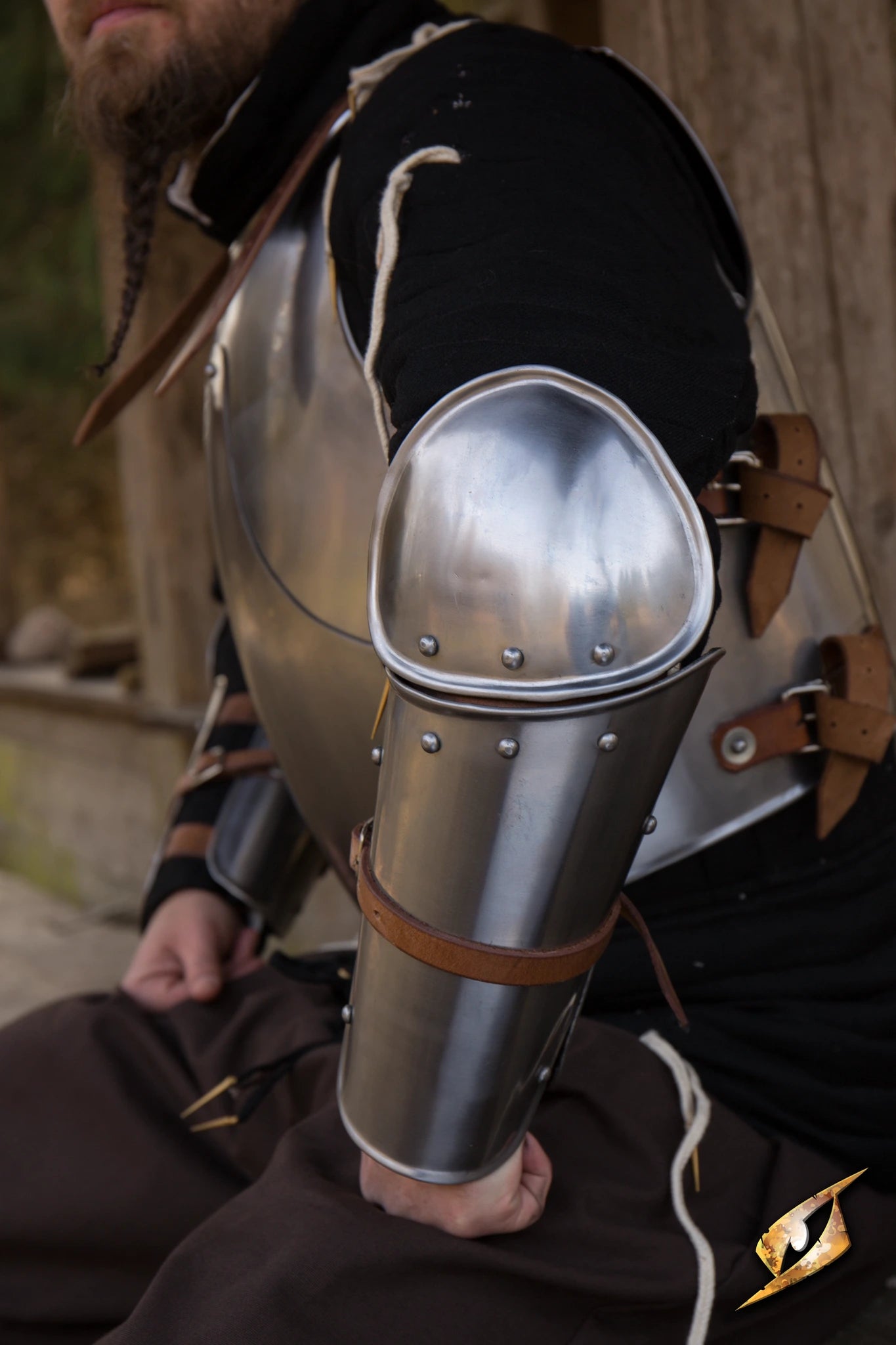
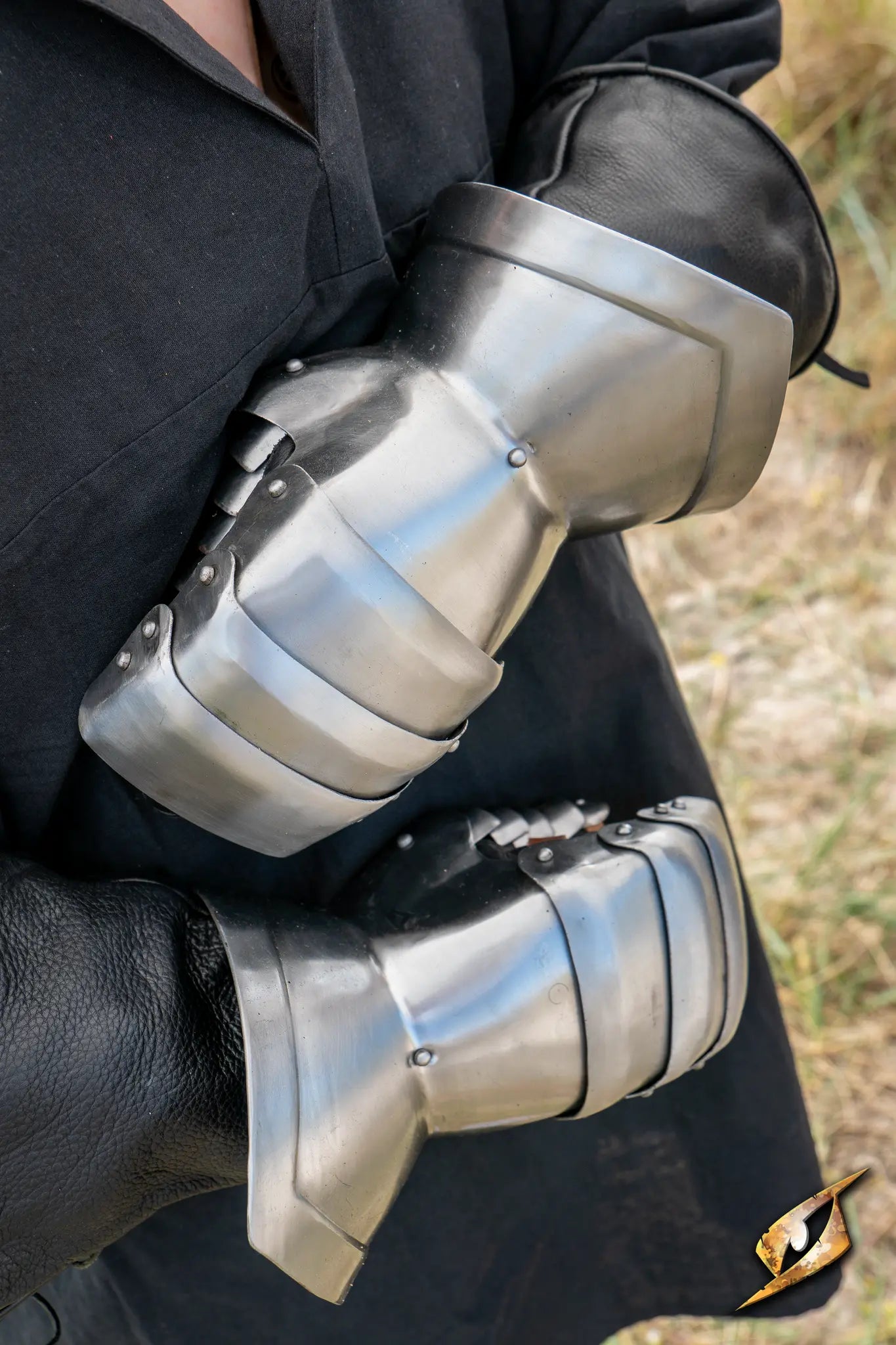
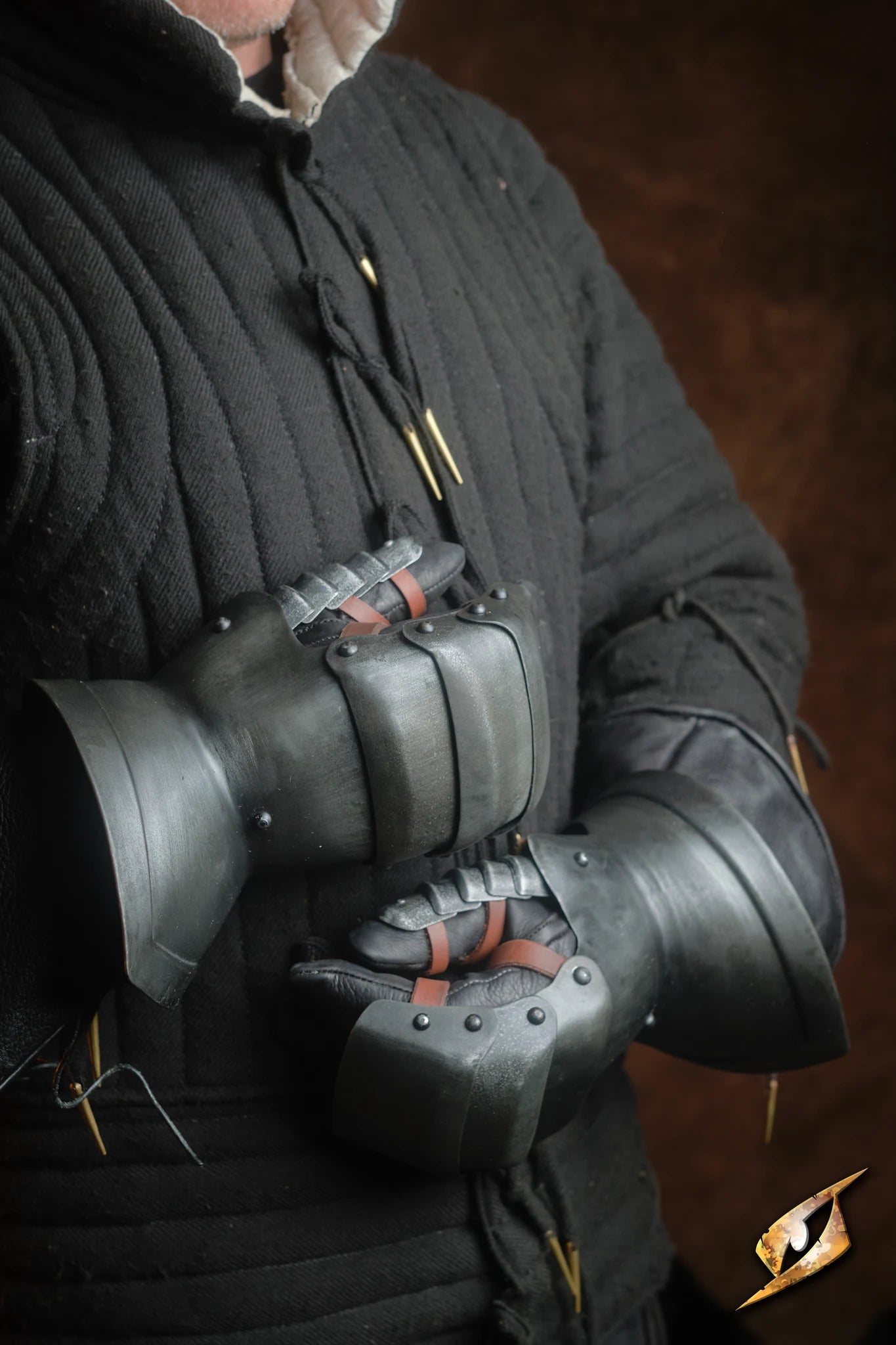
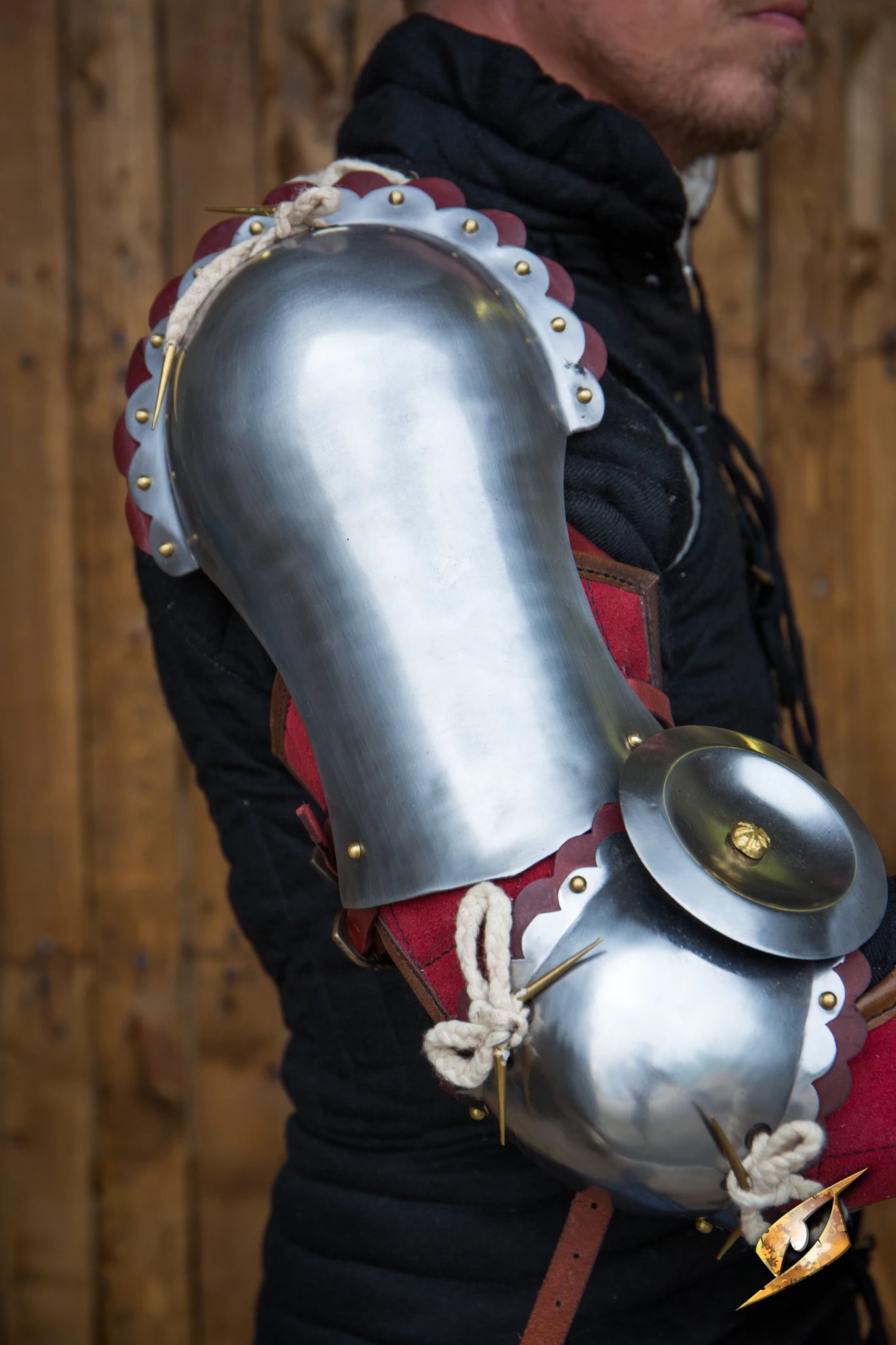
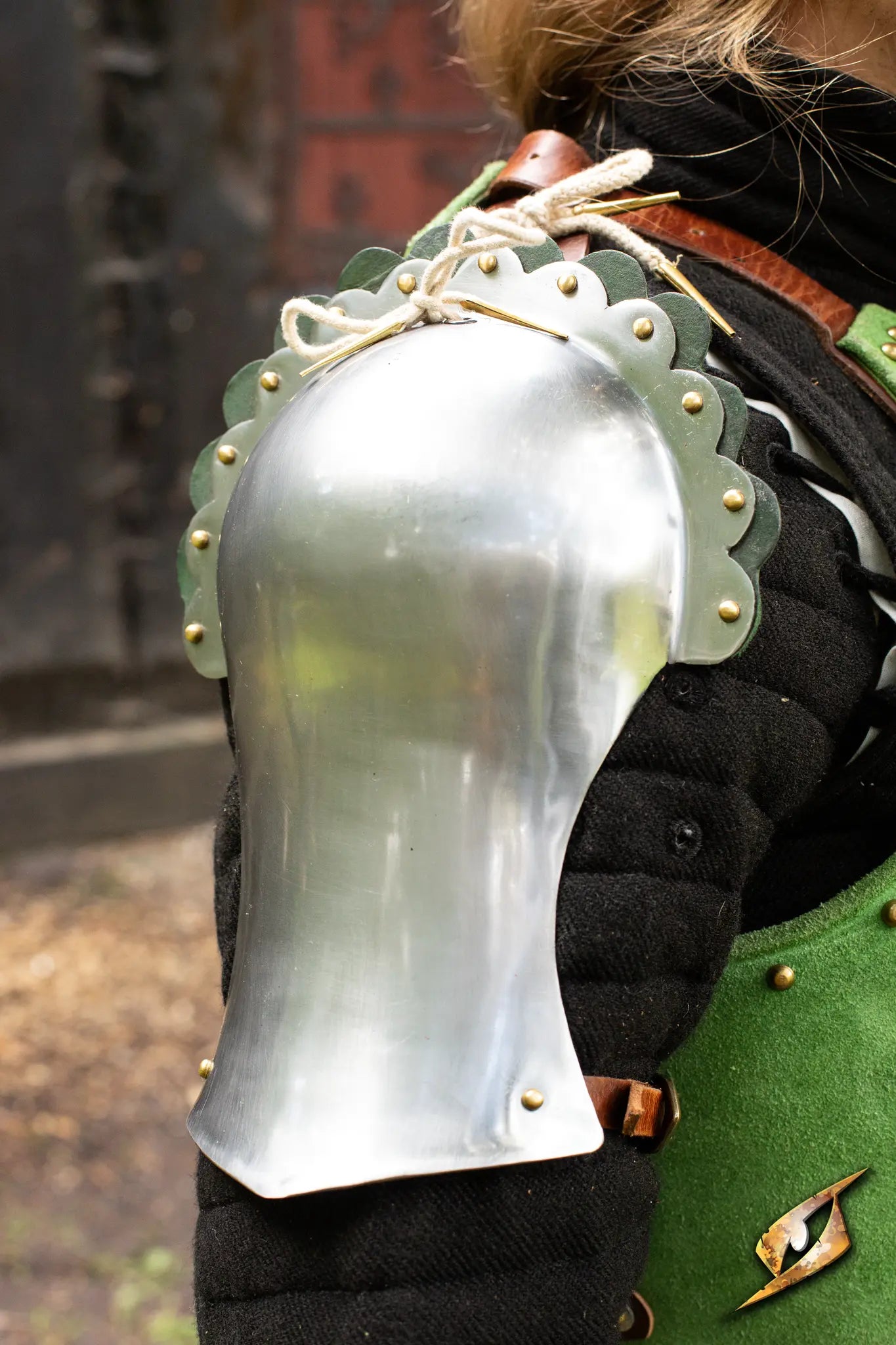
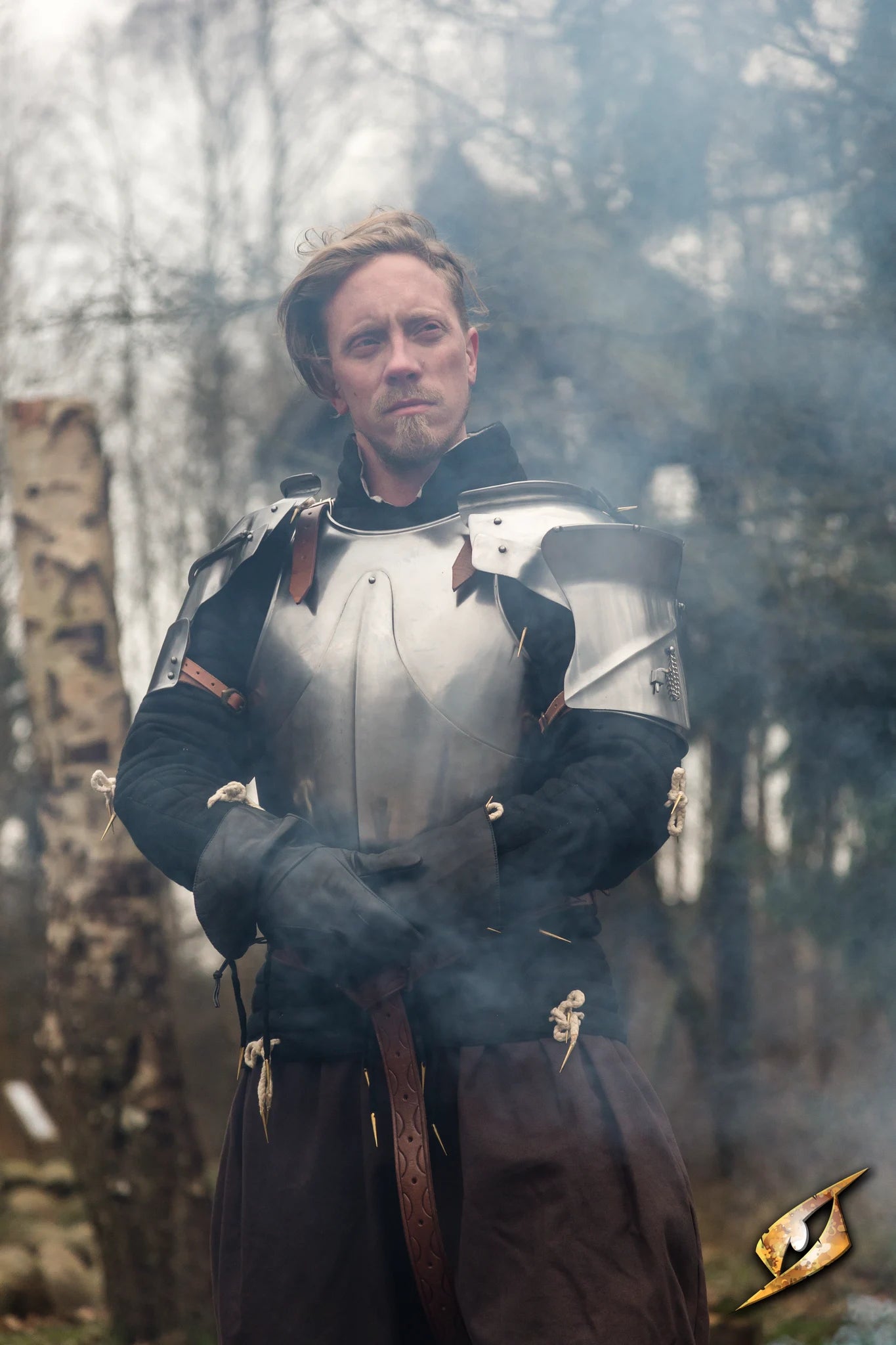
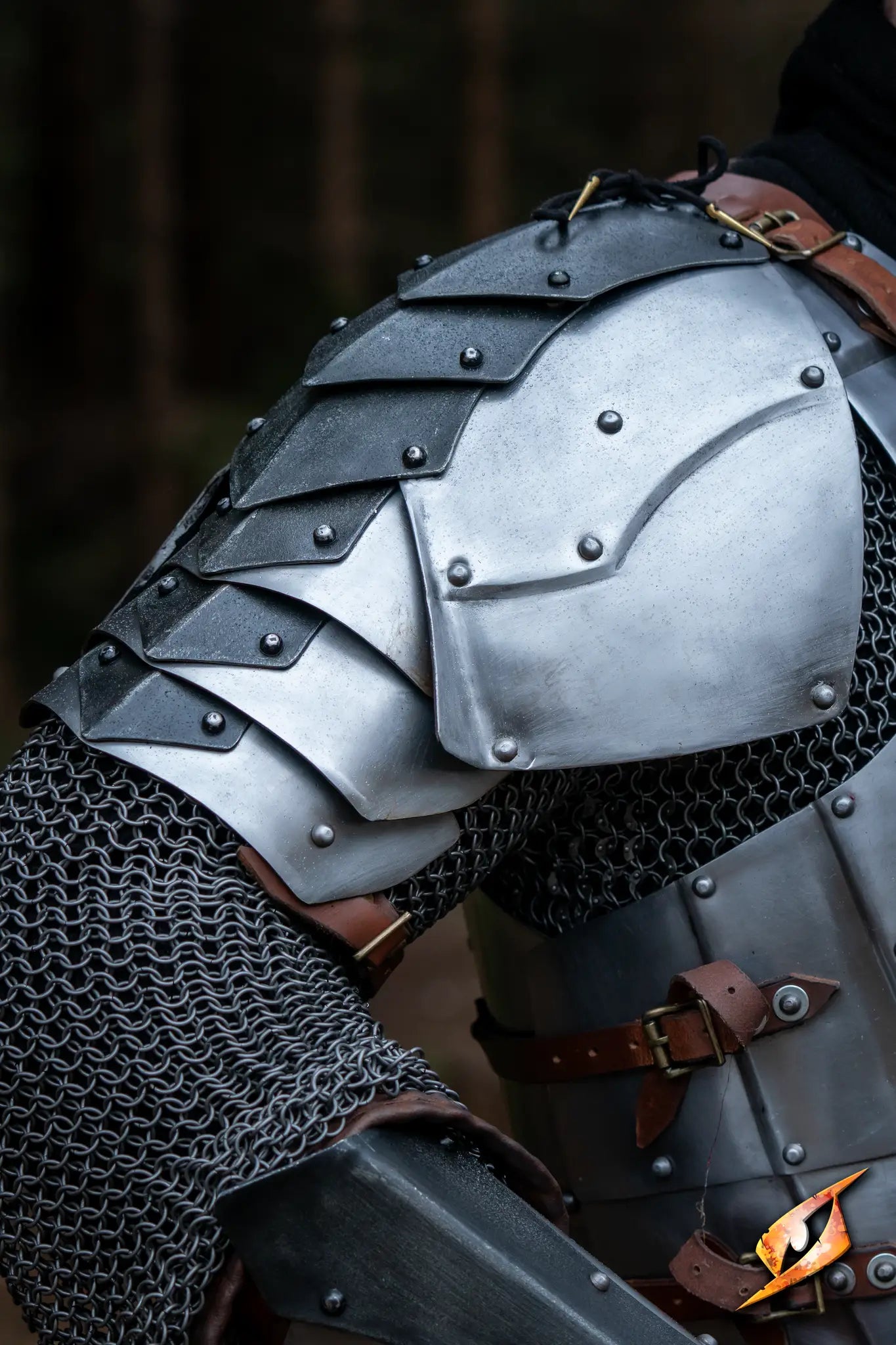
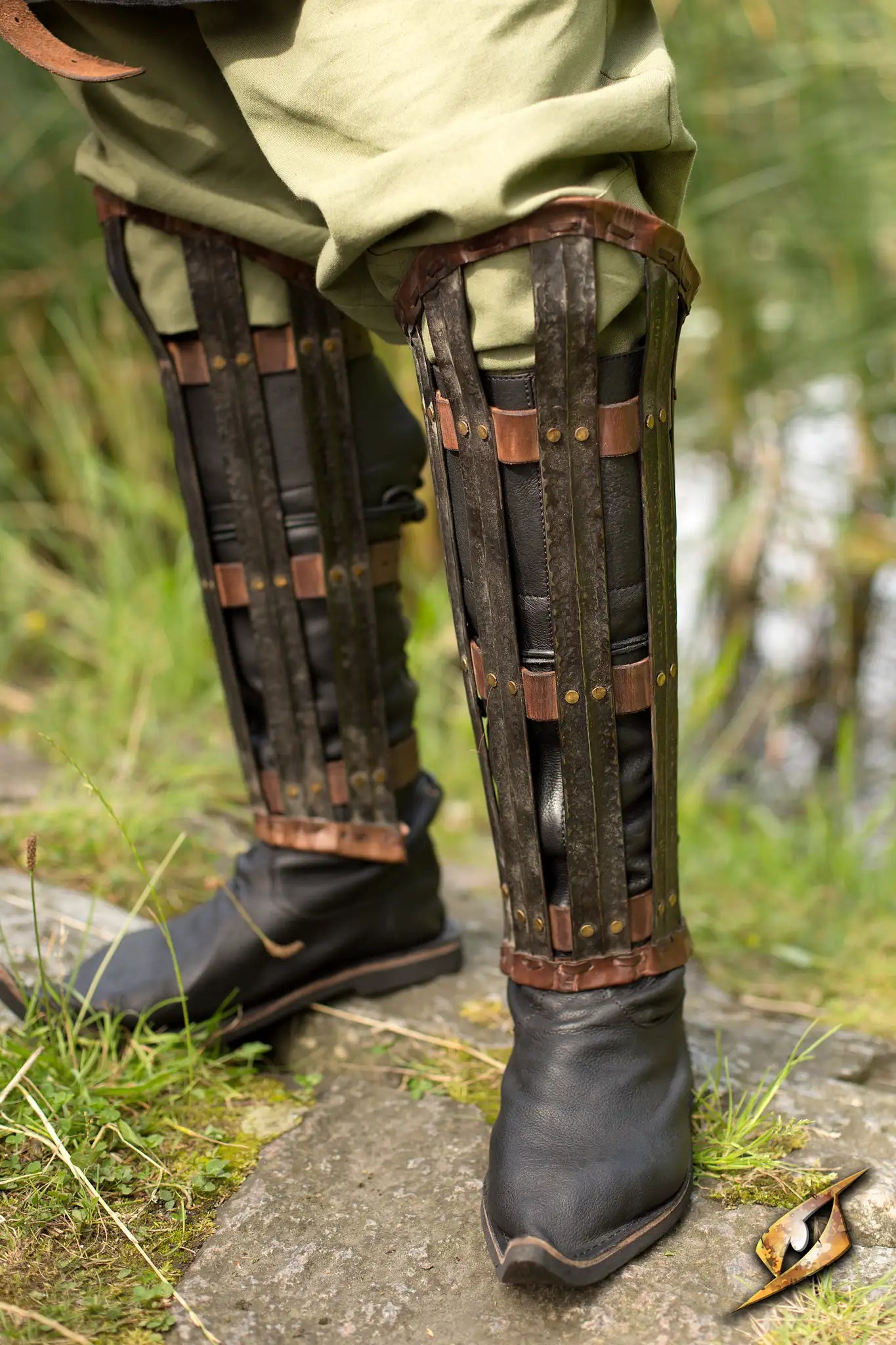
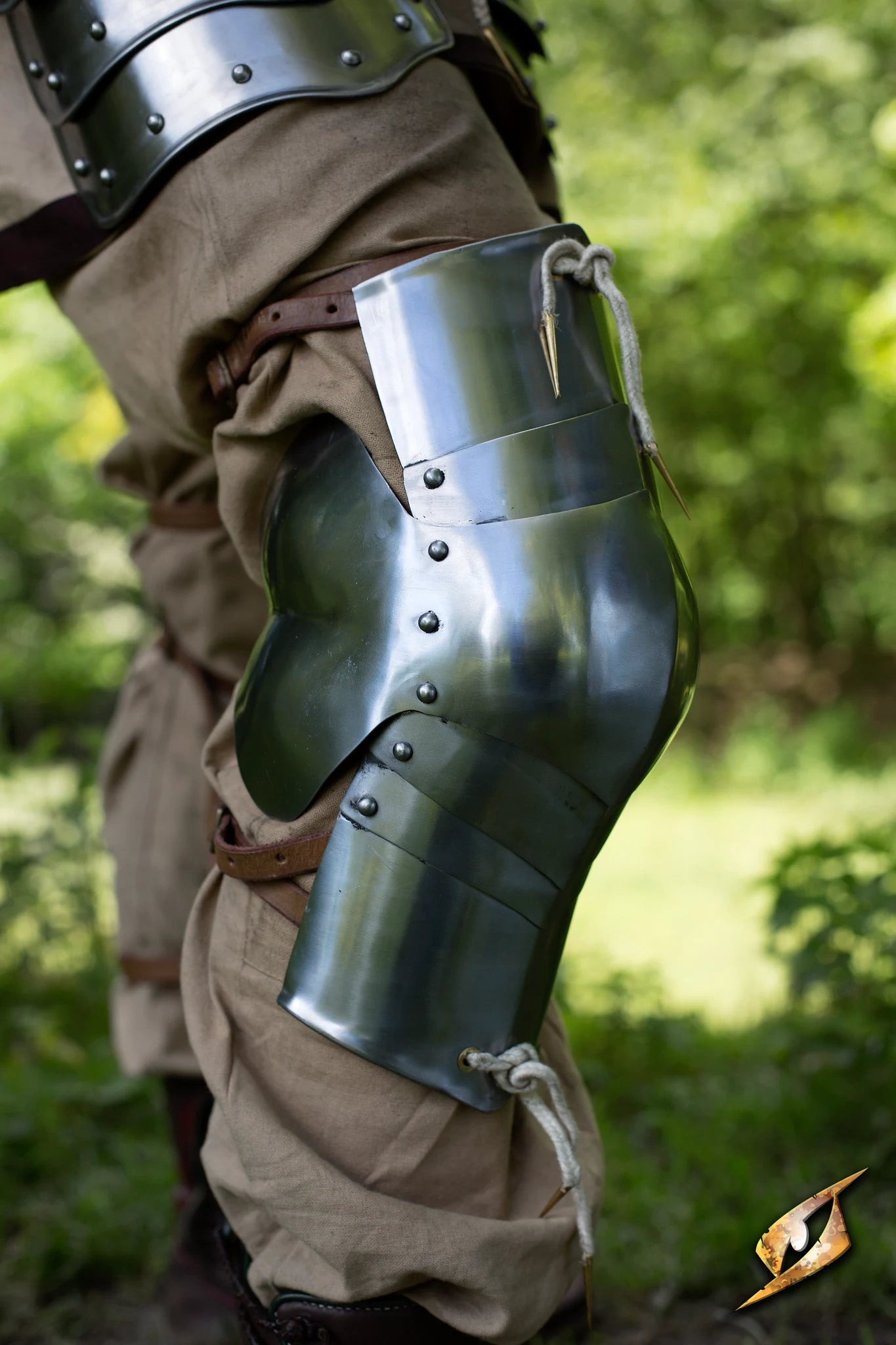
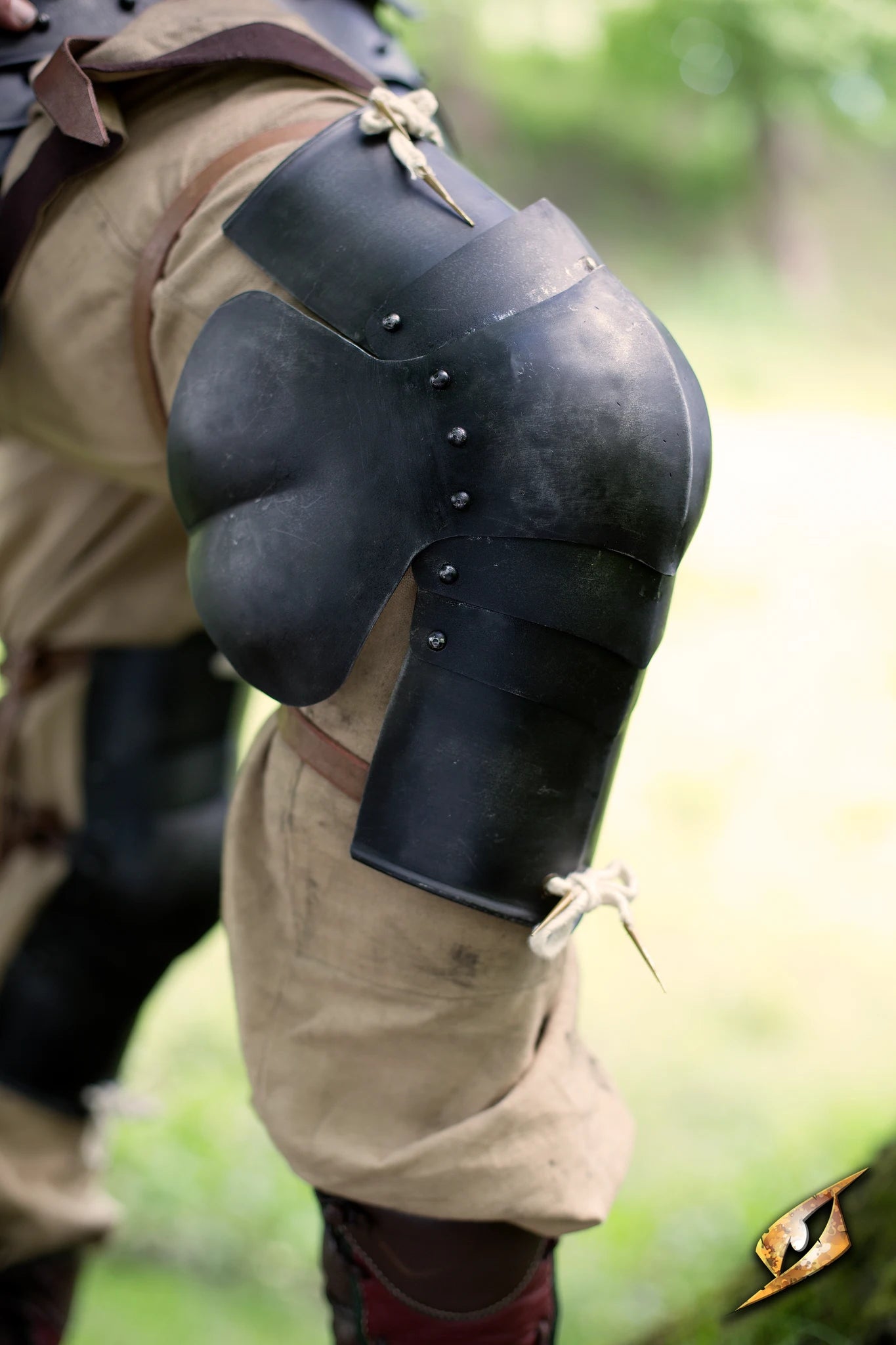
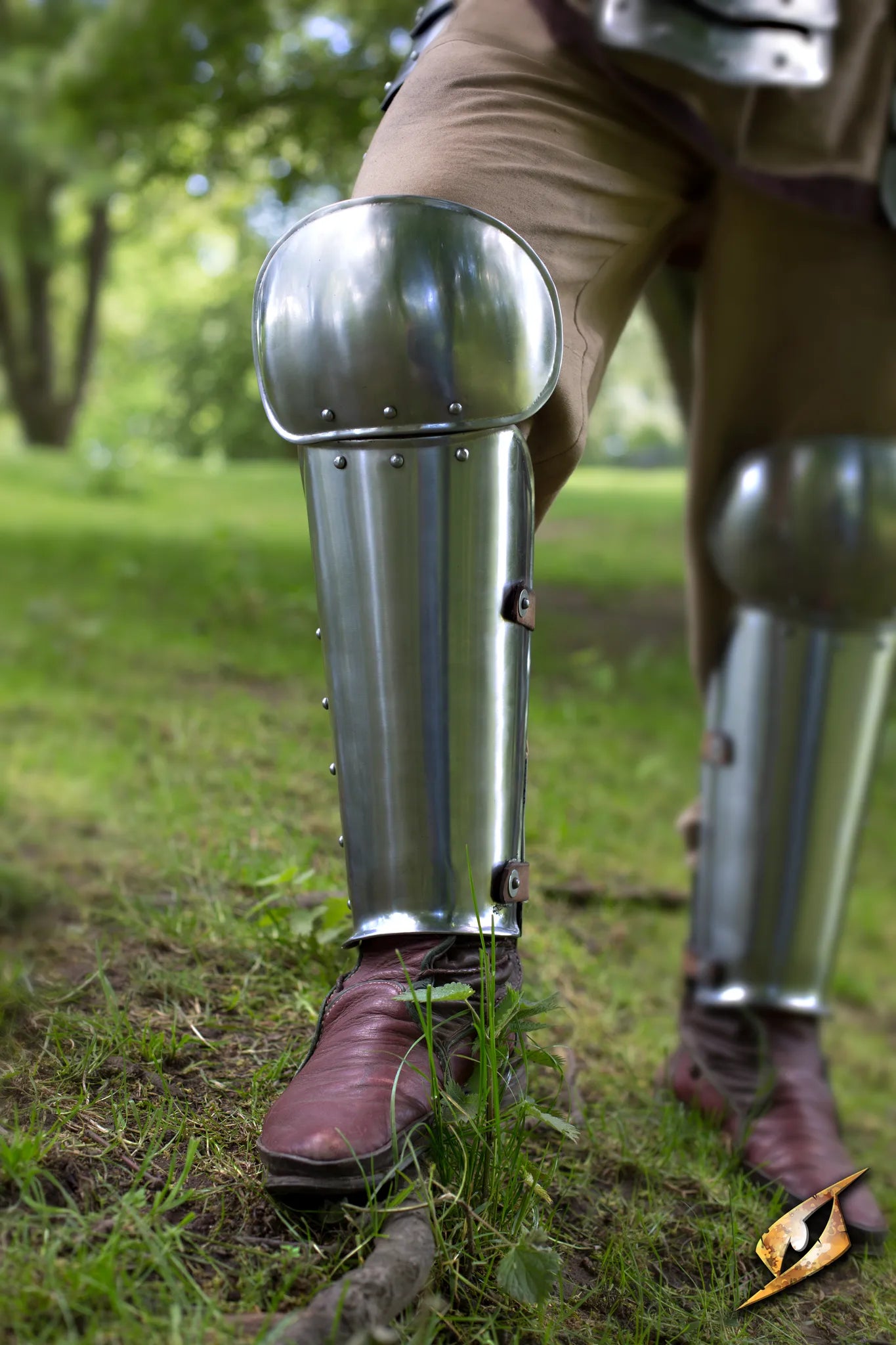
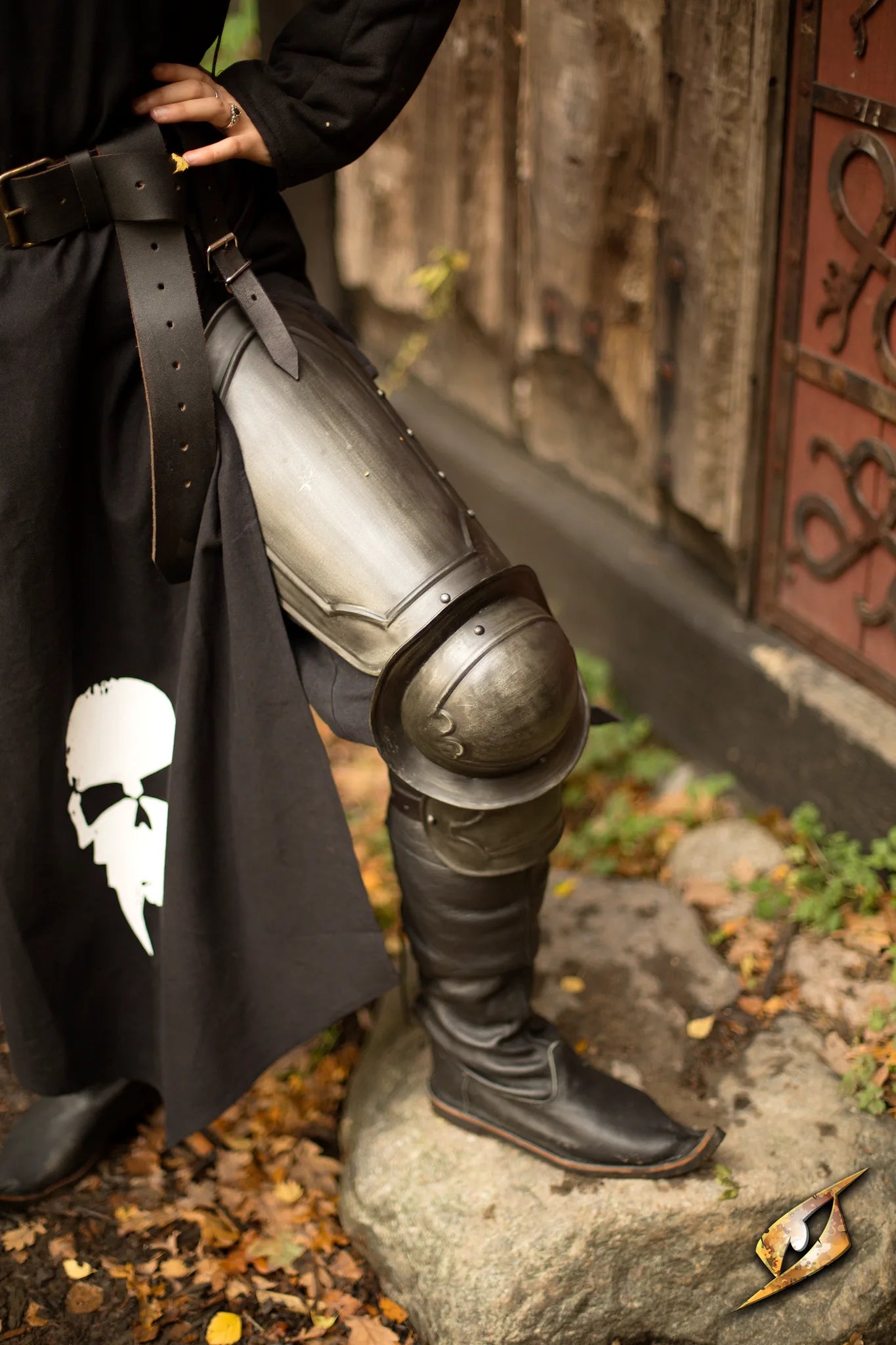
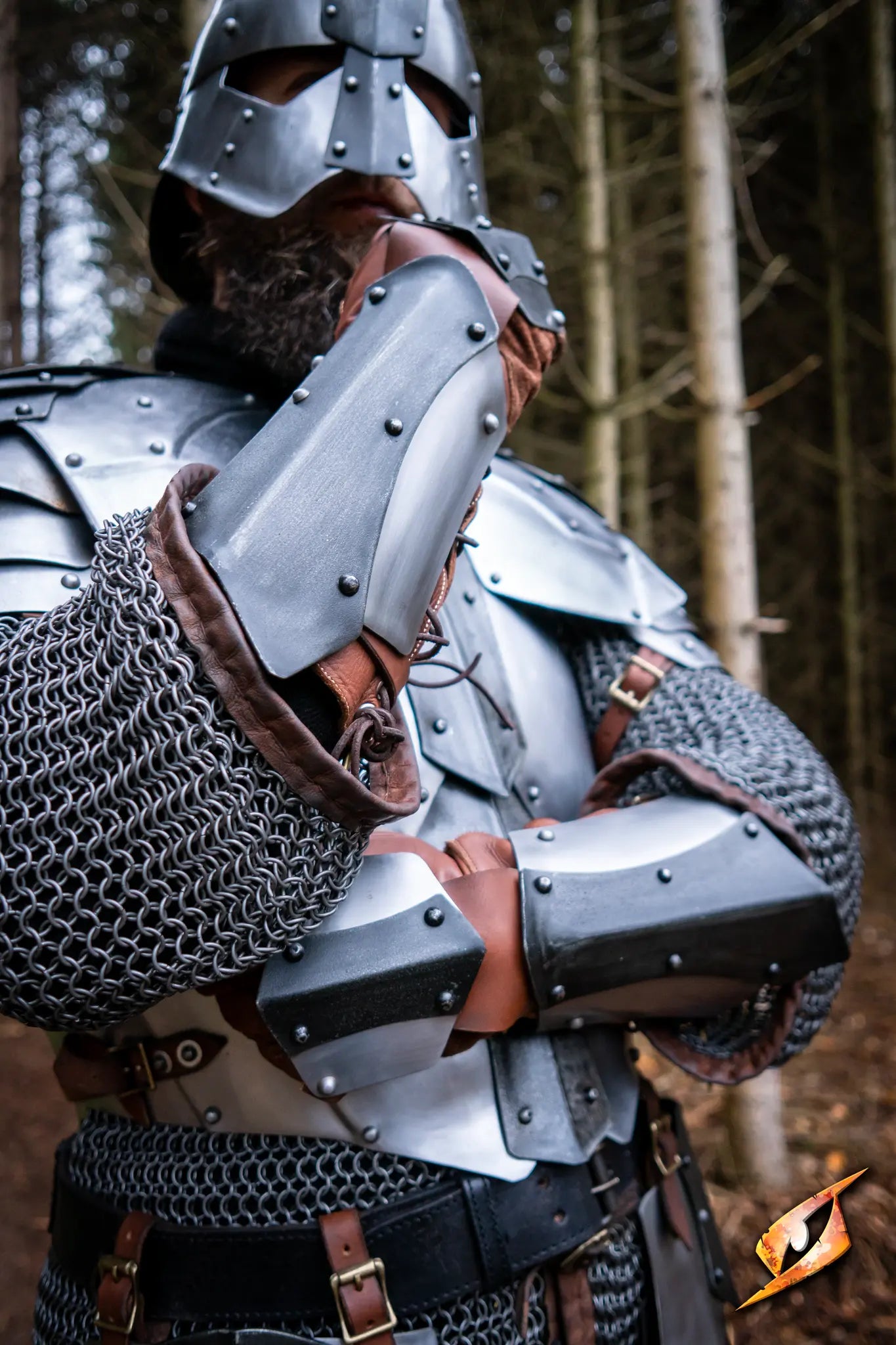
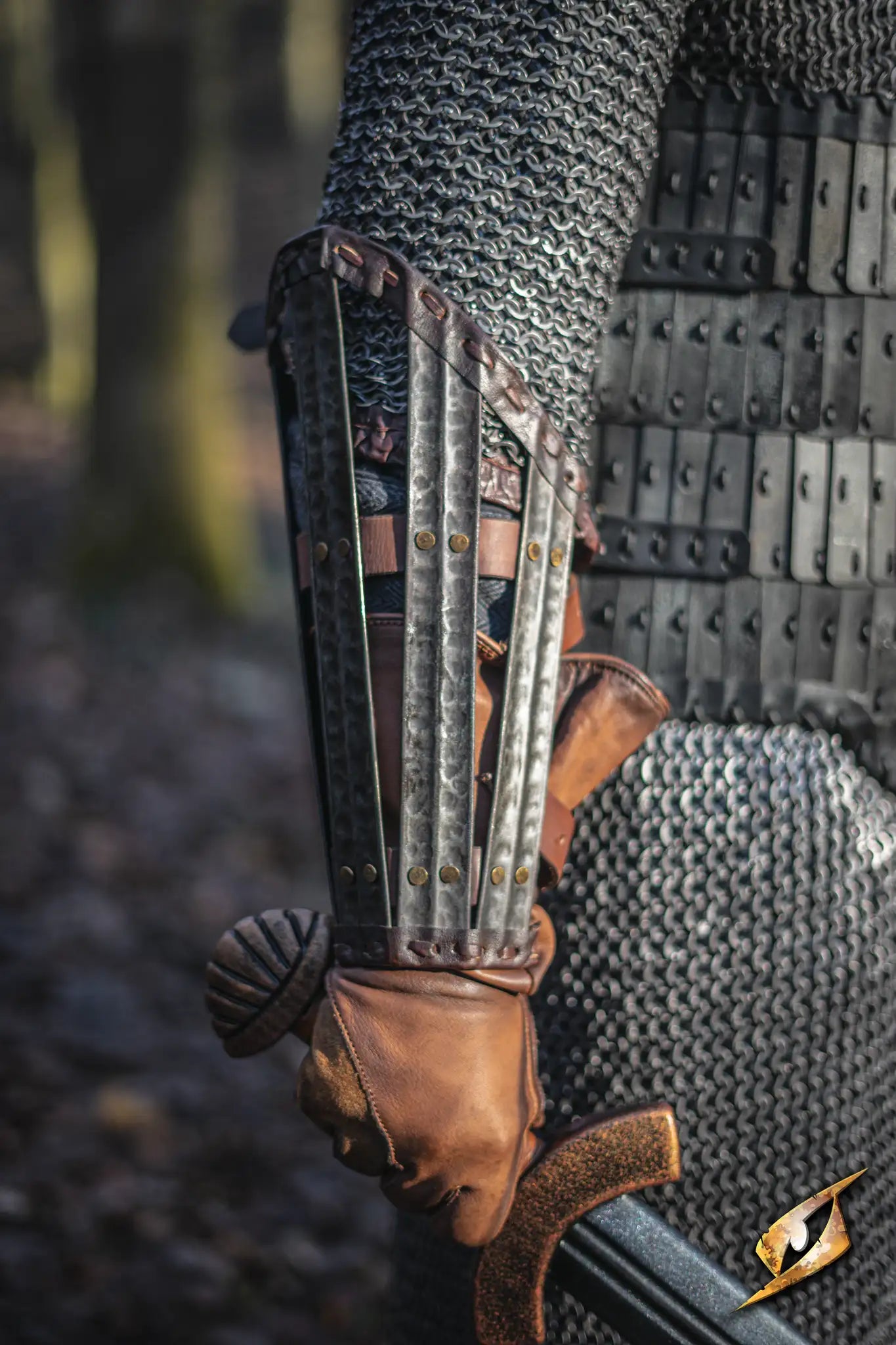
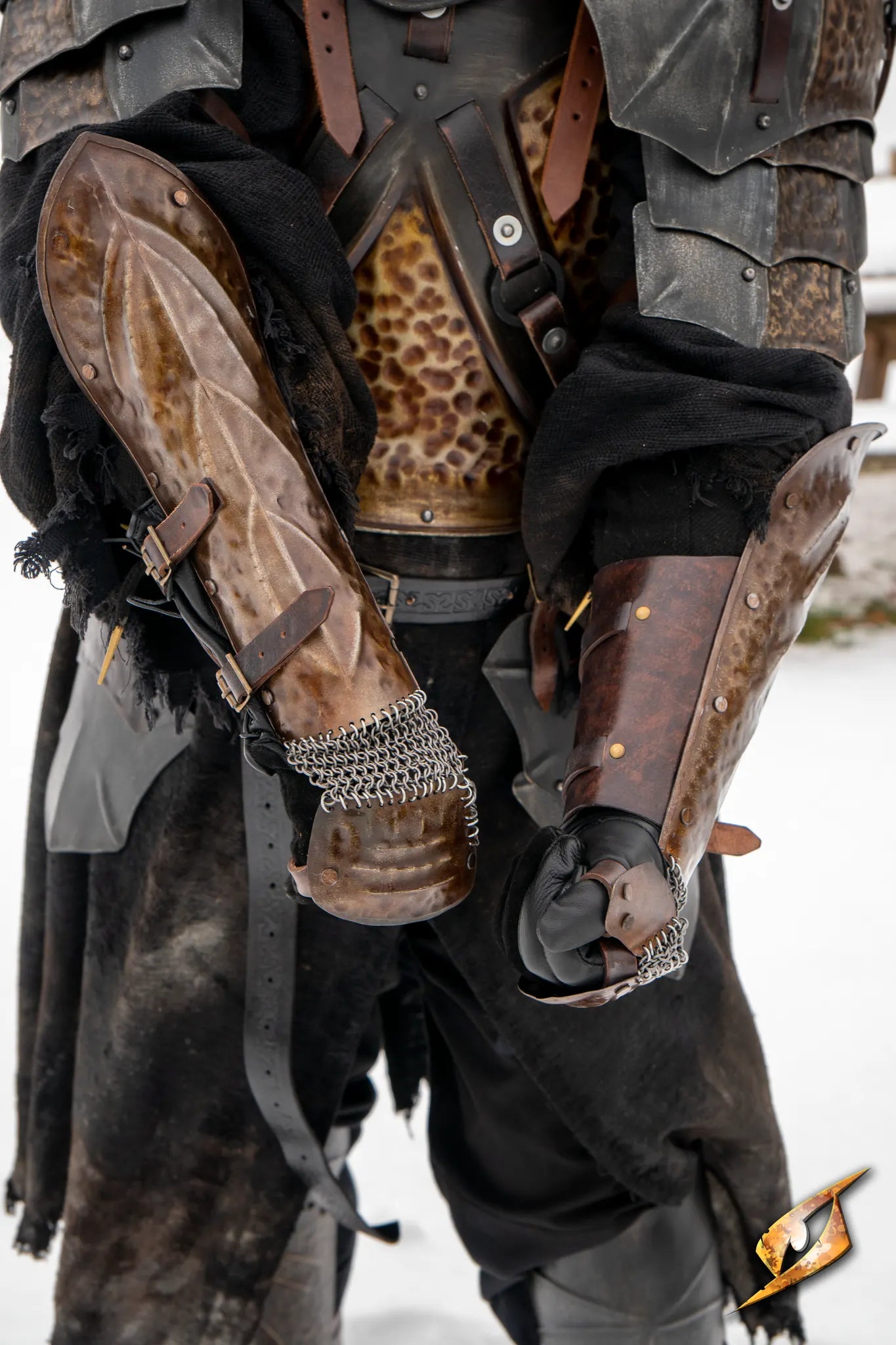
This is where that system lives. Our plate armor range covers the full body in steel, from chest and back to shoulders, arms, hands, hips, and legs, organized into subcategories so you can find the specific piece you need or build toward a complete harness one component at a time.
What Plate Armor Actually Is, and Where It Came From
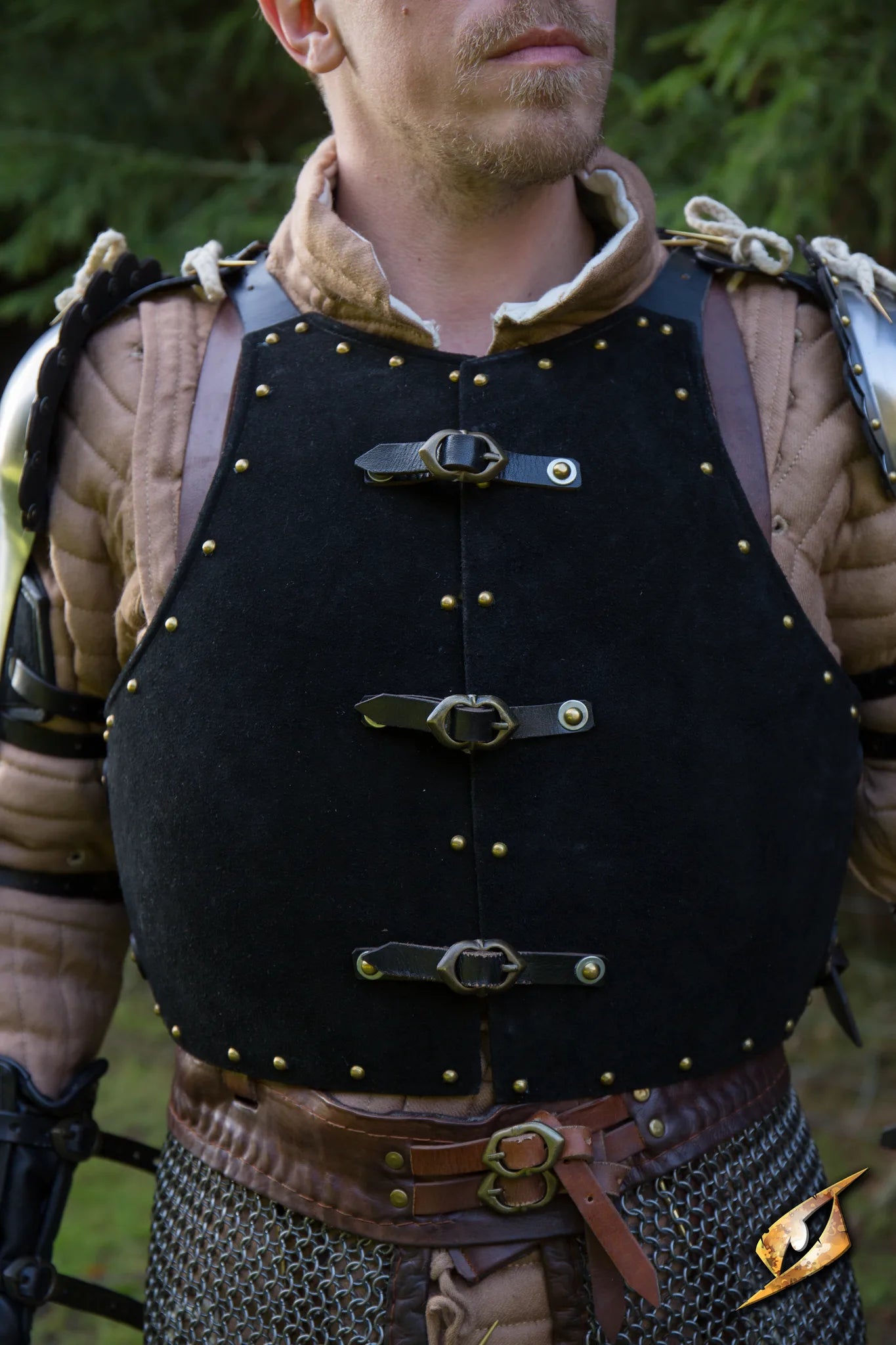
Plate armor refers specifically to protective equipment made from shaped metal plates, as distinct from mail, which uses interlocking rings, or lamellar and scale constructions, which use smaller overlapping plates laced together. The defining characteristic is the large formed plate: shaped to the body, rigid enough to deflect rather than absorb blows, and fitted closely enough to allow movement despite its rigidity.
The transition from mail to plate armor in Europe began in earnest in the early 14th century, driven by the increasing effectiveness of the crossbow and the need for protection that mail alone could not provide. Plate components appeared first at the most exposed and structurally important points: the knees, the elbows, the chest. Over the following century and a half, armorers gradually extended plate coverage across the entire body until, by the mid 15th century, a fully equipped knight could be armored from head to foot in shaped steel with no mail visible at all.
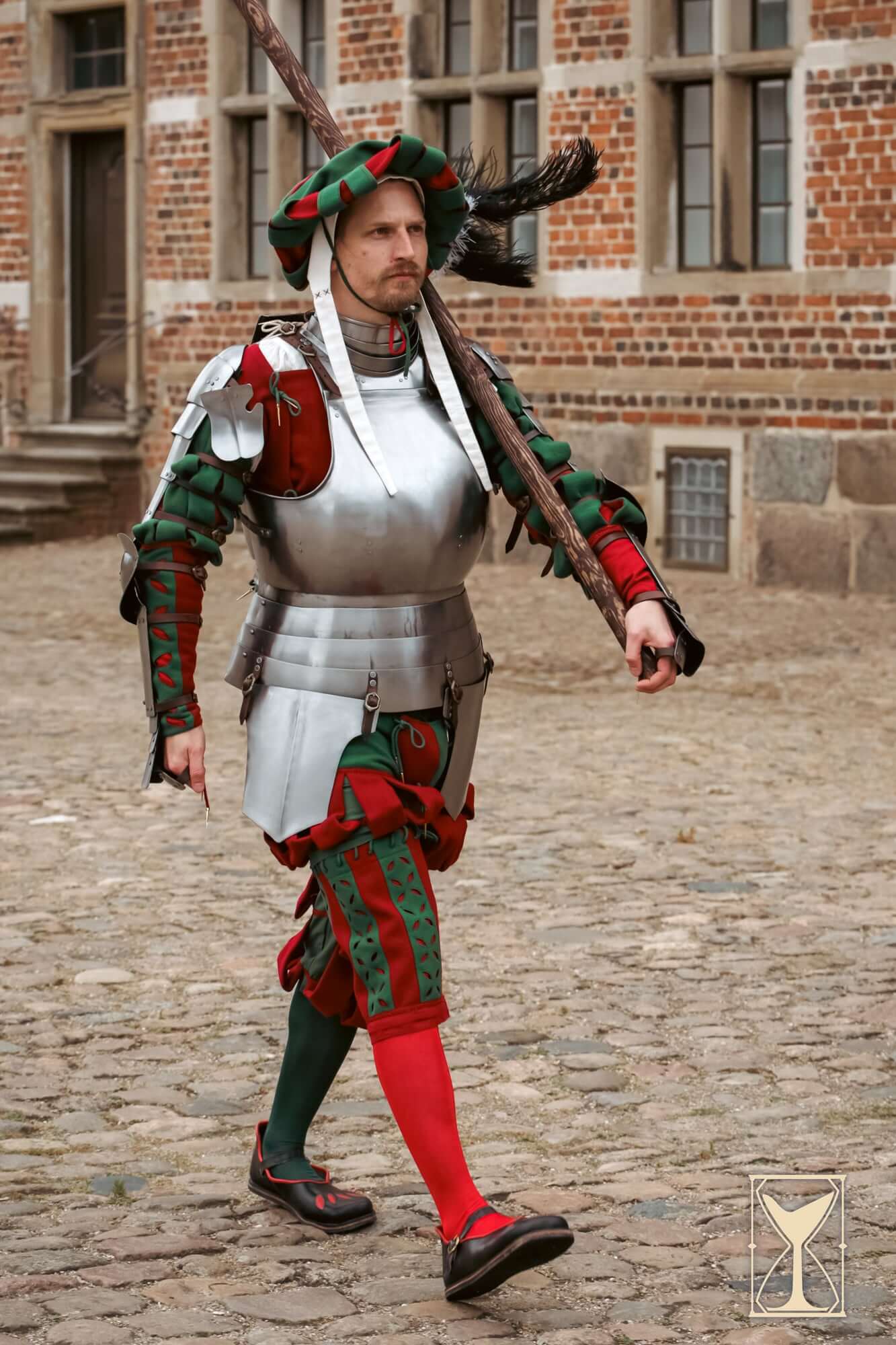
The result was the full plate harness: one of the most sophisticated pieces of functional engineering produced by the medieval period. A well-fitted harness distributed its weight across the shoulders and hips rather than concentrating it, allowed a surprising range of motion at every joint through careful shaping and articulation, and provided a level of protection against the weapons of the period that mail simply could not match. The image most people carry of the medieval knight in shining armor reflects the harness at its peak development, roughly 1420 to 1520, before firearms made the weight-to-protection calculation no longer viable.
How the Range Is Organized
Plate armor covers a lot of ground, and the subcategories below reflect the way a harness is actually built: by body region, from the pieces that anchor the kit outward to the components that complete it.
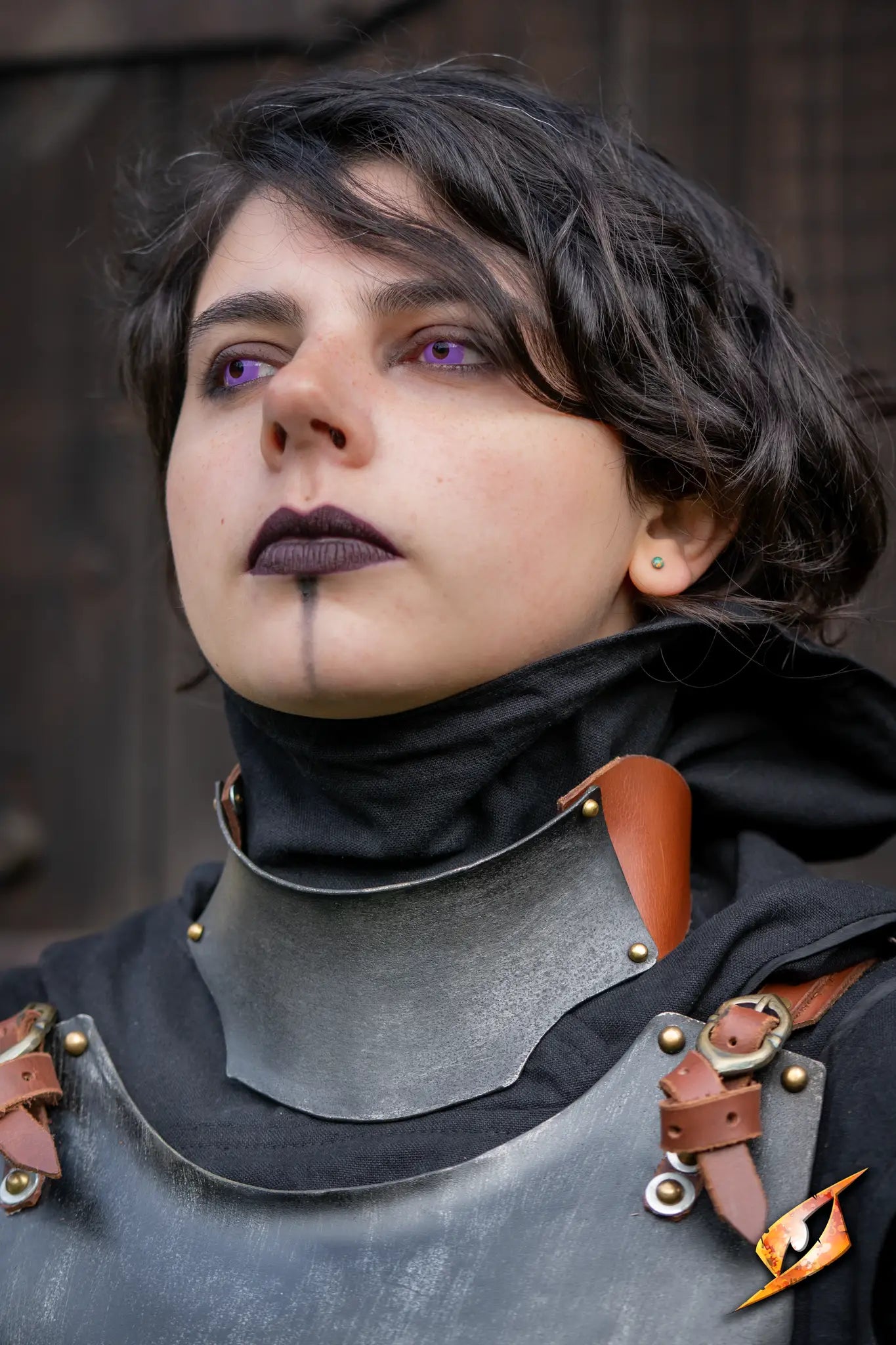
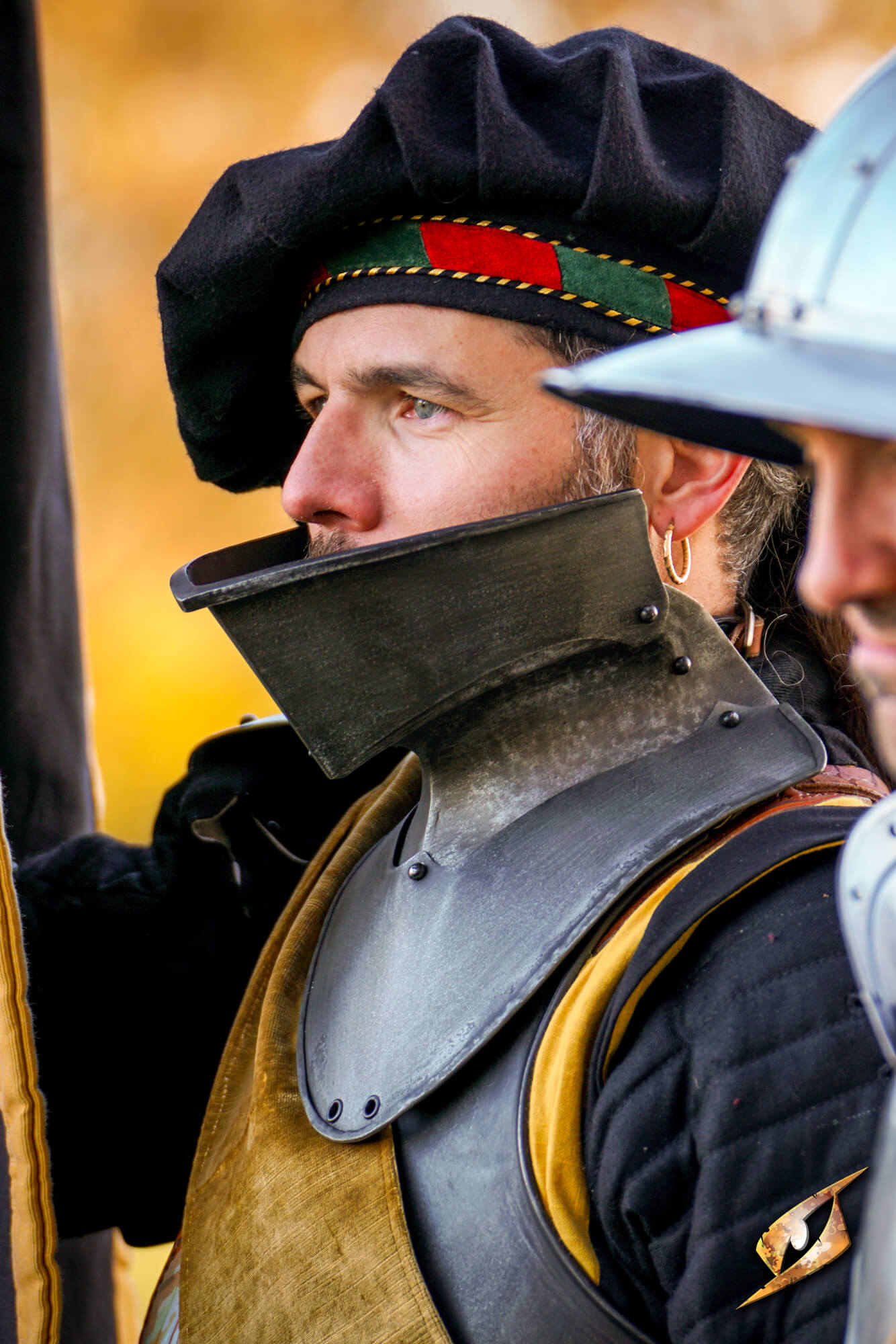
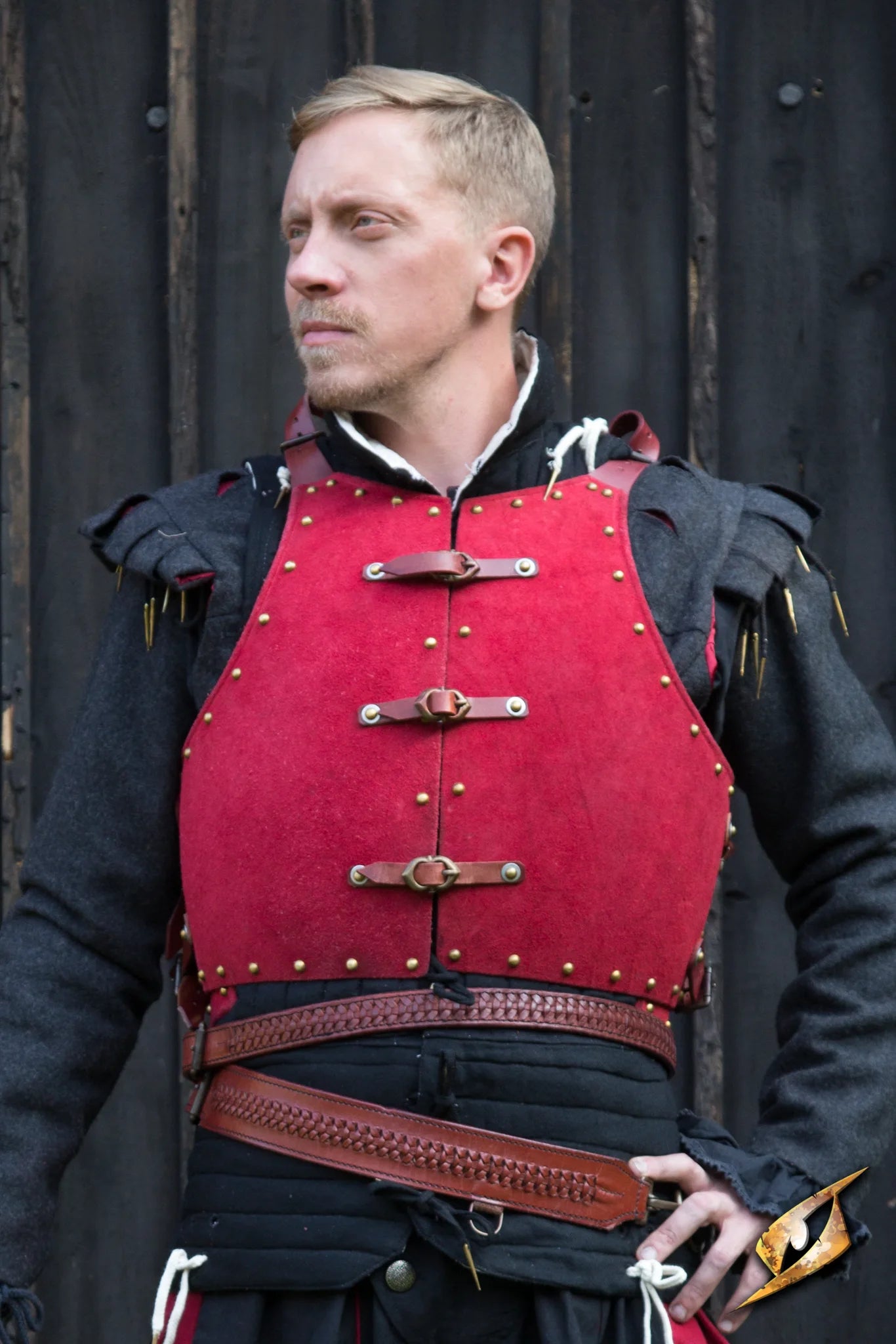
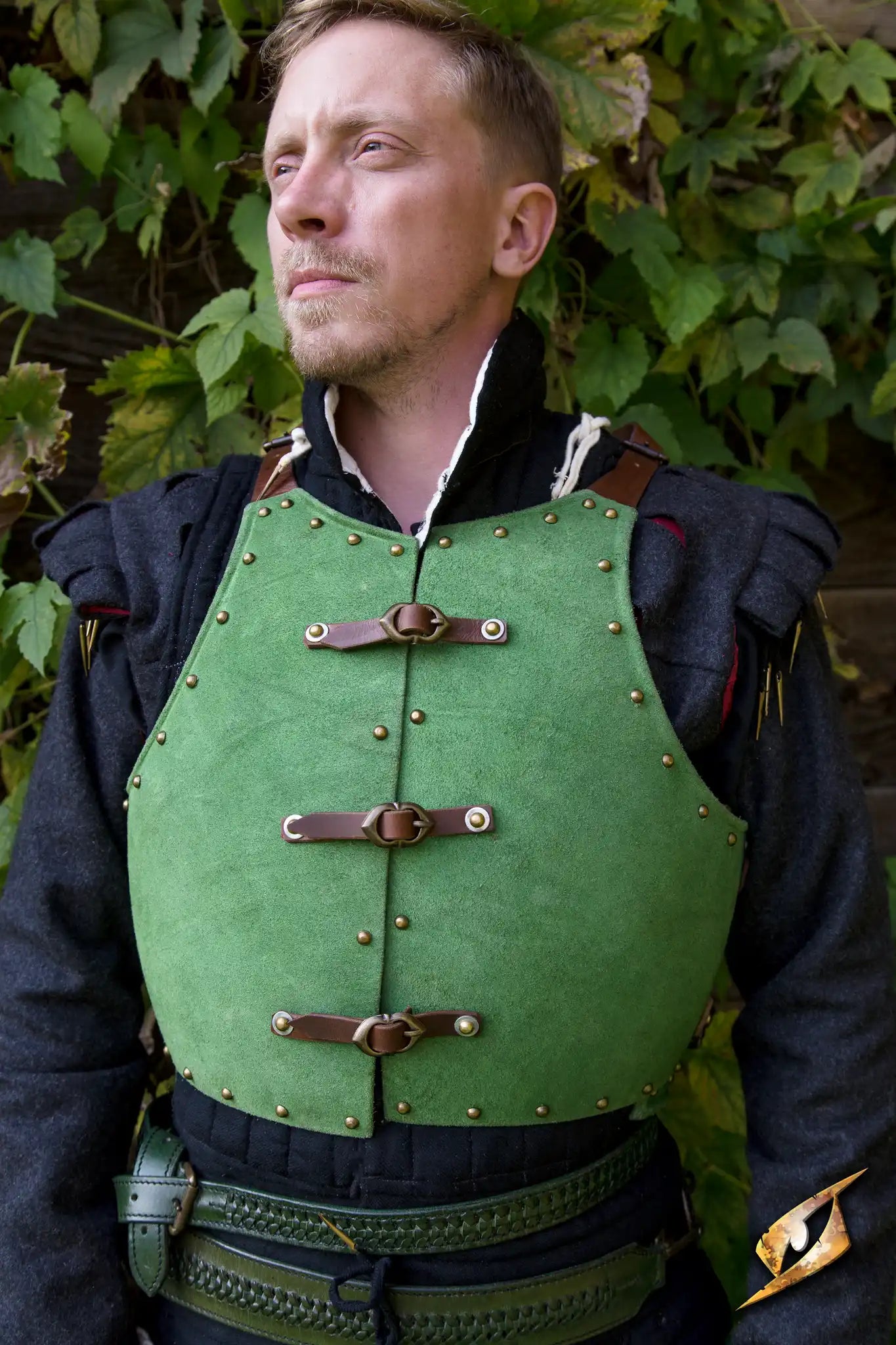
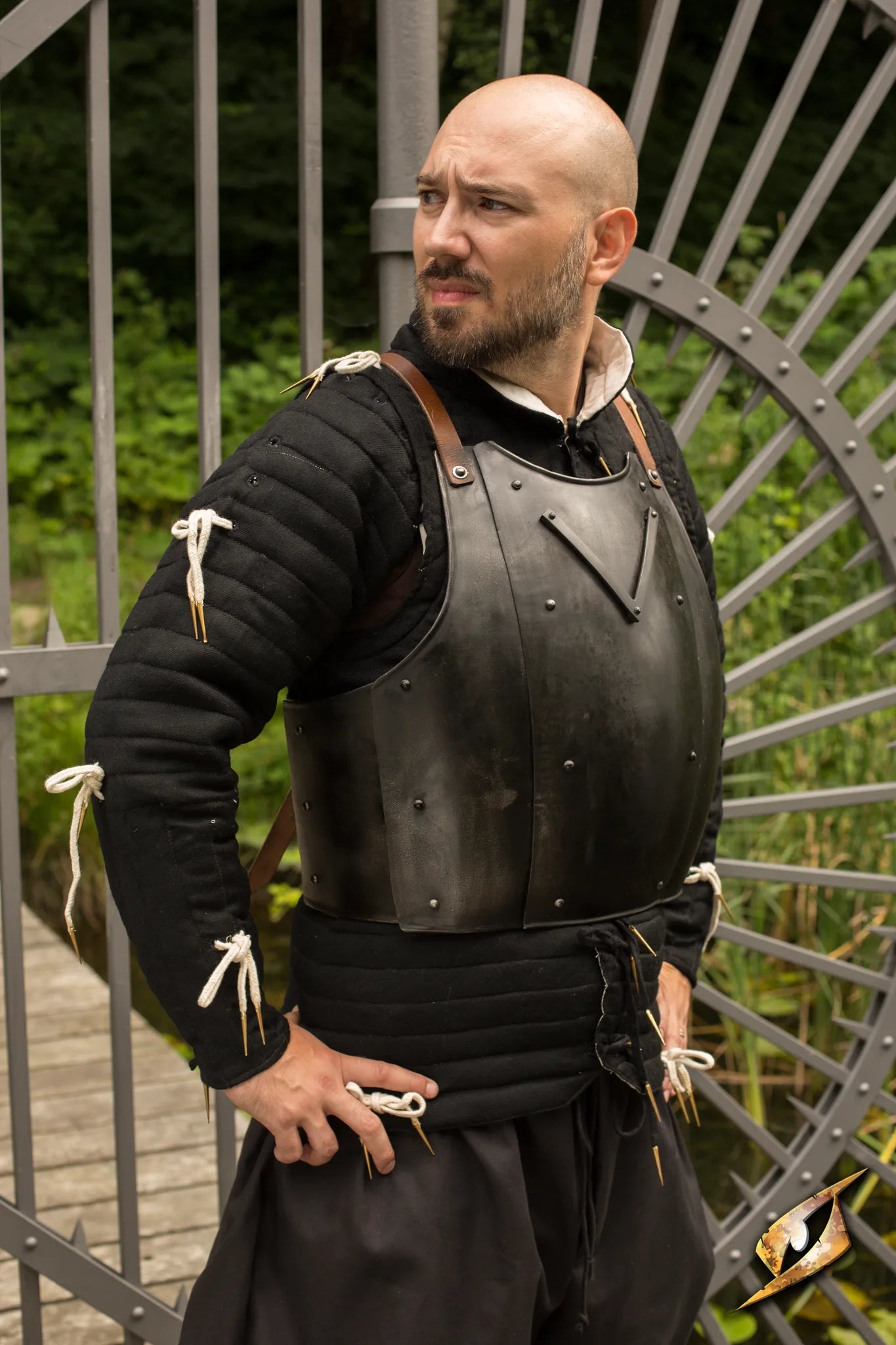
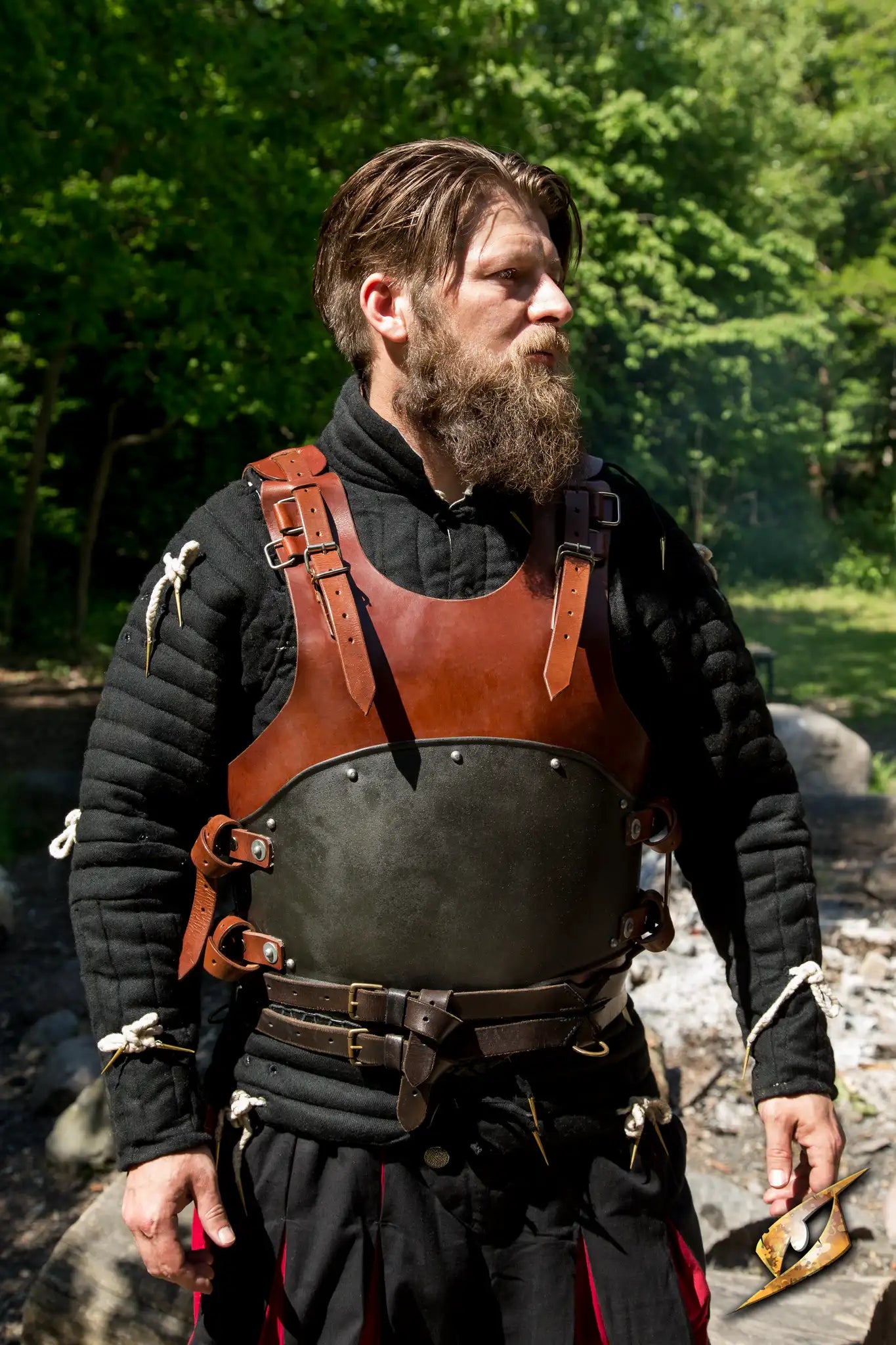
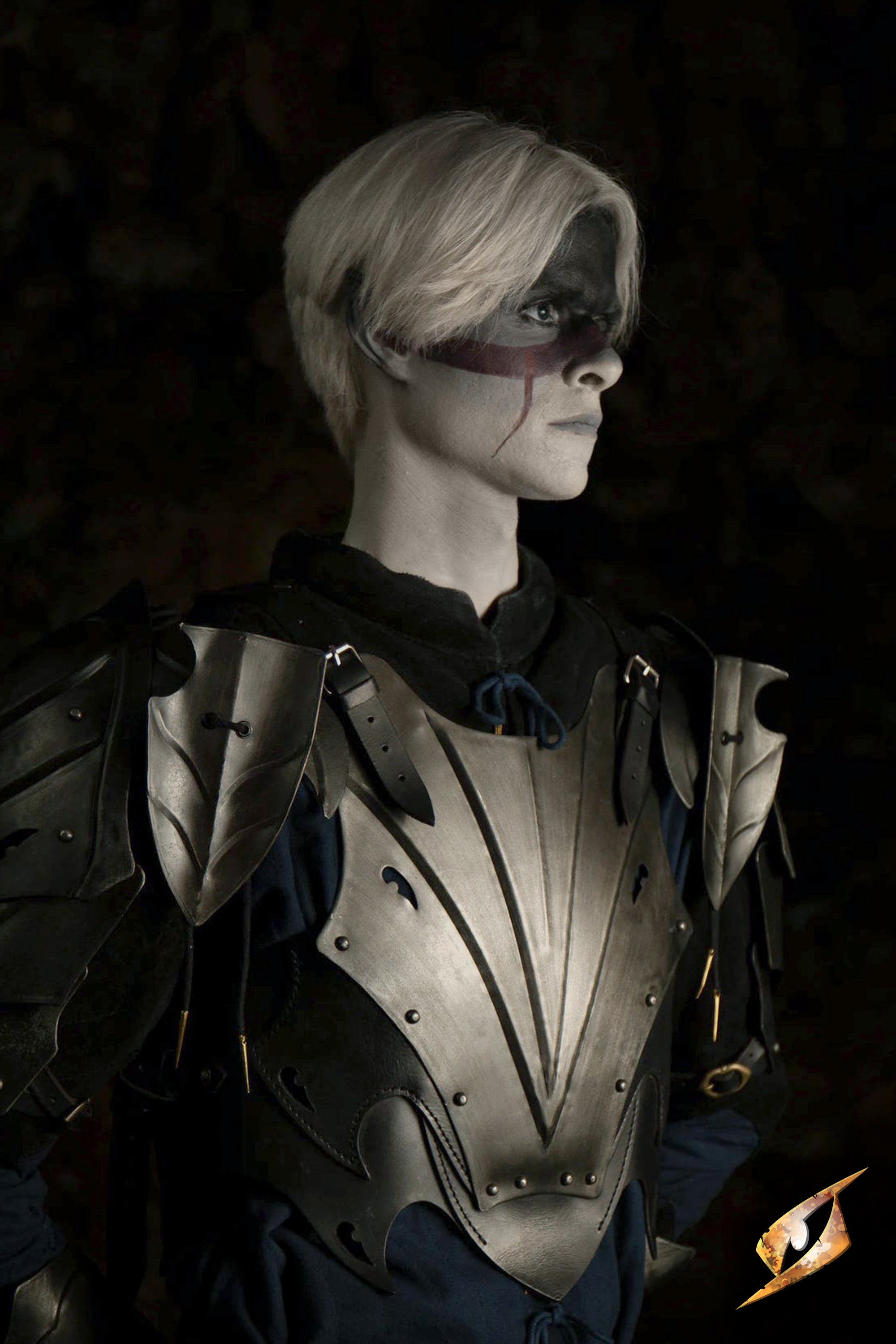
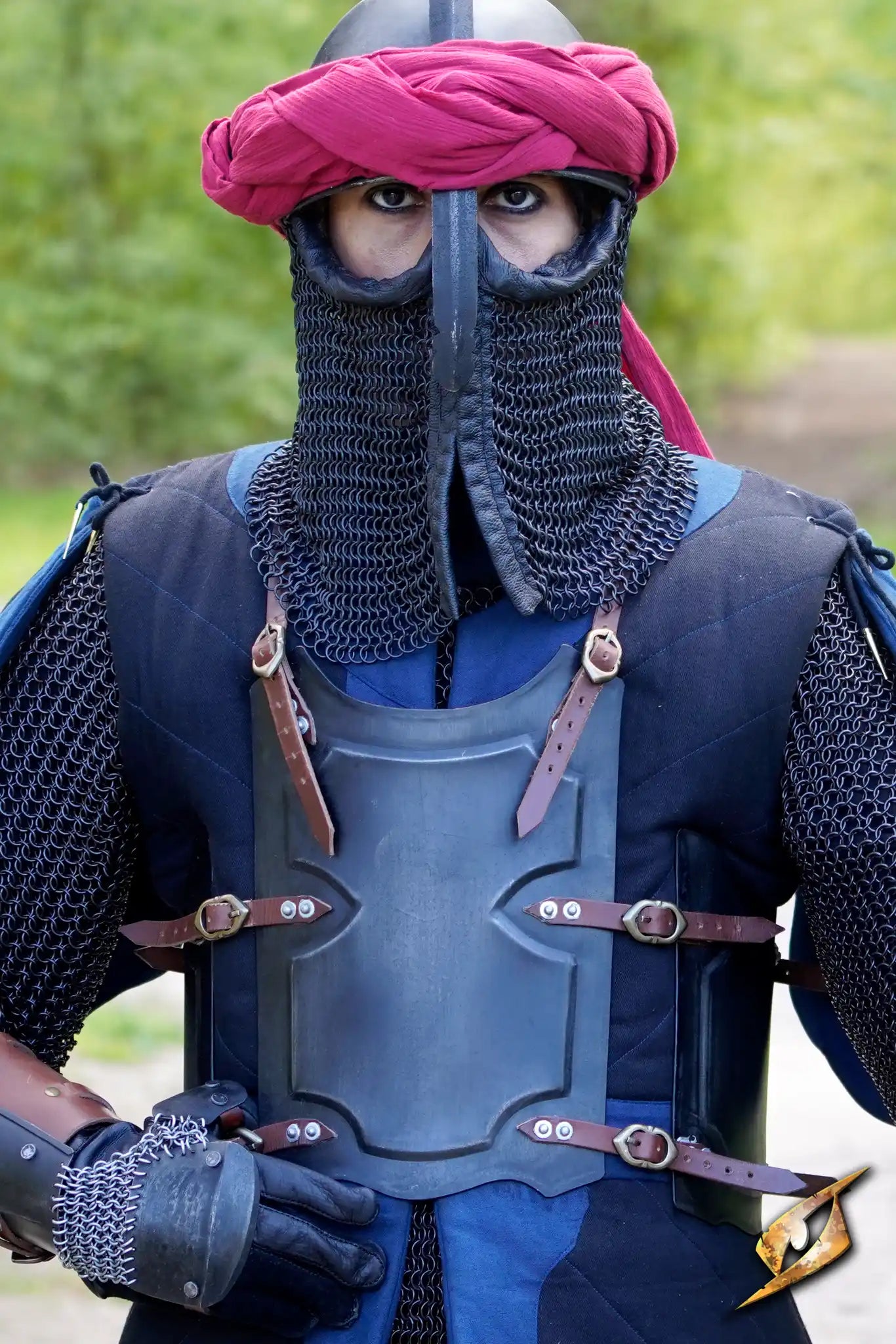
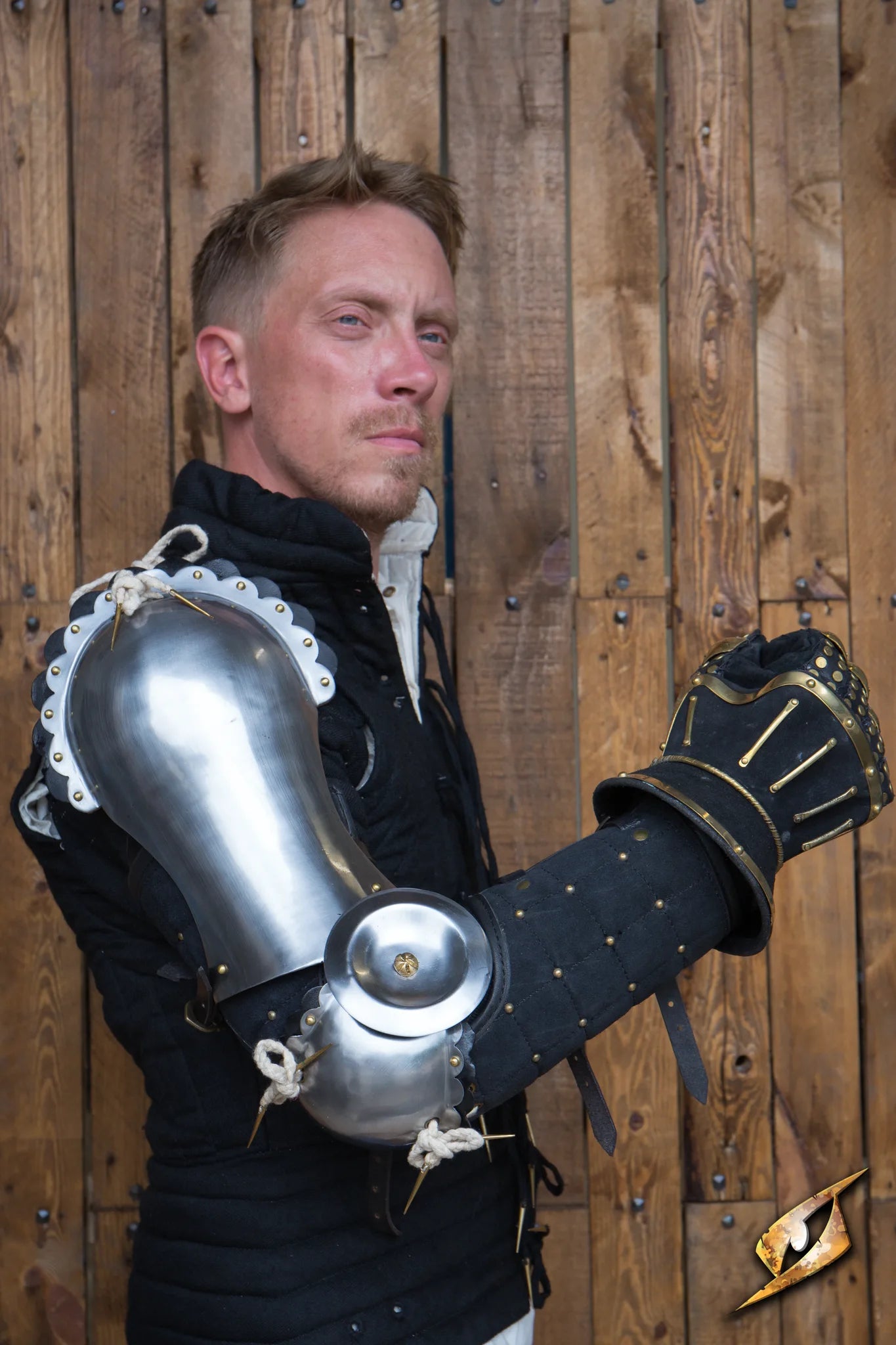
The chest is where most builds start. A breastplate or cuirass establishes the visual and structural foundation of a harness, and everything else connects to or coordinates with it. From there, the natural progression moves to the neck and shoulders, then down the arms to the hands, and separately down through the hips and legs to the feet.
Each subcategory covers one part of that progression in depth, with its own range of historical styles, aesthetic variants, and price points. The organization is designed so that whether you are buying a single piece to add to an existing kit or researching a complete harness from scratch, you can navigate directly to the relevant section without wading through the entire range.
For buyers who want a matched set rather than building piece by piece, the Suits of Armor subcategory covers complete multi-component sets designed to work together out of the box.
Steel, Finish, and What to Expect
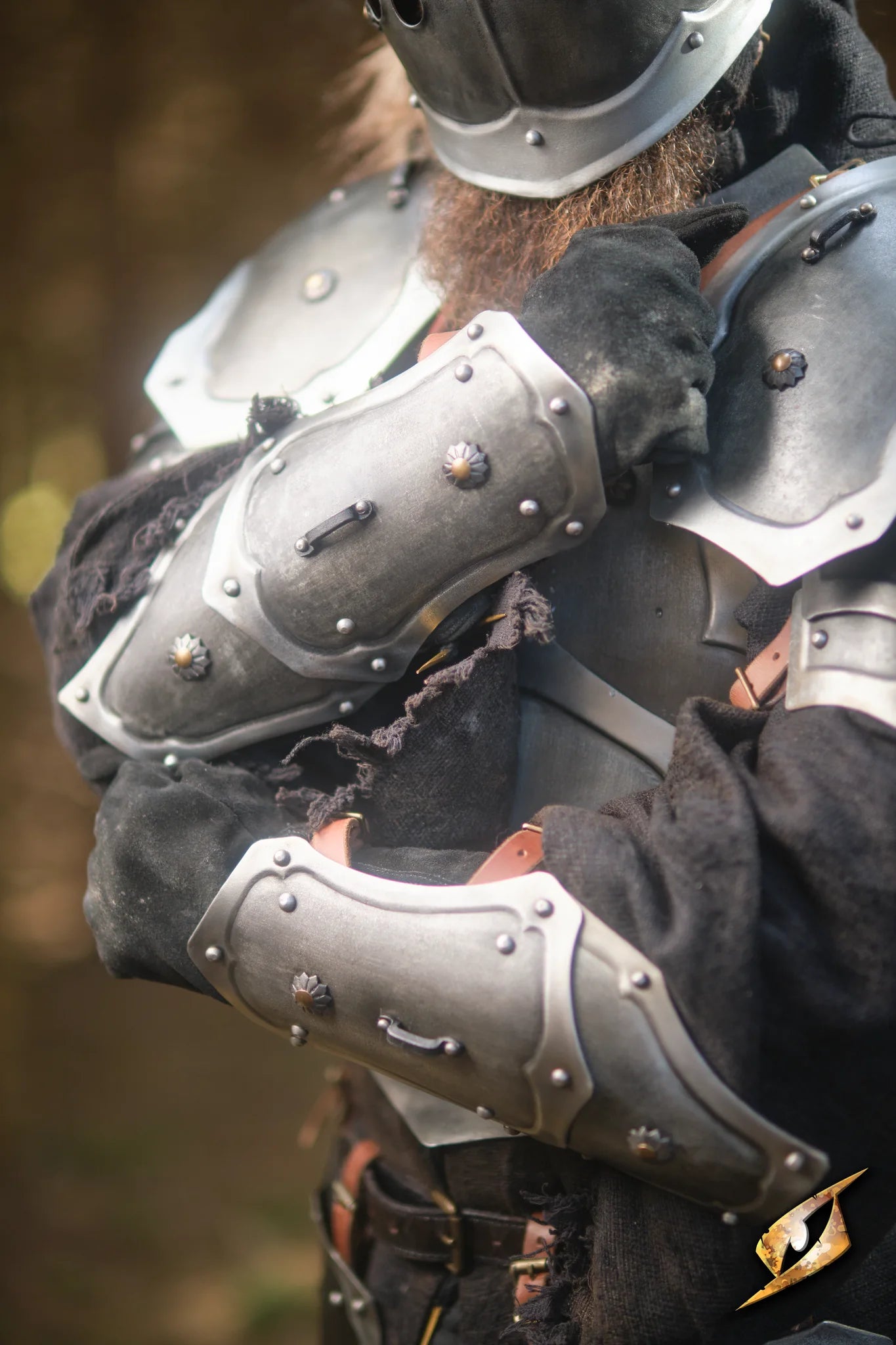
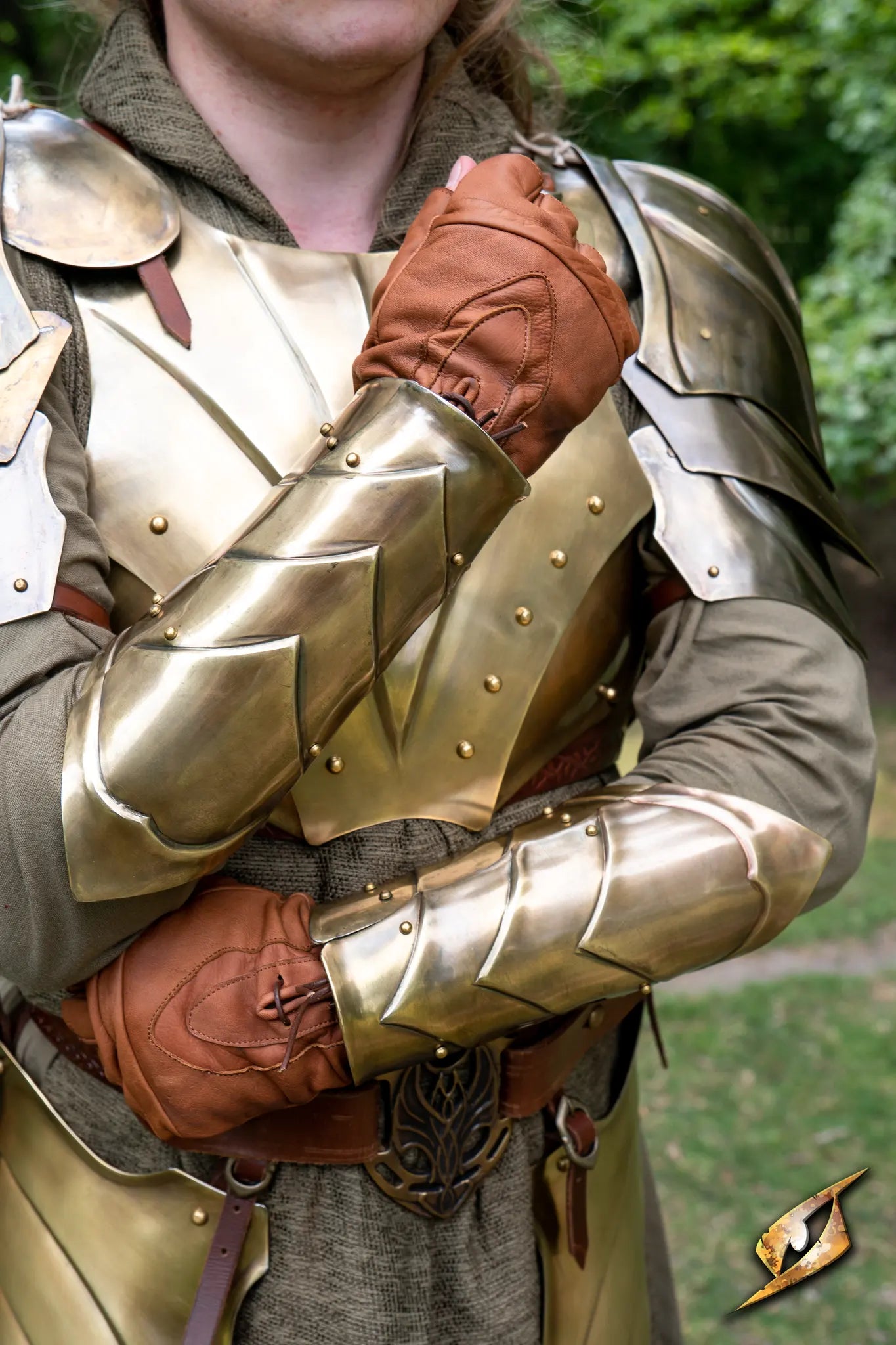
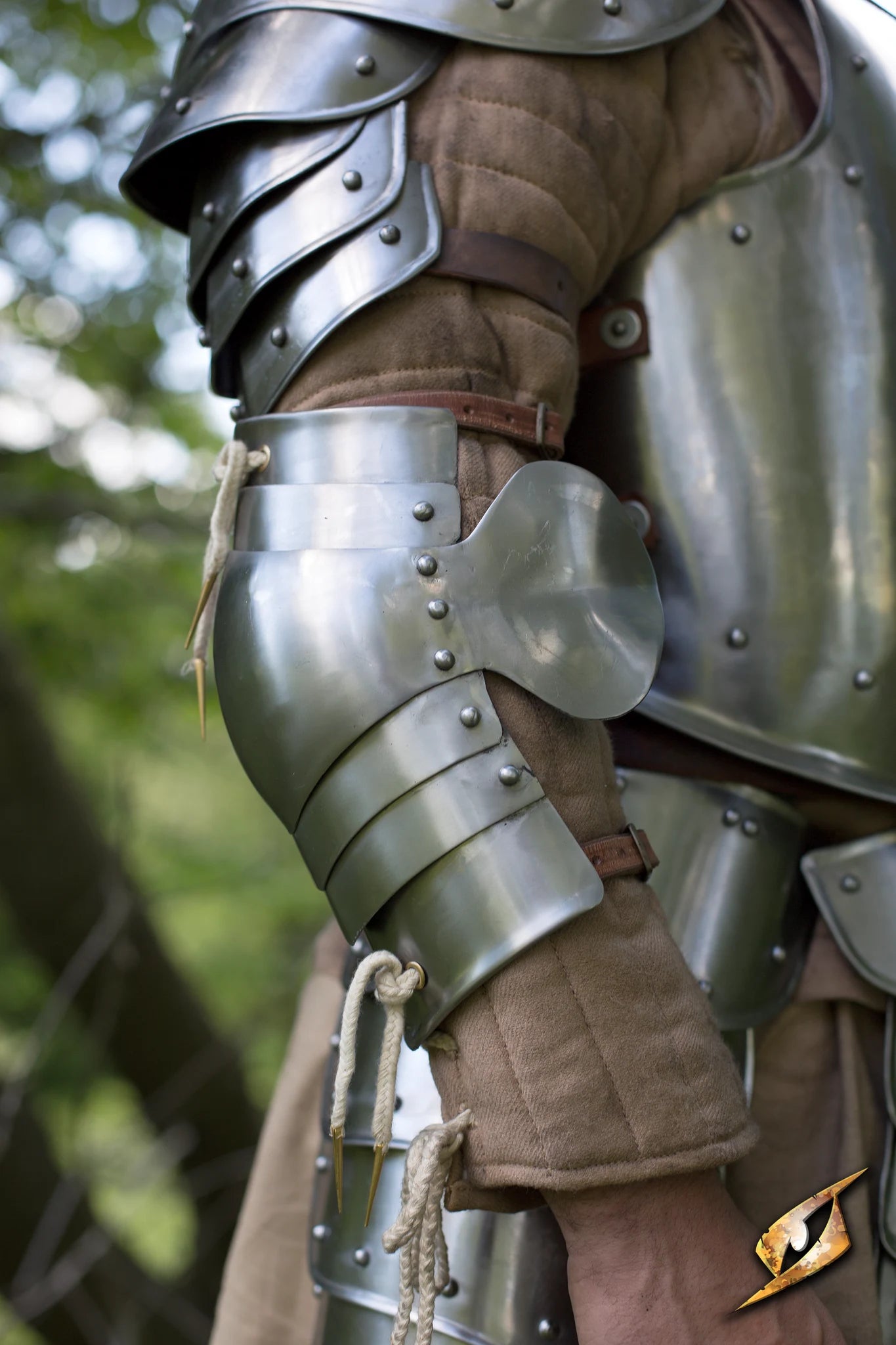
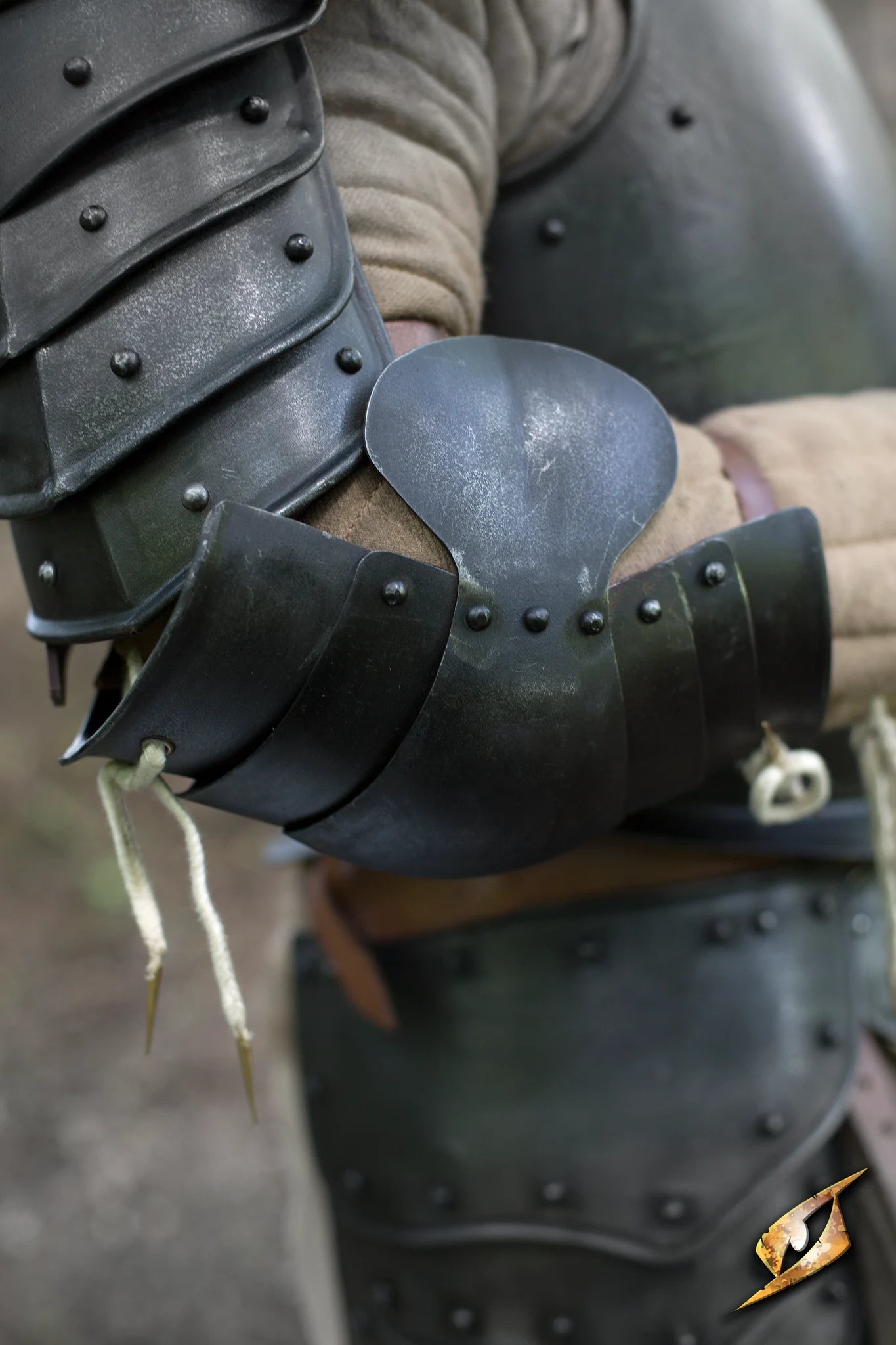
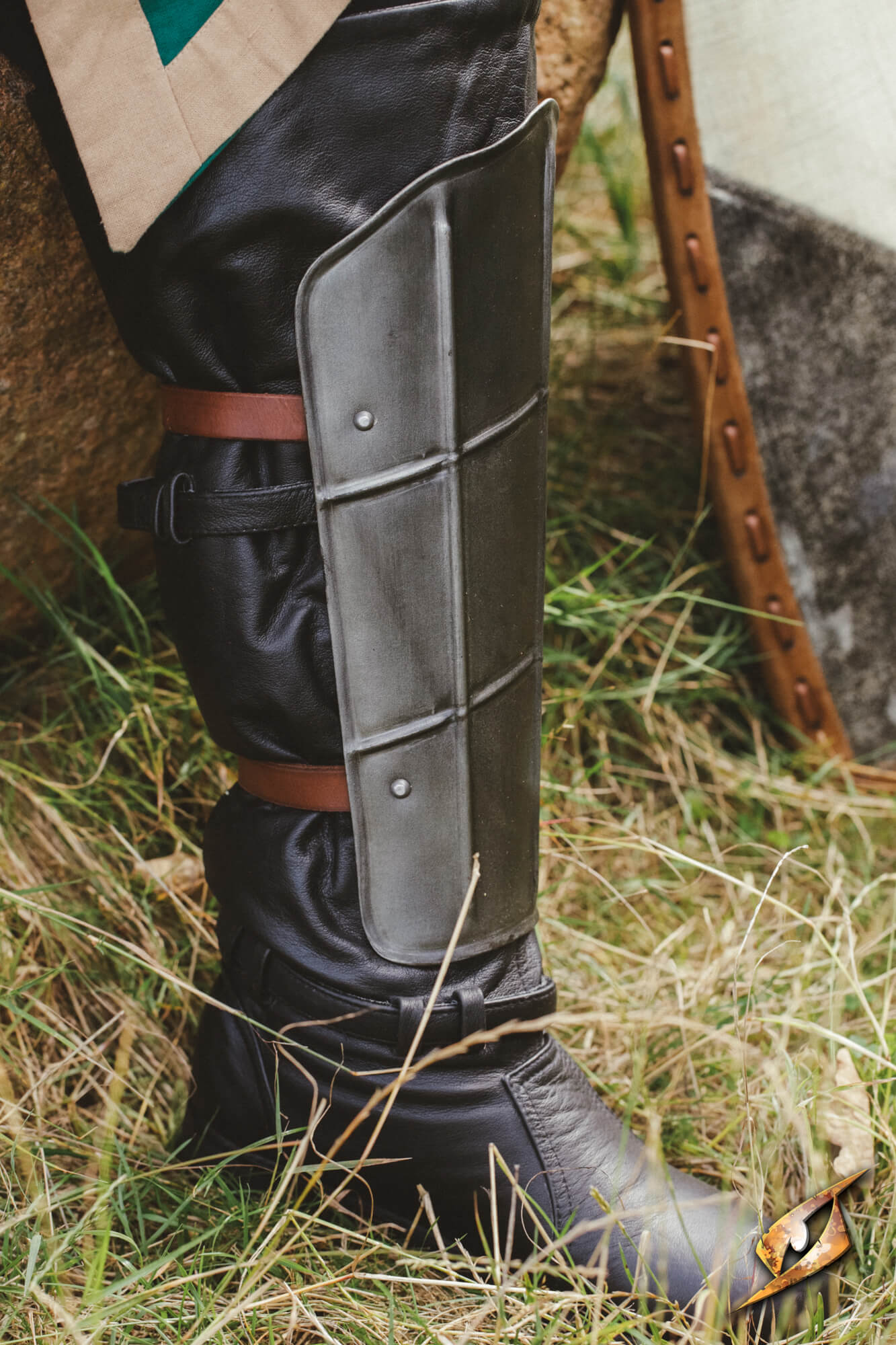
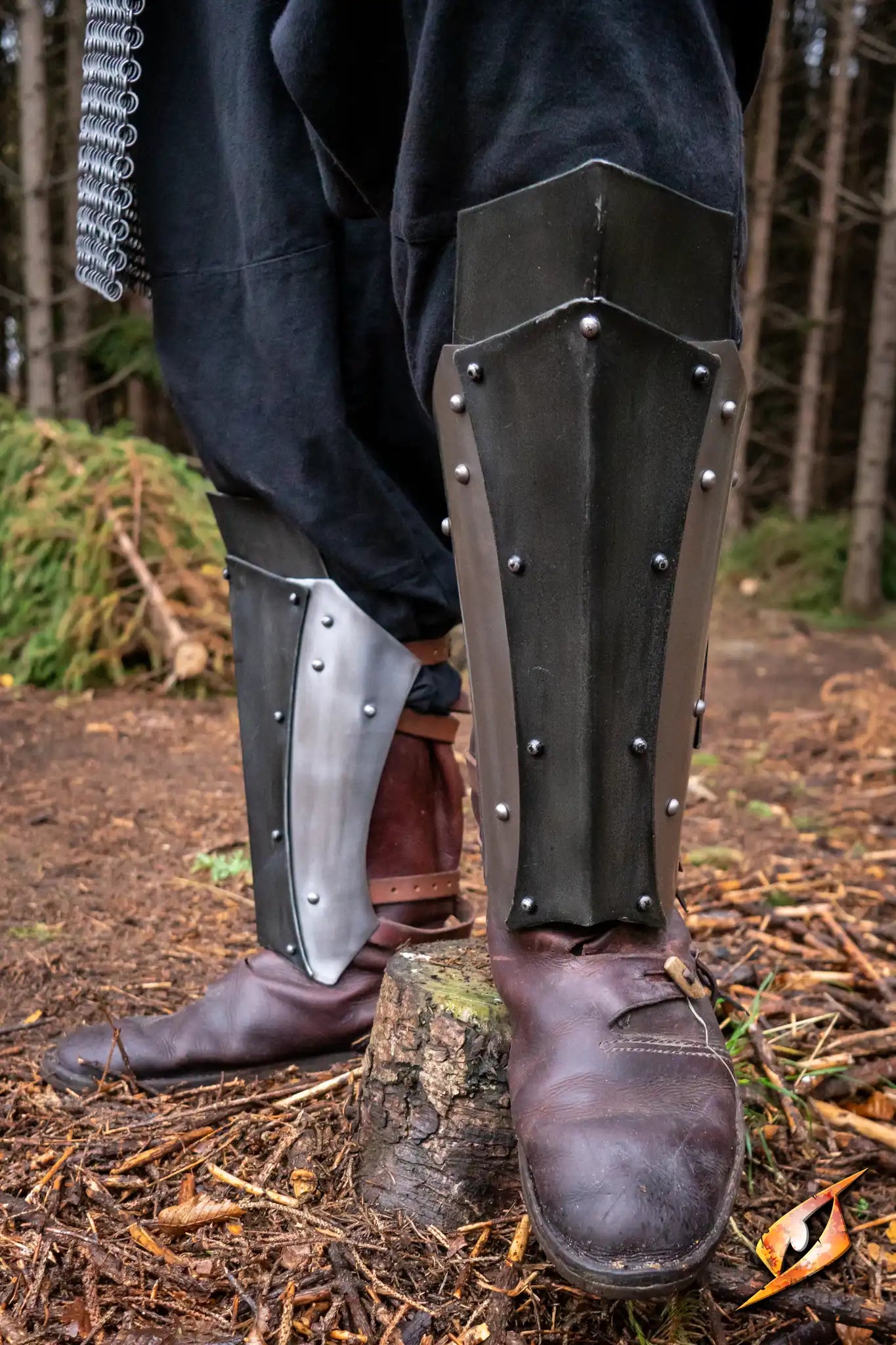
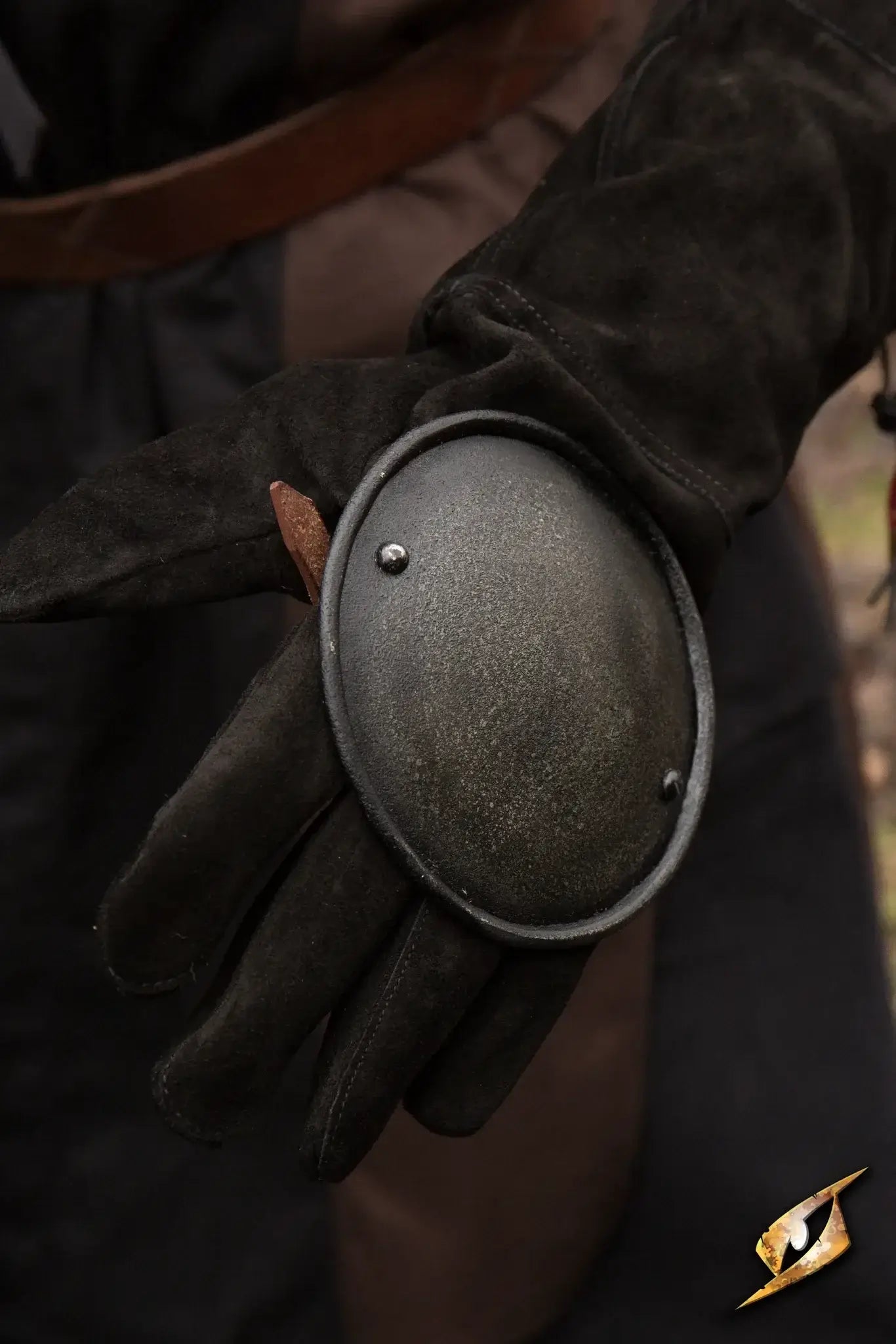
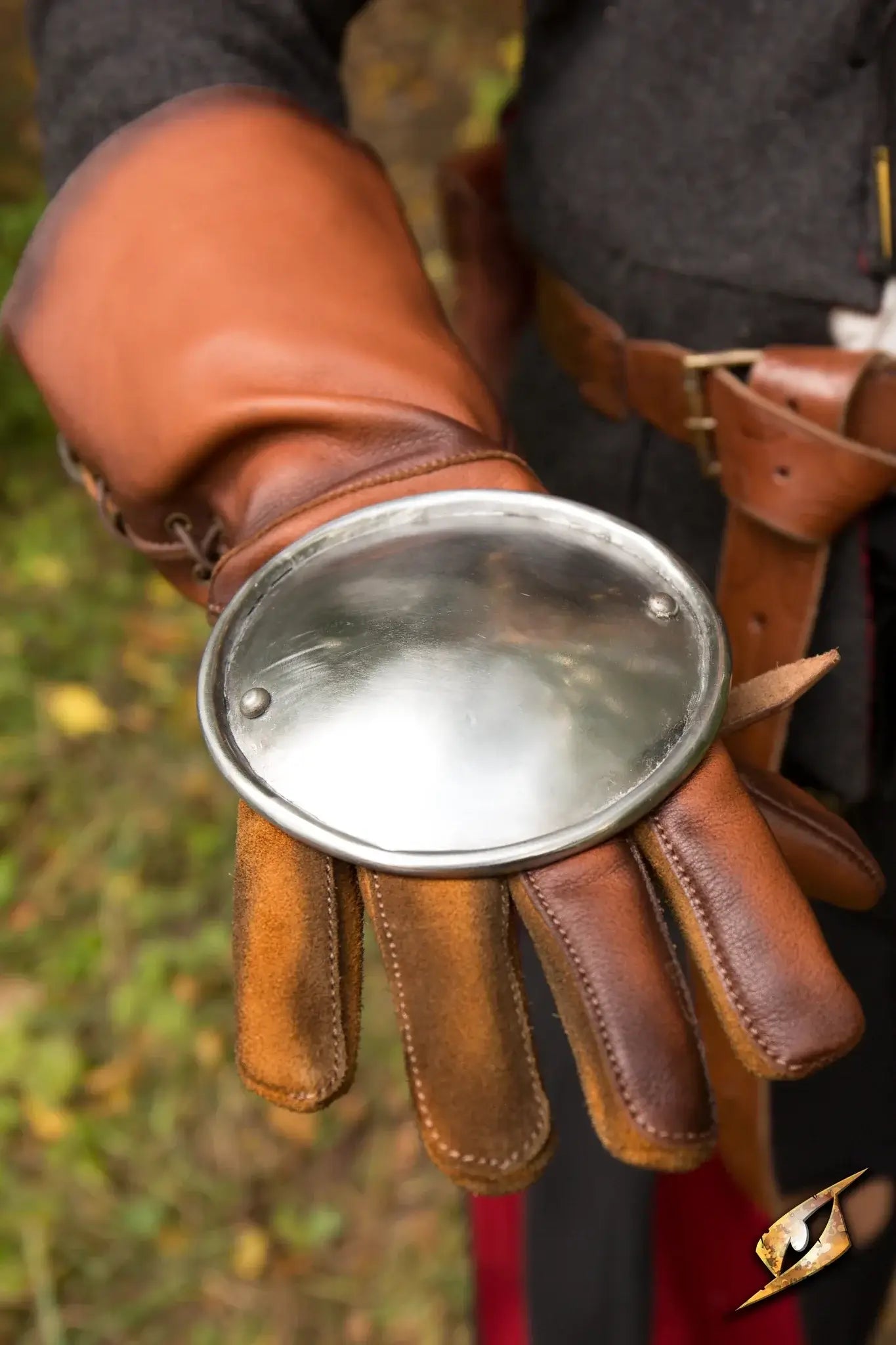
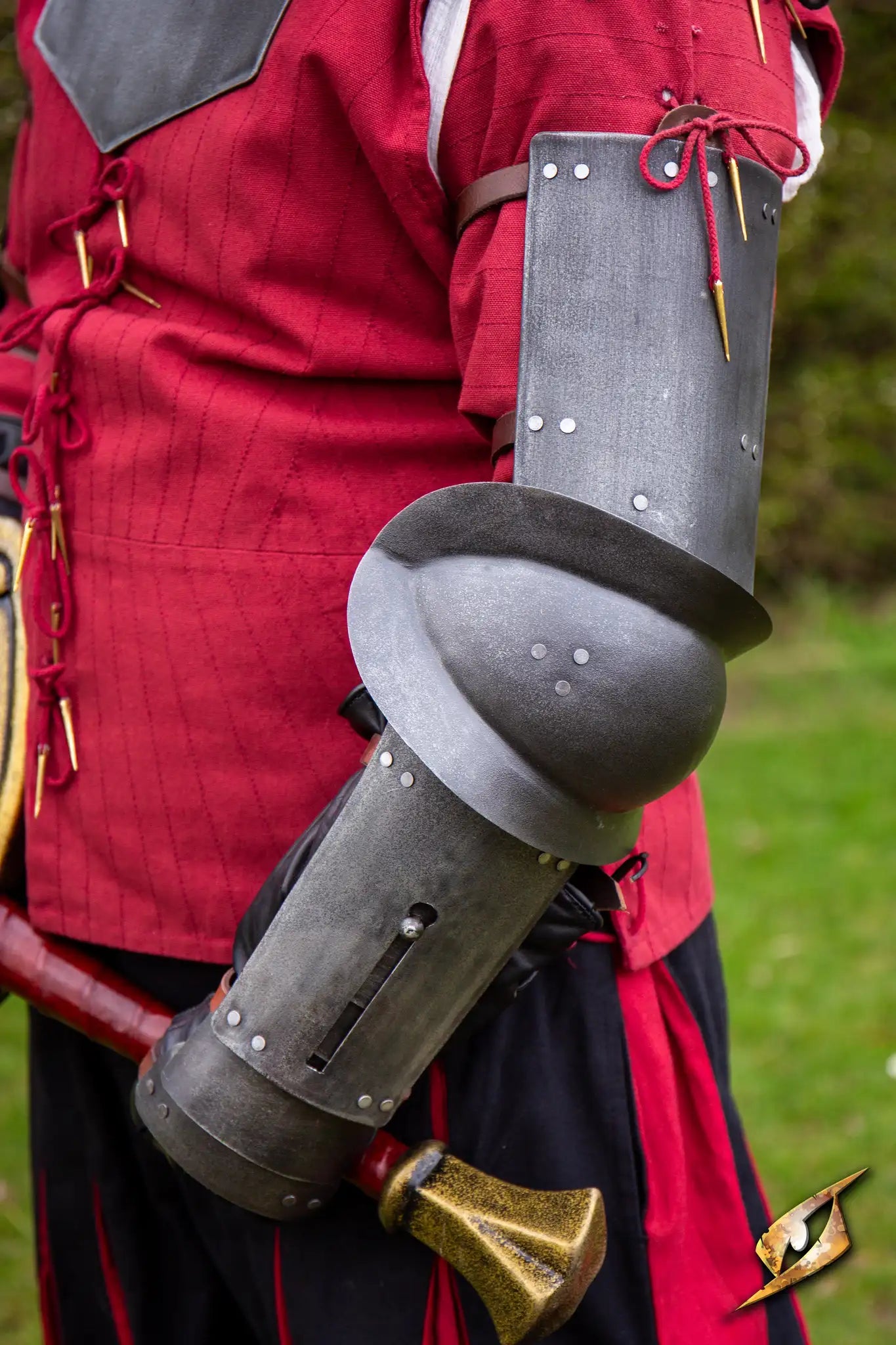
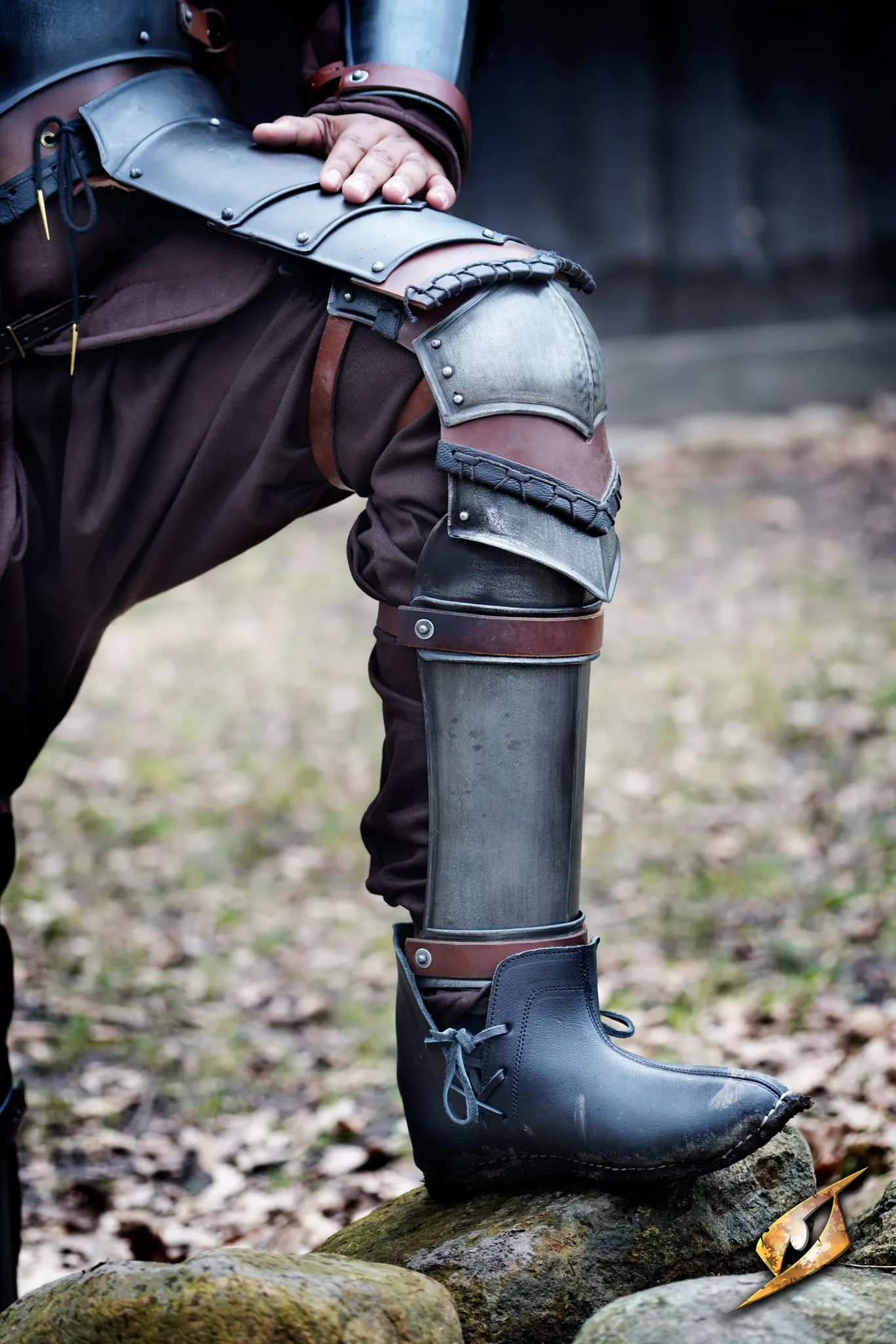
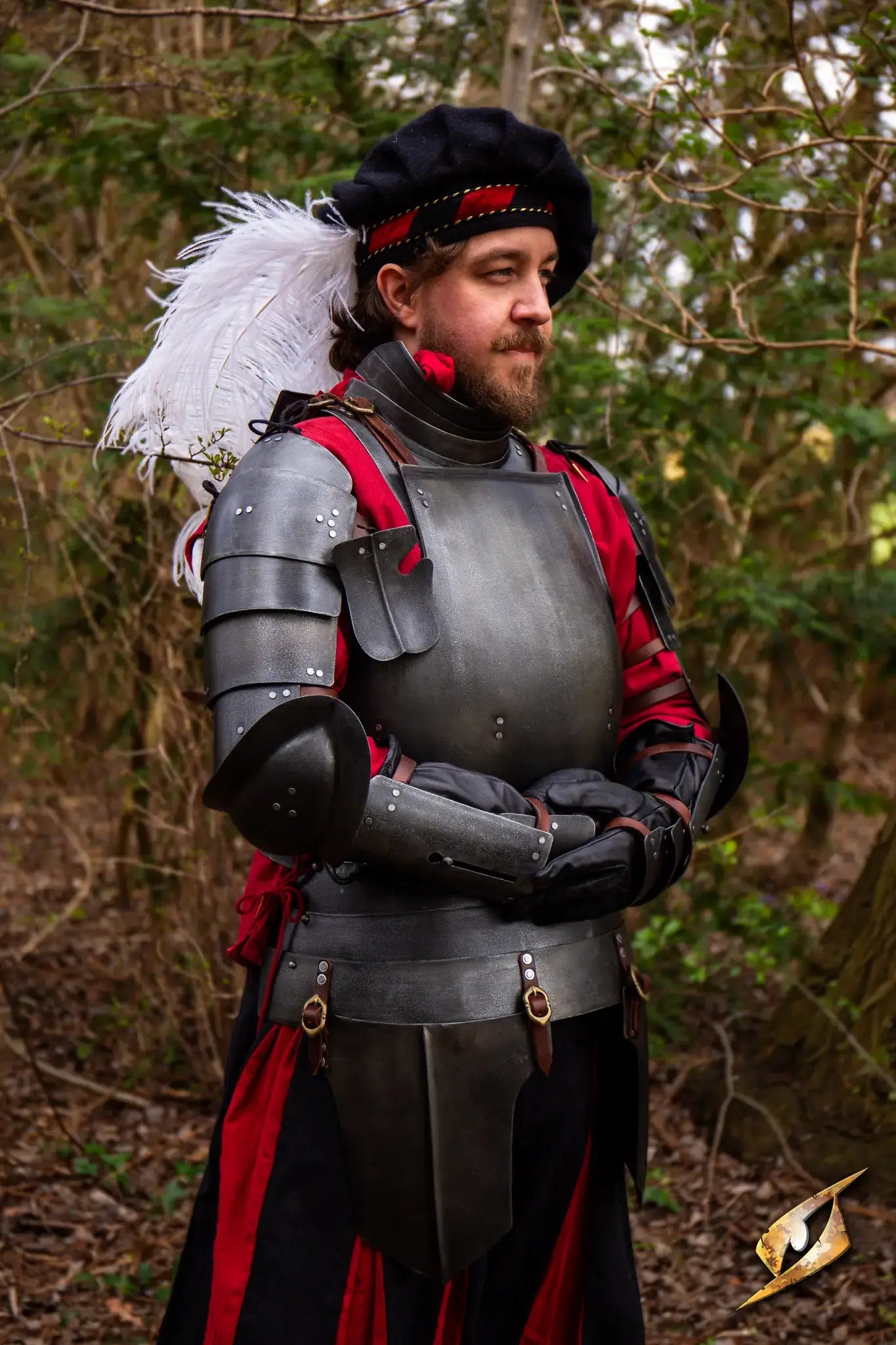
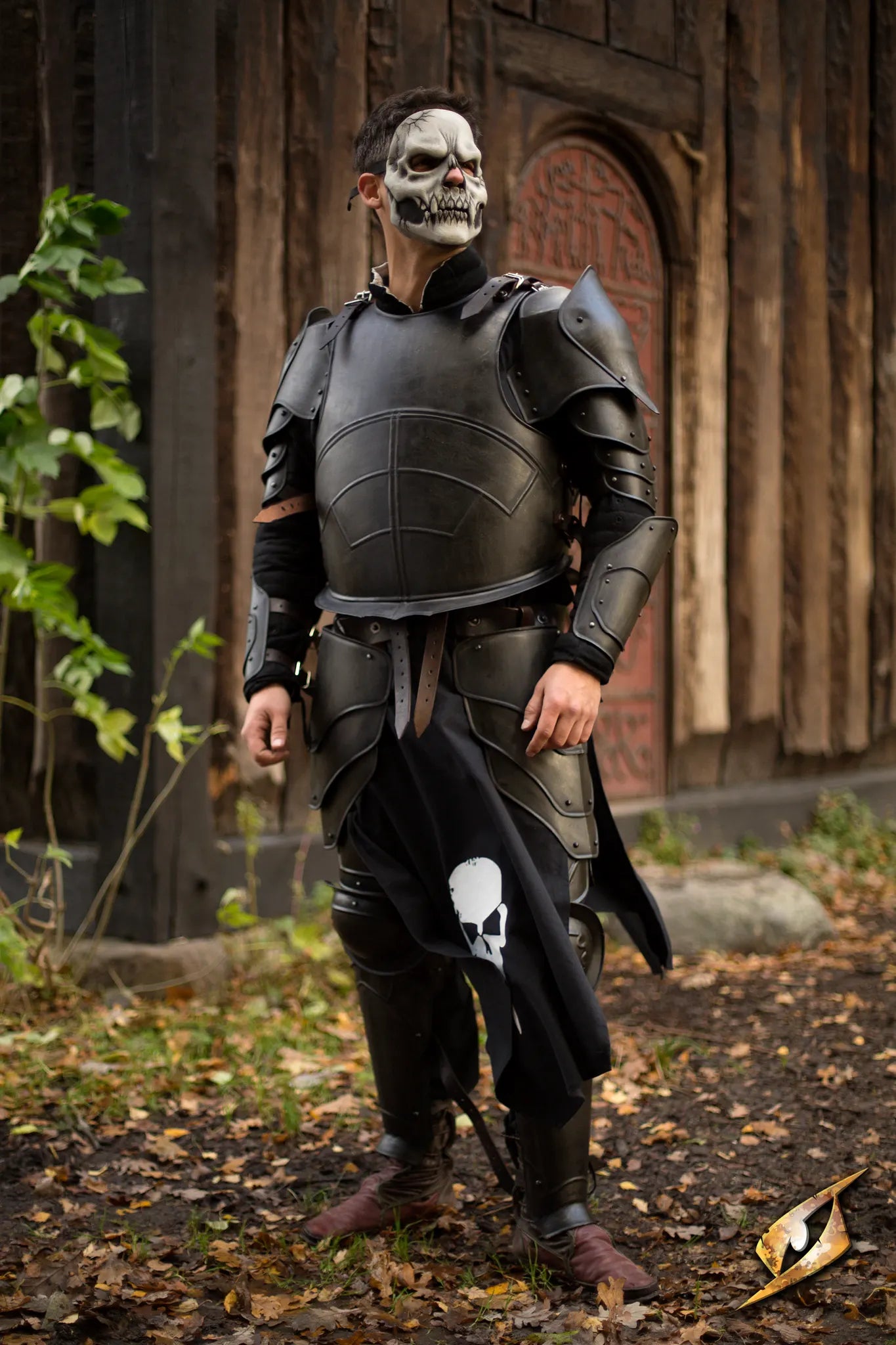
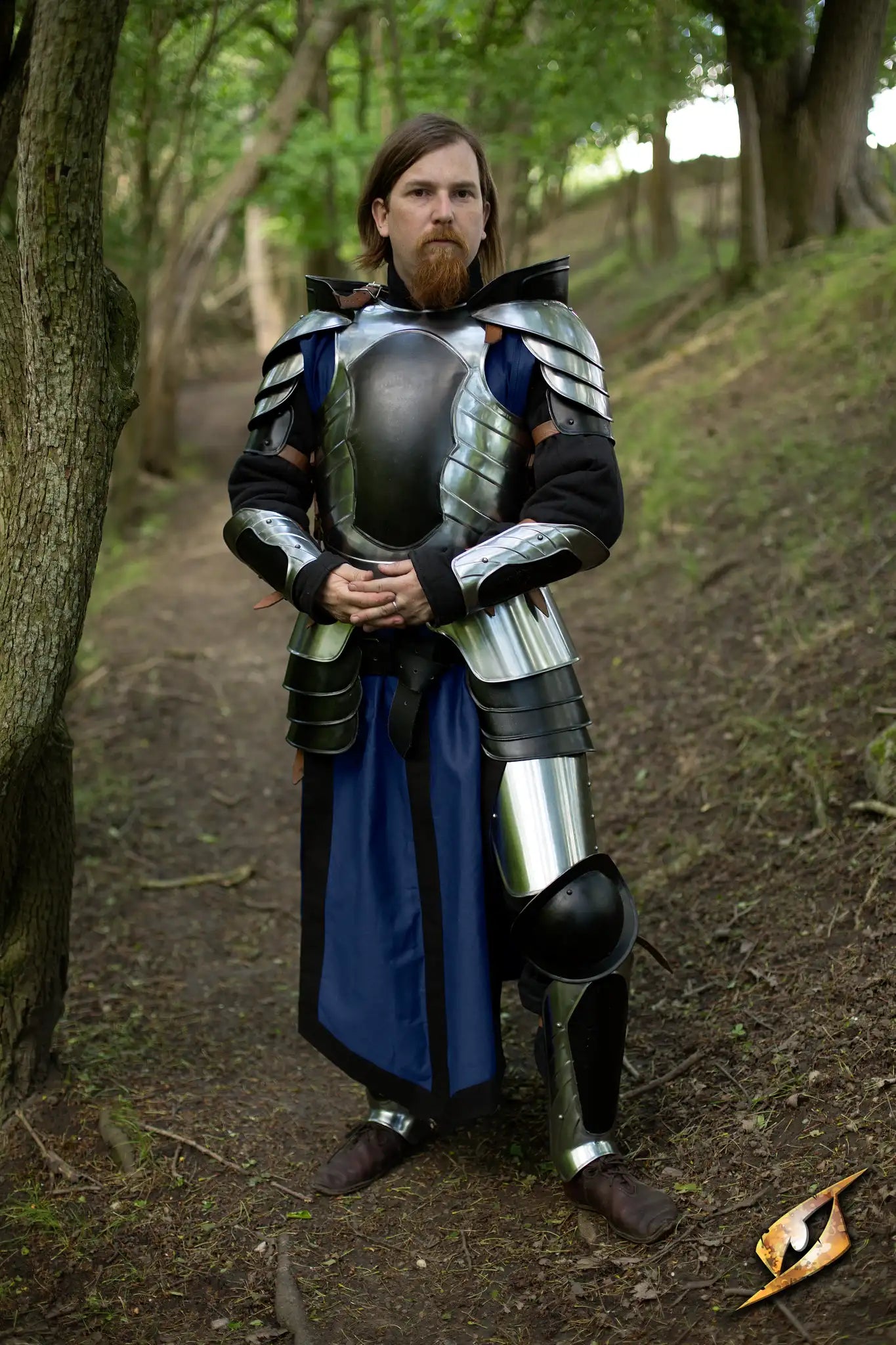
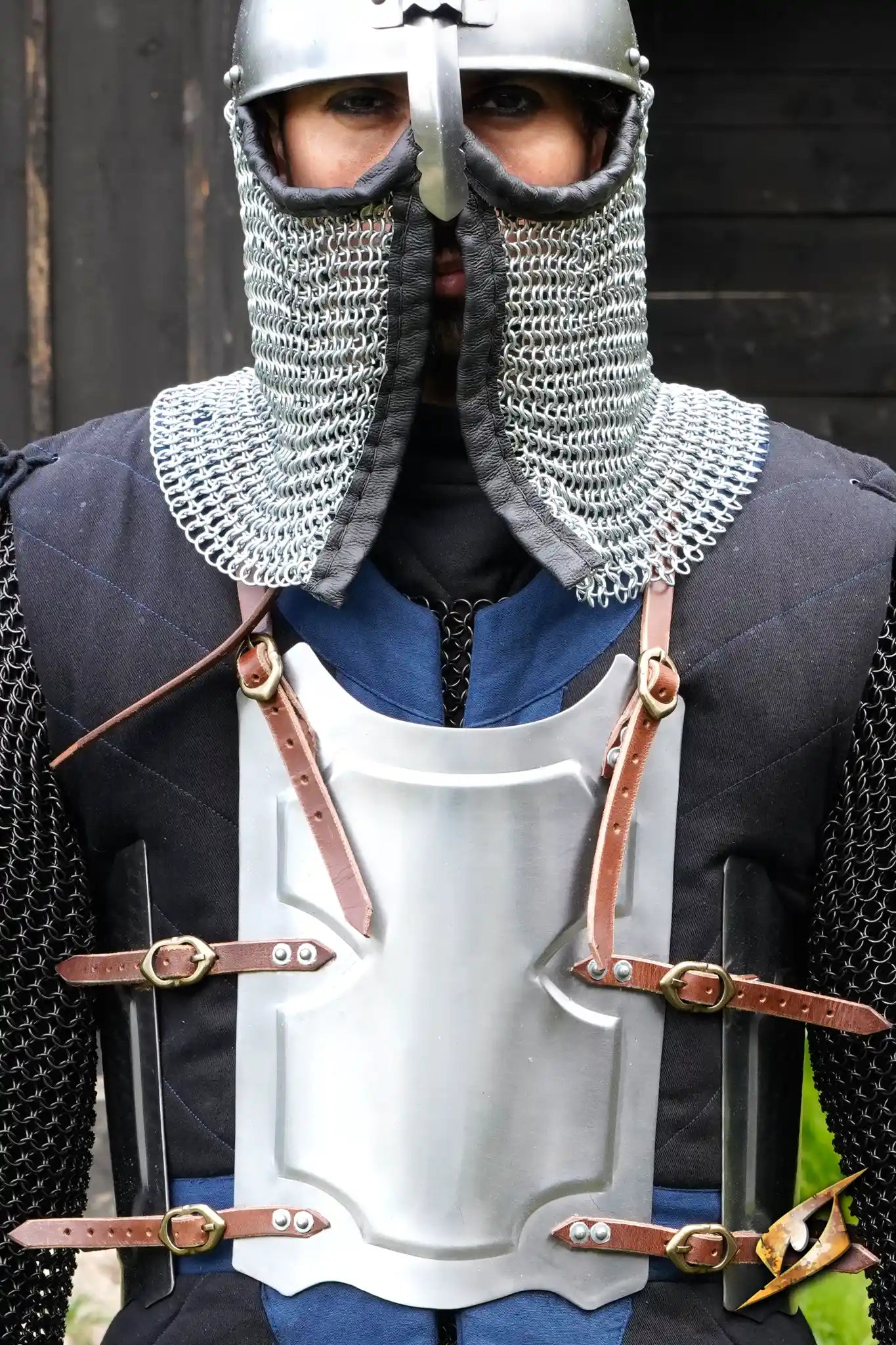
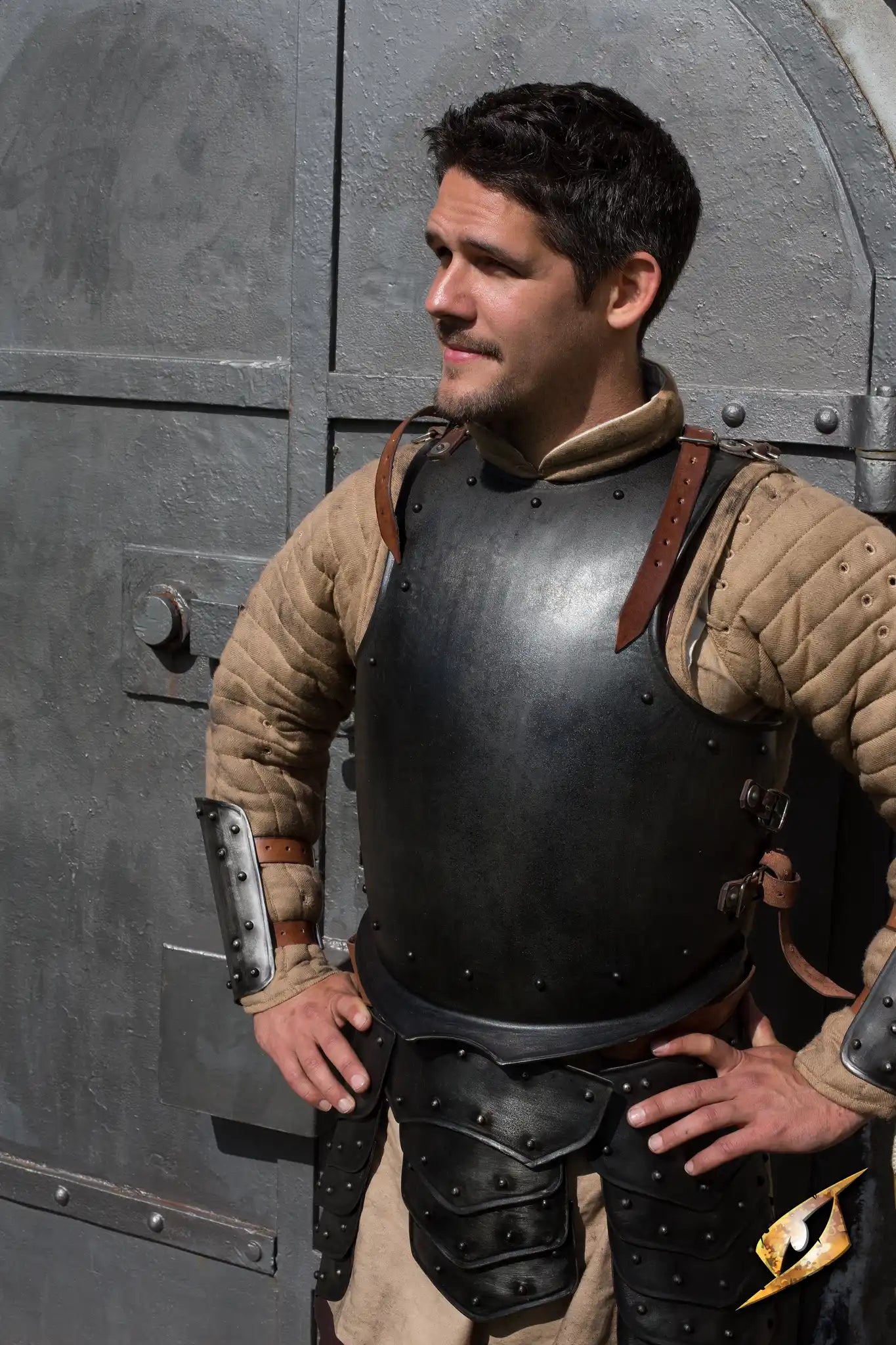
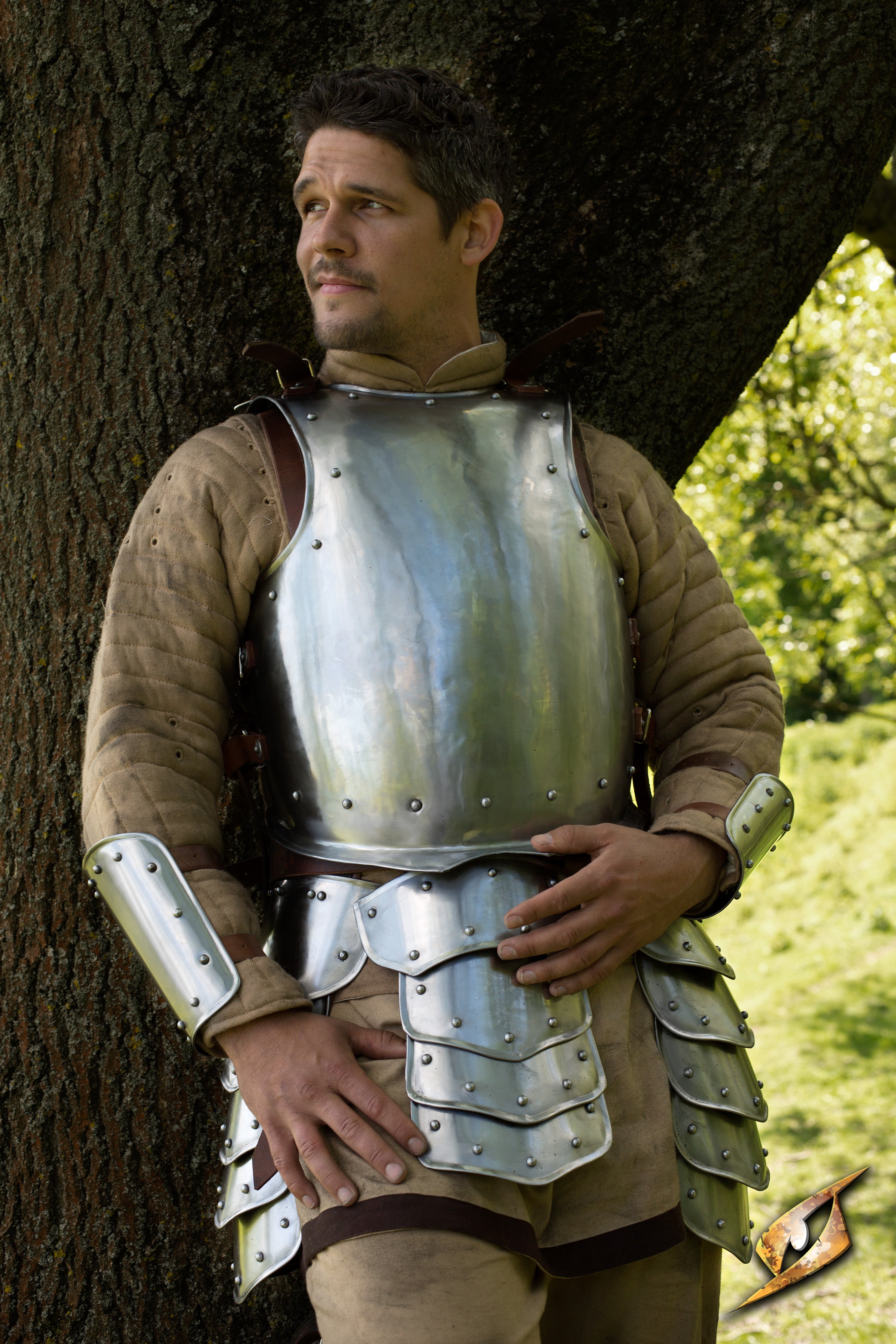
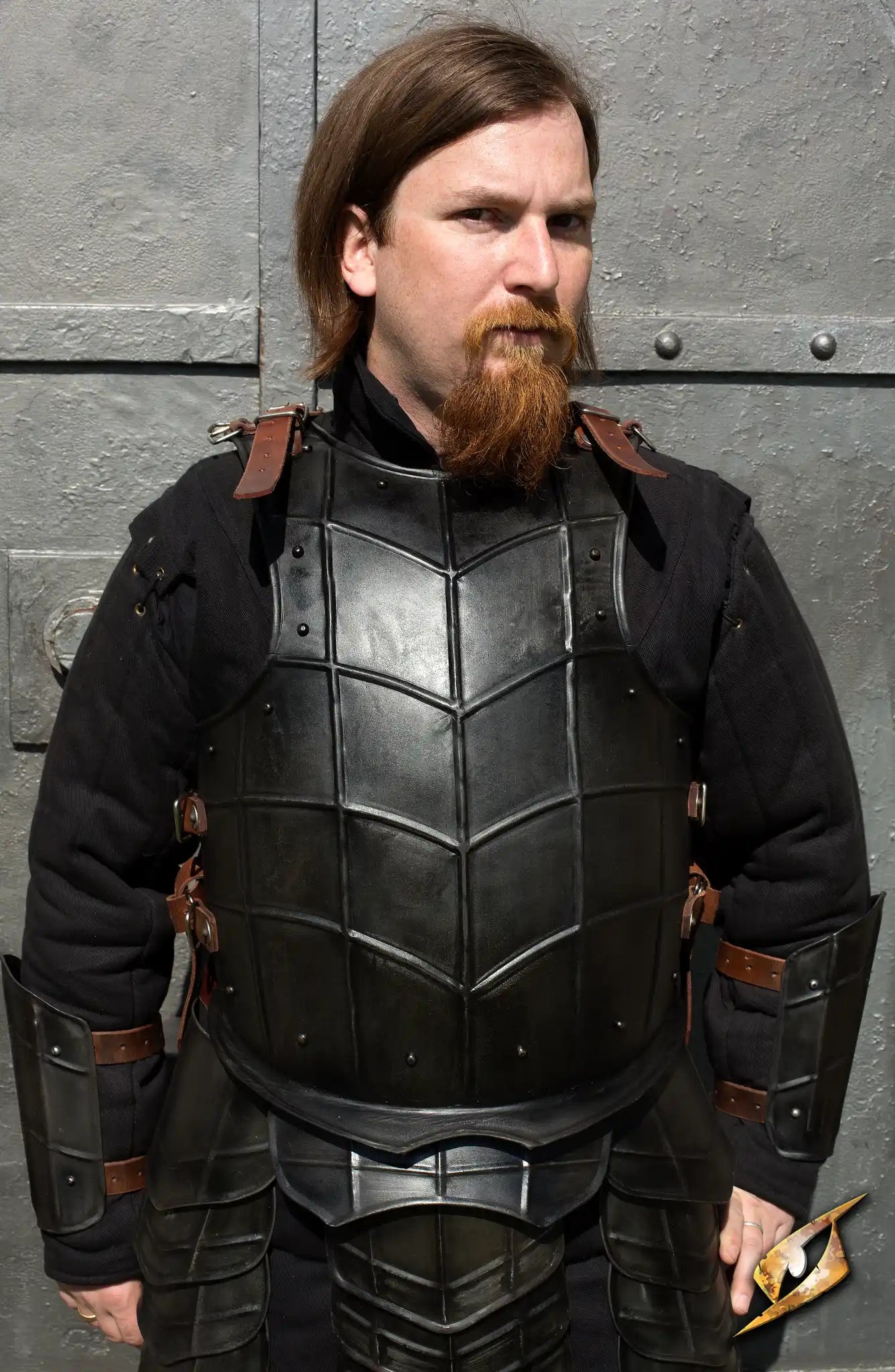
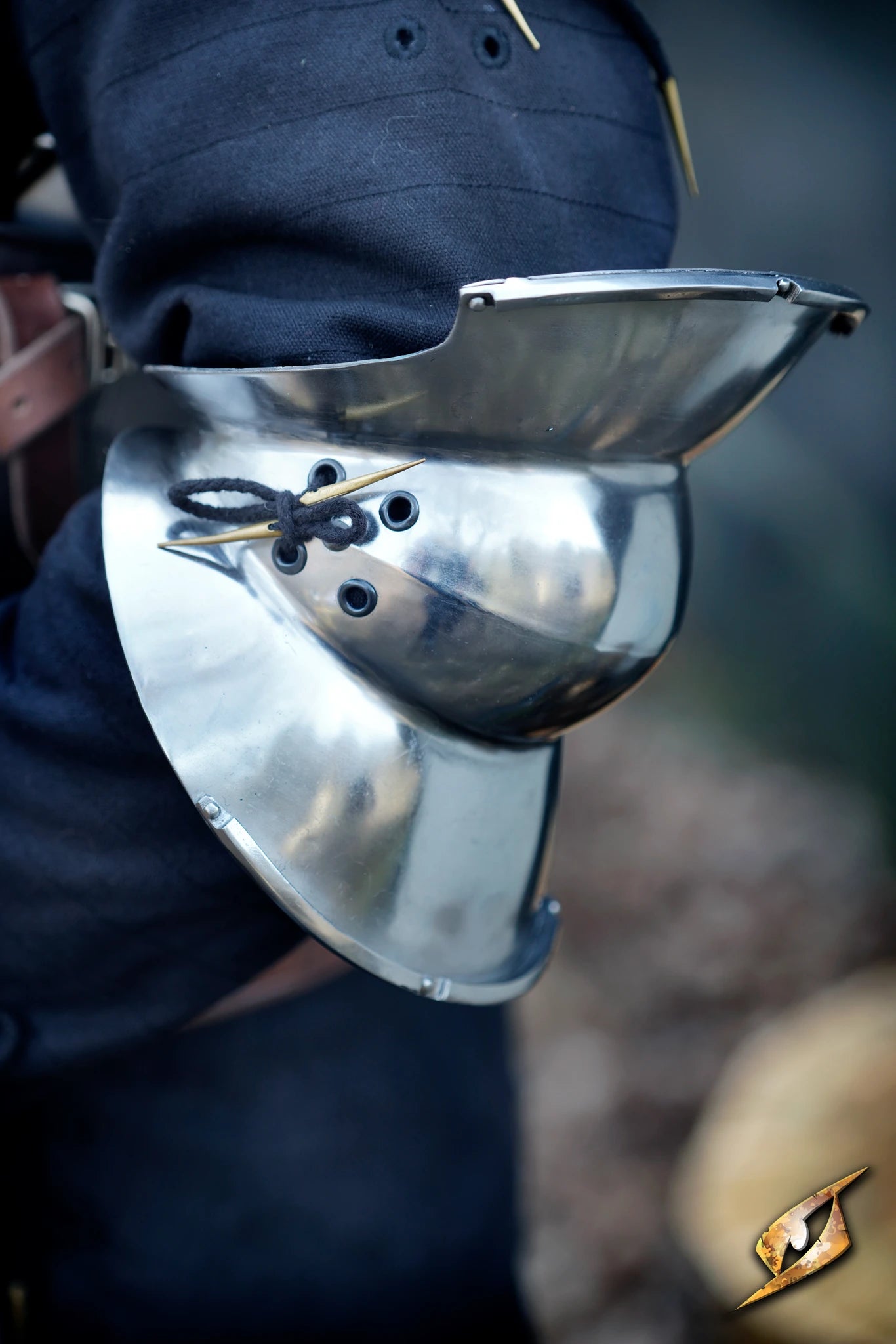
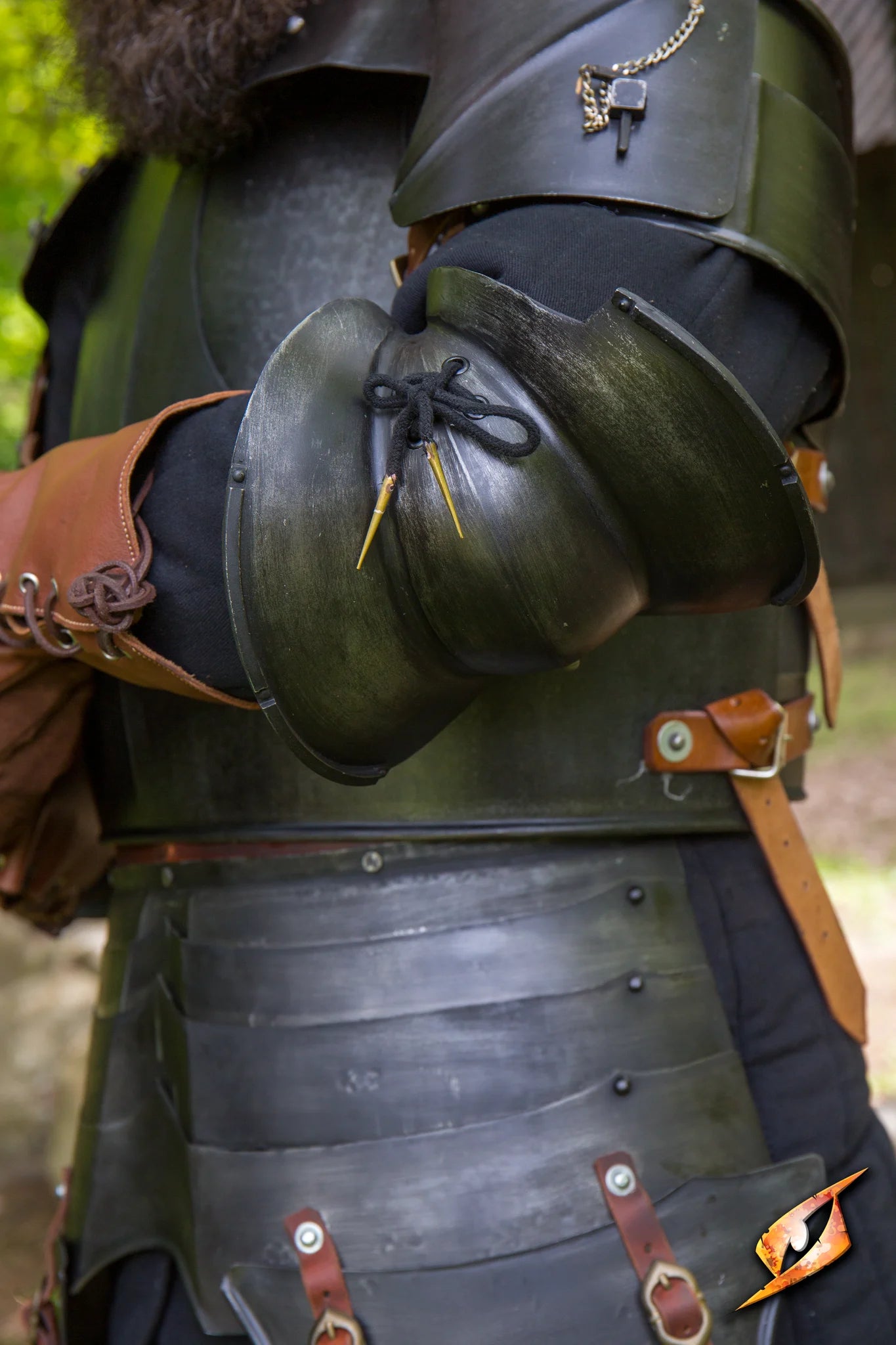
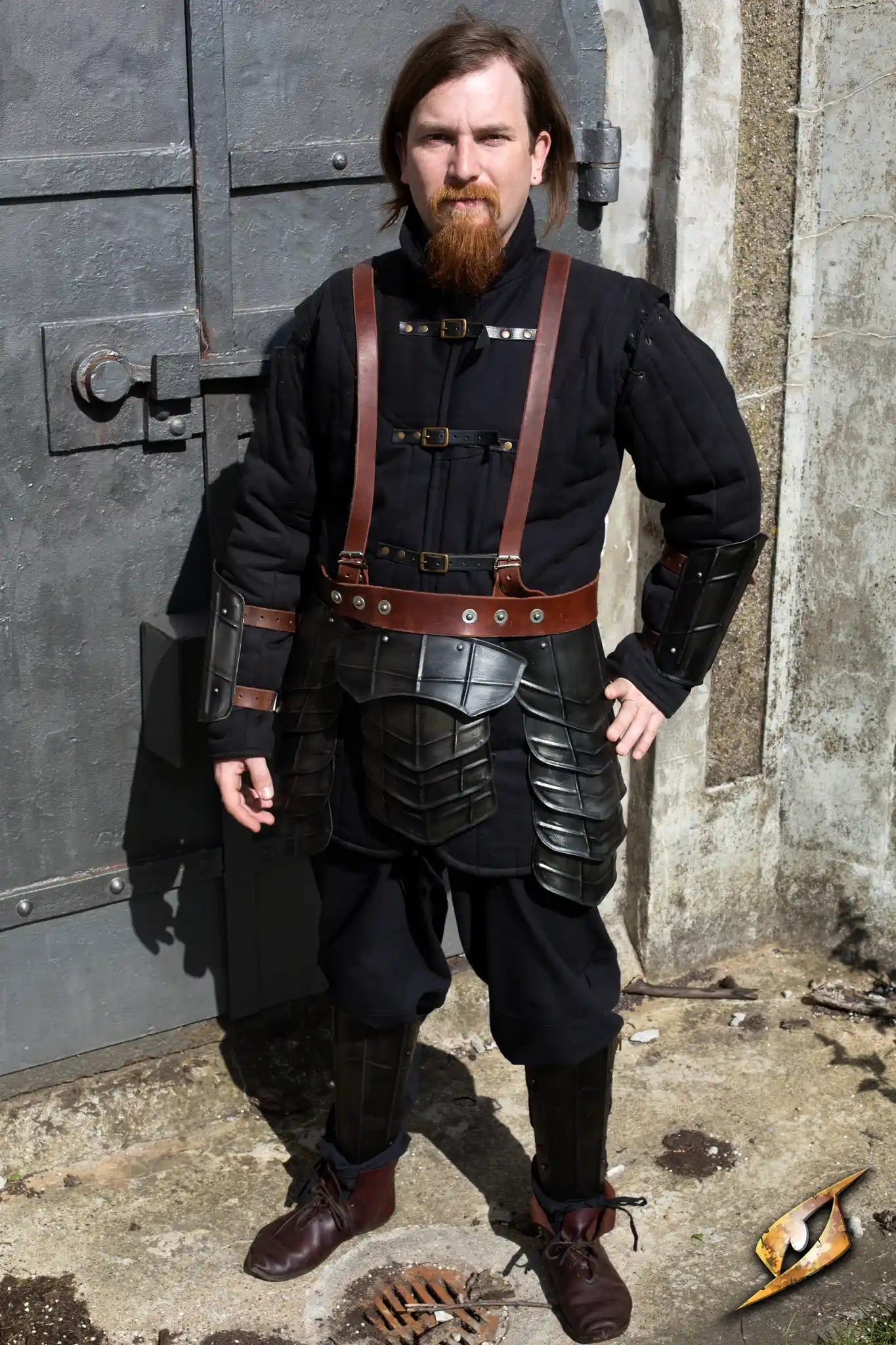
Every piece in this range is built from mild steel, the same material used in historical reproduction armor: workable, durable, and capable of taking a convincing finish. Two primary finishes appear across the range. Polished Steel gives a bright reflective surface suited to maintained and ceremonial armor impressions. Epic Dark is an antiqued darker finish that reads as older and more weathered. Both are equally durable for LARP and reenactment use and the choice between them is primarily aesthetic.
Leather appears in strapping and attachment hardware across most pieces, securing components to the body and connecting adjacent plates at articulation points. It is worth conditioning strap components periodically to keep them supple, particularly if the armor sees regular outdoor use.
Frequently Asked Questions
Is plate armor practical for LARP? Yes. Steel plate armor is worn regularly at LARP events across Europe and North America. Most LARP systems have no restrictions on metal armor beyond standard safety considerations, and a well-fitted harness is considerably more manageable in active use than its appearance might suggest. Check your specific event rules if you are unsure.
Where should I start if I am building a plate armor kit from scratch? The chest piece is the conventional starting point: it establishes the visual foundation and everything else connects to or coordinates with it. From there, gorget and shoulder armor are typically the next additions, followed by arm and leg protection as the build develops.
How do I maintain steel plate armor? Wipe down after use to remove moisture and prevent rust. Apply a light coat of oil to exposed steel surfaces periodically, particularly if the armor is stored for extended periods or used outdoors in wet conditions. Condition leather strap components with leather balm once or twice a year.